 泰互帮
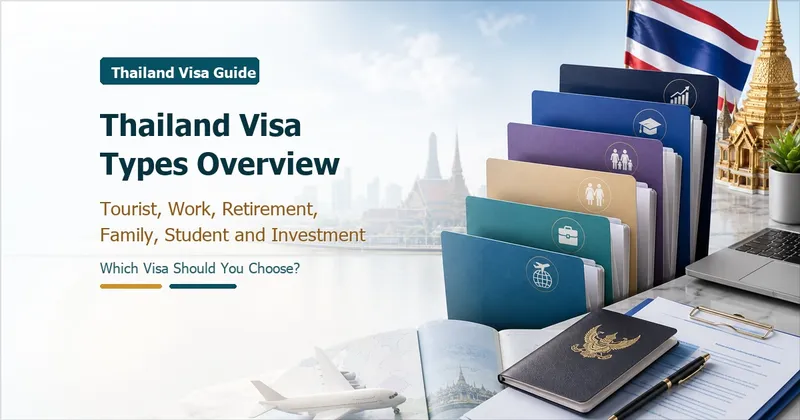
泰互帮Thailand Visa Types Overview: Tourist, Work, Retirement, Family, Student and Investment — Which to Choose
First Decide: What You're Here to Do and for How Long
There is no all-purpose Thai visa. The only logic for choosing is purpose plus length of stay: sightseeing, retirement, working, joining family, studying, remote work, or running a business each map to completely different visas and documents. Forcing the wrong visa (working on a tourist visa, taking a job on a student visa) is the most common and most dangerous trap. Below is a breakdown by purpose, each with a link to a detailed guide. Everything is subject to the current rules of Immigration and Thai embassies/consulates.
Short Trips: Visa Exemption, Visa on Arrival, Tourist Visa (TR)
- Who it suits: tourism, visiting family, short stays with no work involved
- Three entry routes: visa-exempt entry if eligible, visa on arrival (VOA), or a pre-arranged tourist visa (TR, including single/multiple-entry METV) — permitted days and extensions differ
- Common trap: repeatedly "border-running" on tourist visas or exemptions to live here can trigger questioning or even refused entry — don't use a short-stay visa as a long-stay tool
- See our tourist visa, VOA and visa-exempt entry guide; if you overstay, see the overstay guide
Coming to Work: Non-B Business Visa plus Work Permit
- Who it suits: employees of Thai companies, secondees, anyone lawfully working in Thailand
- Key point: lawful work means a Non-B visa AND a work permit together — you need both; the employer provides documents, tied to registered capital and the foreign-to-Thai staff ratio
- Common trap: working on a tourist or student visa is illegal employment, and some occupations are closed to foreigners
- See our work visa and work permit guide and changing jobs and transferring a work permit; employer costs are in the full cost of hiring a foreigner
Long-Term Retirement: O-A / O-X Visa
- Who it suits: those meeting the age threshold (usually 50+) who want to retire in Thailand long term
- Key point: financial thresholds (savings or income) and health insurance requirements, renewed yearly with 90-day reporting
- See our complete retirement guide; to weigh it against the Elite visa see retirement vs Elite visa
Joining Family: O Visa (Spouse / Dependent)
- Who it suits: foreign spouses, children or parents of Thai nationals or residents
- Key point: the marriage/dependent ("O") visa has financial and relationship-proof requirements; in some cases a spouse may apply to work; to accompany a studying child use a guardian visa
- See our marriage/dependent (O visa) guide and guardian visa guide; to register the marriage first see registering a marriage in Thailand
Coming to Study: ED Education Visa
- Who it suits: students at universities, international schools or Ministry-recognized language schools
- Key point: the school issues documents for a Non-ED, renewed by term/year; attendance and genuine-study checks have tightened, and it carries no work permit
- See our language school and ED visa guide; for progression see the university pathway guide
Remote Work: DTV Digital Nomad Visa
- Who it suits: freelancers and digital nomads working remotely for overseas employers or clients
- Key point: multiple entry with a longer stay per entry, making remote work in Thailand lawful — but it is not a local work permit
- See our DTV digital nomad visa guide; for settling in see the digital nomad living guide
Means and Convenience: Privilege (Elite) Visa
- Who it suits: long-stayers with budget who want to skip frequent renewals and enjoy convenience and perks
- Key point: a one-off membership fee buys multi-year residency and services, but no right to work — working still needs a work permit
- See our Thailand Privilege (Elite) visa guide
Investing and Business: BOI and Investment Routes
- Who it suits: owners investing, setting up factories or running promoted-category businesses
- Key point: BOI promotion can grant visas, work-permit quotas and tax benefits, with higher thresholds and approval requirements
- See our BOI investment promotion guide; to set the company up first see starting a business in Thailand
Quick Match: Find Your Row
| Your situation | Roughly the right visa |
|---|---|
| Short trip / visiting | Visa exemption / VOA / tourist visa (TR) |
| Employed work | Non-B + work permit |
| Retirement | O-A / O-X retirement visa |
| Joining a spouse/family | O dependent visa / guardian visa |
| Studying | ED education visa |
| Remote work | DTV digital nomad visa |
| Hassle-free long stay with means | Privilege (Elite) visa |
| Investing / factory / business | BOI / investment route |
Whatever the long-stay visa, after arrival you generally must report every 90 days and get a re-entry permit before leaving where needed — see the 90-day report and re-entry permit guide. The above is directional only; exact conditions, documents and fees are subject to Immigration and embassy current rules.
FAQ
Can I work in Thailand on a tourist visa?
No. A tourist visa (including exemption and VOA) allows only non-work stays such as tourism and visiting. Lawful work requires a Non-B visa plus a work permit. Being employed or taking on local Thai business on a tourist visa is illegal employment, risky for both employer and worker. Even working remotely for overseas clients, use the DTV or similar rather than stretching a tourist visa indefinitely. Choosing a visa is about what you're here to do — don't use the wrong category, subject to Immigration's current rules.
I want to live in Thailand long term — which visa is easiest?
It depends on budget and purpose. With means and a wish to avoid frequent renewals, the Elite visa trades a membership fee for years of residency and is the most hassle-free; at retirement age go for a retirement visa; with a Thai spouse use the O dependent visa; working remotely use the DTV. Each has financial thresholds and limits (Elite and retirement visas carry no work right). There's no absolute "best," only the one that fits your situation — match it against this guide and the detailed guides, or ask first.
Are a visa and a work permit the same thing?
No. A visa covers lawful entry and stay; a work permit covers lawfully doing work — separate but paired: coming to work needs both a Non-B and a work permit, and without the permit you can't work even with a valid visa. Conversely, Elite, retirement, student and tourist visas carry no work right. Thinking of "allowed to stay" and "allowed to work" separately is key to avoiding traps, subject to Ministry of Labour and Immigration rules.
If I pick the wrong visa, can I change it after arriving?
In some cases you can convert visa type in-country (e.g. tourist to another if eligible), but not all can be changed on the spot — many require leaving to reapply at an embassy, with document and time costs. The safest path is to choose the right visa before you travel based on purpose, rather than "sort it out once there." When unsure, ask first — lay out your stay plan, work arrangements and family situation so a professional can match you and save you wasted border-runs and overstay risk.
Need Help?
TaiHuBang offers consultation and assistance across all visa types: matching a visa to your purpose and stay plan, document preparation and application guidance, and 90-day reporting and renewal reminders after arrival. Everything is subject to Immigration and embassy current rules, and we make no "guaranteed approval" promises. See our visa services or submit an enquiry, and an advisor will reply within 24 hours.
Related Articles
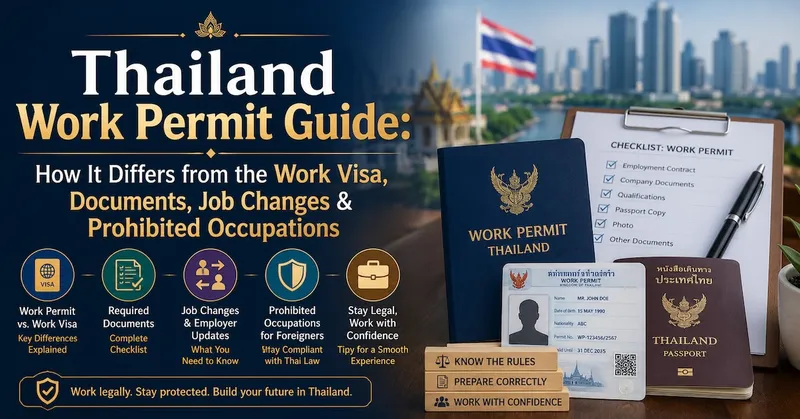
Thailand Work Permit Guide: How It Differs from the Work Visa, Documents, Job Changes & Prohibited Occupations
To work legally in Thailand, a work visa (Non-B) alone isn't enough — you also need a Work Permit, and the two are different: the work visa is permission to enter and stay, while the work permit authorises you to do a specified job for a specified employer. Typically you first hold a Non-B visa, then the company applies for your work permit, and only both together make employment legal. The permit is employer-initiated and tied to a specific company and position, so changing jobs means reapplying or amending it, and the company must meet capital and Thai-to-foreign staff ratio requirements (commonly four Thai employees per foreigner). Thailand also has a list of occupations prohibited or restricted for foreigners; working out of scope or without a permit is illegal and can bring fines, deportation and a blacklist. This guide covers the permit-versus-visa distinction, documents and process, handling job changes, and prohibited occupations, subject to current Ministry of Labour rules.
7/24/2026
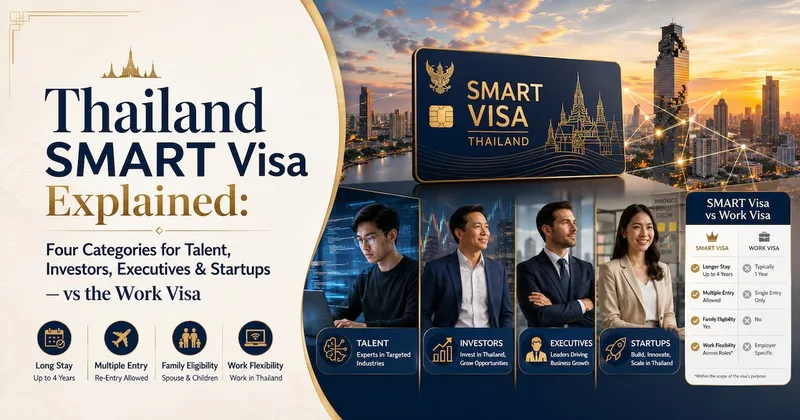
Thailand SMART Visa Explained: Four Categories for Talent, Investors, Executives & Startups — vs the Work Visa
The SMART Visa is Thailand's special visa to attract talent in targeted industries (technology, digital, innovation), in four categories: Highly-Skilled Talent (T), Investor (I), Executive (E) and Startup (S). Its appeal: up to a four-year visa for those who qualify, the ability to work within the approved scope without a separate work permit, 90-day reporting relaxed to once a year, and dependants who can join — with spouses generally allowed to work. But the bar is defined: your role must fall in a BOI-endorsed targeted industry and meet salary or investment thresholds, with certification by the relevant authority, so vetting is stricter than an ordinary work visa. It differs from the standard "work visa + work permit" route, which suits most employed foreigners, whereas SMART targets high-end talent, investors and founders in targeted industries. This guide covers the four categories' requirements, benefits and how to choose between SMART, the work visa and LTR, subject to current BOI and agency rules.
7/22/2026
Thailand LTR Visa Guide: The Four Categories, Requirements, Tax Perks and Ten-Year Residence
The LTR (Long-Term Resident) visa is Thailand's long-stay visa to attract wealthy individuals, affluent retirees, remote-working professionals and highly skilled experts. It offers up to around ten years of residence (typically issued in stages, renewed on continued eligibility), plus perks such as annual reporting instead of 90-day reporting, multiple re-entry, the option of a digital work permit, and preferential personal income tax for some categories. It targets people with higher income, assets or investment, so the bar and paperwork are higher than a tourist visa or DTV — but you get a far more hassle-free long-term status. This guide covers the four LTR categories, their income/asset thresholds, the perks, and how to choose between LTR, the Privilege visa, DTV and retirement visas — subject to the BOI and Immigration's current rules.
7/21/2026