 泰互帮
泰互帮Overstaying Your Visa in Thailand: Fines, the Blacklist and How to Fix It
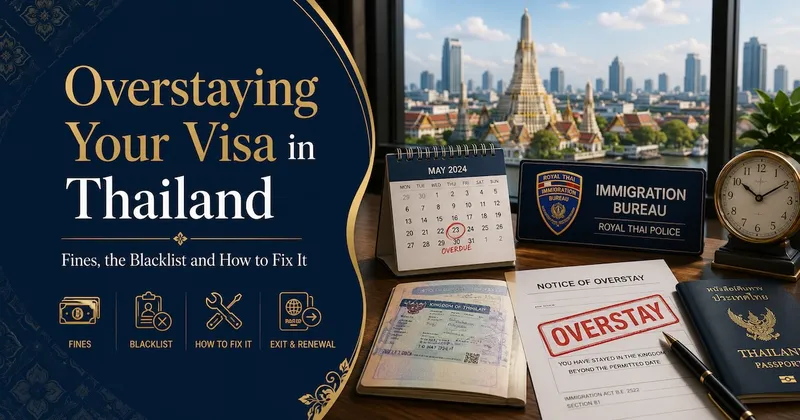
How the Overstay Fine Works
- The standard is 500 baht per day overstayed, capped at 20,000 baht (the cap hits at around 40 days)
- The fine is paid at the departure checkpoint or at an Immigration office, after which the relevant procedure is completed
- Don't read the cap as "no harm in dragging it out" — the cap is only on the fine; the blacklist and ban years are a separate consequence, and the longer you overstay the worse they get
Voluntary Departure vs Getting Caught: Worlds Apart
The same overstay can end very differently depending on how it's handled — this is the crucial point:
- Turning yourself in at the airport to leave: usually you pay the fine and are allowed to depart — a relatively light outcome; the overstay days still affect whether you can re-enter later
- Caught by police or in a raid: you may be taken to an Immigration Detention Centre (IDC), put through deportation, and placed directly on the entry blacklist — far more precarious than leaving voluntarily
- The conclusion is clear: the moment you realize you've overstayed, act as early as possible — don't gamble on staying on
The Blacklist and Ban Years
An overstay maps to a "banned from entering Thailand for a period" by its length, and the years differ between voluntary departure and being caught:
- A short overstay with voluntary departure usually carries a relatively short ban or limited impact
- A longer overstay (tiers such as over 90 days, over 1 year) maps to longer bans, and being caught and deported carries heavier tiers
- The exact tiers are per Immigration's current rules — the point is to grasp the logic that "the longer the overstay and the more passive the handling, the longer the ban," and not to test the edges
The Right Steps Once You Realize You've Overstayed
- Stop staying on immediately and arrange departure or consult Immigration on a compliant fix as soon as possible
- Pay the fine and leave via the nearest departure checkpoint (airport) — the most common light-handling route
- For complex cases (a very long overstay, other issues, lost documents), consult a professional or your embassy/consulate first to weigh the best approach
- Never take irregular routes, use "black connections" to sneak out, or pay bribes — that escalates a visa issue into a criminal one, with far worse consequences
How to Avoid Overstaying
- Note the expiry from the stamp: go by the officer's stamped date, not your own guess from the visa type
- Don't confuse "visa expiry" with the "90-day report" — they are different obligations, and the 90-day report is not an extension; see our 90-day report and re-entry permit guide
- Extend or renew early — counting on a long-weekend grace period is unreliable; for holiday scheduling see our Thai holidays and errand calendar
- Set a phone reminder and re-check the expiry the night before departure
Frequently Asked Questions
A few days over — will I be arrested for going to the airport to leave?
Generally no. Turning yourself in at the airport and paying the 500-baht-a-day fine usually means you're allowed to depart — a relatively light outcome. The real trouble is being caught inside the country by police or a check, which triggers detention, deportation and the blacklist. So don't hide once you realize you've overstayed — leaving voluntarily as soon as possible is the best move, and the fewer days over, the smaller the later impact.
The fine is capped at 20,000 baht — so does it matter if I drag it out?
A serious mistake. Only the fine amount is capped; the entry ban lengthens the longer you overstay, and the longer you overstay the more likely you're caught — and once caught it's detention, deportation and a heavier blacklist. The saved fine is nowhere near worth years banned from Thailand. Realizing you've overstayed should mean fixing it promptly, not calculating that "the fine is capped anyway."
If I'm blacklisted, can I still come back to Thailand?
The blacklist means you're banned from entering Thailand for a corresponding period, whose length depends on the overstay duration and on whether you left voluntarily or were caught and deported. Whether you can re-enter after the ban ends, and any extra explanation needed, is per Immigration's rules at that time. For complex cases, consult a professional to assess first — don't rashly book a flight and be refused while your status is unclear.
I lost my passport and I've also overstayed — what do I do?
Replace the document first, then handle the overstay: apply to the Chinese embassy/consulate for a travel document or replacement passport (see our emergency help guide), and at the same time explain to Immigration and pay the fine to depart per procedure. If detention is involved, see our detained-in-Thailand guide. For these stacked situations, always use official channels and seek professional help if needed — don't delay or take shortcuts.
Need a Hand?
TaiHuBang provides compliant support around visa overstays: advice on handling routes, guidance on departure and fine procedures, document replacement and embassy liaison help, and professional referral for complex cases. We only assist with lawful, compliant handling — no irregular "clean-up" schemes. See our visa service and legal consulting service, or submit an inquiry and a consultant will reply within 24 hours.
Related Articles
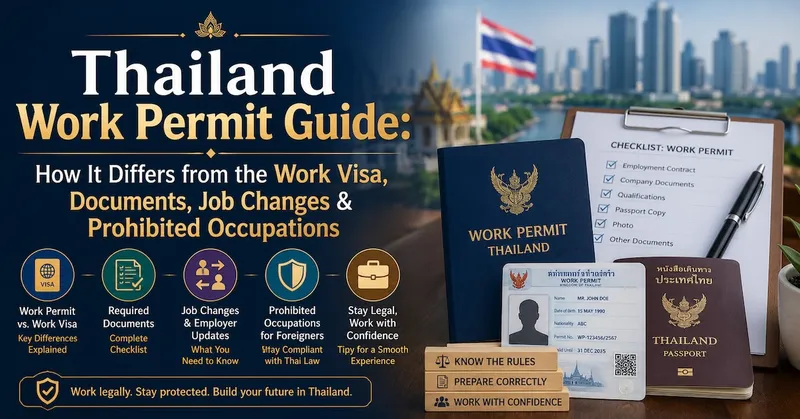
Thailand Work Permit Guide: How It Differs from the Work Visa, Documents, Job Changes & Prohibited Occupations
To work legally in Thailand, a work visa (Non-B) alone isn't enough — you also need a Work Permit, and the two are different: the work visa is permission to enter and stay, while the work permit authorises you to do a specified job for a specified employer. Typically you first hold a Non-B visa, then the company applies for your work permit, and only both together make employment legal. The permit is employer-initiated and tied to a specific company and position, so changing jobs means reapplying or amending it, and the company must meet capital and Thai-to-foreign staff ratio requirements (commonly four Thai employees per foreigner). Thailand also has a list of occupations prohibited or restricted for foreigners; working out of scope or without a permit is illegal and can bring fines, deportation and a blacklist. This guide covers the permit-versus-visa distinction, documents and process, handling job changes, and prohibited occupations, subject to current Ministry of Labour rules.
7/24/2026

Thailand SMART Visa Explained: Four Categories for Talent, Investors, Executives & Startups — vs the Work Visa
The SMART Visa is Thailand's special visa to attract talent in targeted industries (technology, digital, innovation), in four categories: Highly-Skilled Talent (T), Investor (I), Executive (E) and Startup (S). Its appeal: up to a four-year visa for those who qualify, the ability to work within the approved scope without a separate work permit, 90-day reporting relaxed to once a year, and dependants who can join — with spouses generally allowed to work. But the bar is defined: your role must fall in a BOI-endorsed targeted industry and meet salary or investment thresholds, with certification by the relevant authority, so vetting is stricter than an ordinary work visa. It differs from the standard "work visa + work permit" route, which suits most employed foreigners, whereas SMART targets high-end talent, investors and founders in targeted industries. This guide covers the four categories' requirements, benefits and how to choose between SMART, the work visa and LTR, subject to current BOI and agency rules.
7/22/2026
Thailand LTR Visa Guide: The Four Categories, Requirements, Tax Perks and Ten-Year Residence
The LTR (Long-Term Resident) visa is Thailand's long-stay visa to attract wealthy individuals, affluent retirees, remote-working professionals and highly skilled experts. It offers up to around ten years of residence (typically issued in stages, renewed on continued eligibility), plus perks such as annual reporting instead of 90-day reporting, multiple re-entry, the option of a digital work permit, and preferential personal income tax for some categories. It targets people with higher income, assets or investment, so the bar and paperwork are higher than a tourist visa or DTV — but you get a far more hassle-free long-term status. This guide covers the four LTR categories, their income/asset thresholds, the perks, and how to choose between LTR, the Privilege visa, DTV and retirement visas — subject to the BOI and Immigration's current rules.
7/21/2026