 泰互帮
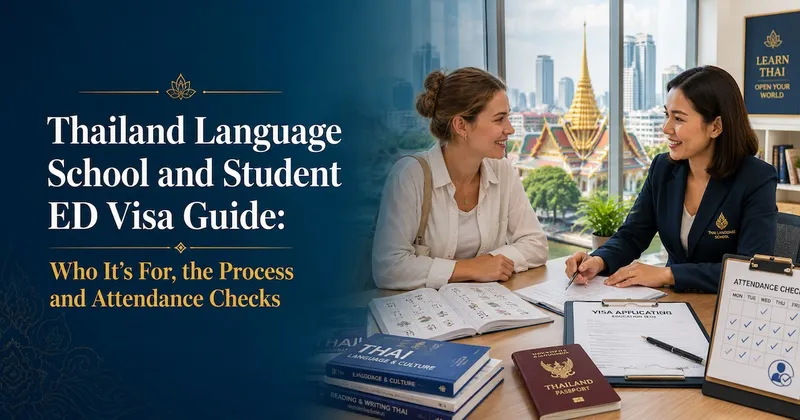
泰互帮Thailand Language School and Student ED Visa Guide: Who It's For, the Process and Attendance Checks
What the ED Visa Is and Who It Suits
- Purpose: the ED visa (Non-Immigrant ED, education visa) is for foreigners lawfully studying in Thailand, covering universities, K12 international-school students, and learners at Ministry-recognized Thai-language / skills schools
- Who it suits: those genuinely studying Thai, pursuing a degree or enrolling their children long term — the proper route to combining study and a long stay
- For choosing an international school see our international school guide, and for progression our university pathway guide
The Process: From Choosing a School to Getting the Visa
- Choose a properly recognized school: confirm Ministry accreditation and that it can issue the admission/enrollment documents needed for the visa — for language schools especially, check it's compliant and can lawfully issue ED documents
- Get the school's documents: admission letter, enrollment certificate, the school's letter to Immigration, etc.
- Apply for the Non-ED visa: at an embassy/consulate abroad, or convert in-country per the rules, subject to current policy
- Extend at Immigration after arrival: an ED visa usually grants a shorter entry permit first, extended on the school's documents, then renewed by term/year
- Like all long stays, report every 90 days — don't confuse it with renewal; see our 90-day report and re-entry permit guide
Attendance and Scrutiny: Don't Treat a Language School as a Long-Stay Tool
- Attendance is a hard metric: Immigration spot-checks genuine attendance and class records for language-school ED visas, and renewal may require meeting an attendance threshold
- Interviews and language checks: some cases involve an interview or a simple test of the Thai you've learned — pure enrollment without attending is easily exposed
- The grey "enroll-but-don't-attend" route is risky: buying an enrollment through an agent to live here without attending carries rising refusal and audit risk as policy tightens — not worth it. For a long stay, use the appropriate lawful visa
ED Visa vs Other Long-Stay Visas: How to Choose
- Genuinely studying: the ED visa is the right choice
- Remote work / digital nomad: see the DTV digital nomad visa — don't force an ED visa
- Asset holders wanting a hassle-free stay: see the Thailand Elite visa and retirement vs Elite comparison
- Accompanying a studying child: parents use the guardian visa while the child uses an ED visa
Costs and Common Pitfalls
- Cost components: tuition plus visa official fees; language-school tuition is by class hours/term and varies widely — ask the total and whether renewal costs extra before enrolling
- Insist on a compliant school: cheap "visa guaranteed" enroll-but-don't-attend agents are the worst trap, and a school with credential problems drags down your visa
- Don't let it lapse: visa expiry, insufficient attendance or missing renewal documents can void it or even lead to overstay — see our overstay guide
Frequently Asked Questions
Can I live in Thailand long term just by enrolling in a Thai-language school?
Yes, but only if you genuinely study at a recognized school and meet attendance. ED visas go to real students, and Immigration's spot-checks of attendance and genuine study have tightened, with renewal possibly requiring attendance or a Thai interview. Buying an enrollment through an agent without attending is a grey-area move with rising refusal and audit risk as policy tightens. If you want a long stay rather than study, the DTV or Elite visa is the proper lawful choice.
Can I work in Thailand on an ED visa?
No. The ED visa is a study visa and carries no work permit — working on it is illegal employment and risky if inspected. To work lawfully you need a work visa plus work permit, a separate route. Even student part-time work has specific rules — don't assume "studying means I can work." To work, use the appropriate visa rather than risking a study visa.
How often does an ED visa renew, and what if attendance is short?
Usually renewed by term or year, with a 90-day report (don't confuse the two). Renewal depends on the school's enrollment and attendance documents, and insufficient attendance can lead to refused renewal; once the visa lapses, dragging on becomes overstay. So choosing a school where you actually attend and keeping up attendance matters far more than a cheap enrollment. Exact renewal cycles and attendance requirements are per the school and Immigration's current rules.
How do I avoid getting burned by enroll-but-don't-attend agents?
The key is to choose a Ministry-accredited school that actually runs classes, not just the cheapest "visa guaranteed" offer. Ask to see credentials, sit in or review the real timetable, and clarify tuition, renewal fees and attendance requirements. Be wary of anyone promising "renewal without attending" — it's non-compliant and puts your visa at risk. Compliant study up front is far less hassle than fixing problems later.
Need a Hand?
TaiHuBang provides study and ED-visa process guidance and document support: connecting you with recognized schools and language schools, preparing admission and enrollment documents, guiding the Non-ED application and renewals, and guardian-visa processing. All per Immigration and school current rules, with no enroll-but-don't-attend arrangements. See our visa service, or submit an inquiry and a consultant will reply within 24 hours.
Related Articles
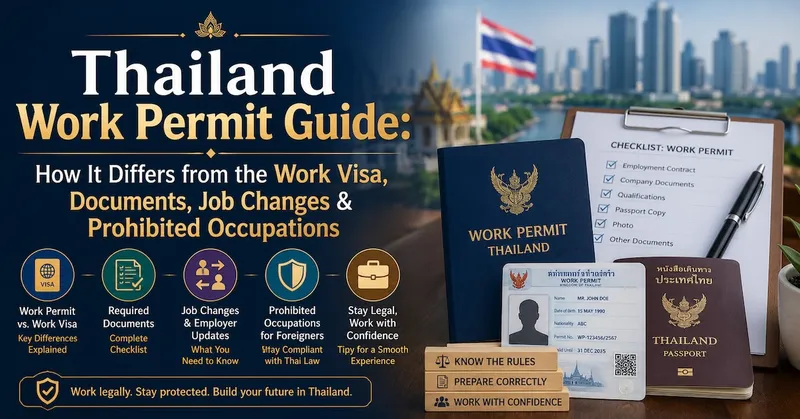
Thailand Work Permit Guide: How It Differs from the Work Visa, Documents, Job Changes & Prohibited Occupations
To work legally in Thailand, a work visa (Non-B) alone isn't enough — you also need a Work Permit, and the two are different: the work visa is permission to enter and stay, while the work permit authorises you to do a specified job for a specified employer. Typically you first hold a Non-B visa, then the company applies for your work permit, and only both together make employment legal. The permit is employer-initiated and tied to a specific company and position, so changing jobs means reapplying or amending it, and the company must meet capital and Thai-to-foreign staff ratio requirements (commonly four Thai employees per foreigner). Thailand also has a list of occupations prohibited or restricted for foreigners; working out of scope or without a permit is illegal and can bring fines, deportation and a blacklist. This guide covers the permit-versus-visa distinction, documents and process, handling job changes, and prohibited occupations, subject to current Ministry of Labour rules.
7/24/2026

Thailand SMART Visa Explained: Four Categories for Talent, Investors, Executives & Startups — vs the Work Visa
The SMART Visa is Thailand's special visa to attract talent in targeted industries (technology, digital, innovation), in four categories: Highly-Skilled Talent (T), Investor (I), Executive (E) and Startup (S). Its appeal: up to a four-year visa for those who qualify, the ability to work within the approved scope without a separate work permit, 90-day reporting relaxed to once a year, and dependants who can join — with spouses generally allowed to work. But the bar is defined: your role must fall in a BOI-endorsed targeted industry and meet salary or investment thresholds, with certification by the relevant authority, so vetting is stricter than an ordinary work visa. It differs from the standard "work visa + work permit" route, which suits most employed foreigners, whereas SMART targets high-end talent, investors and founders in targeted industries. This guide covers the four categories' requirements, benefits and how to choose between SMART, the work visa and LTR, subject to current BOI and agency rules.
7/22/2026
Thailand LTR Visa Guide: The Four Categories, Requirements, Tax Perks and Ten-Year Residence
The LTR (Long-Term Resident) visa is Thailand's long-stay visa to attract wealthy individuals, affluent retirees, remote-working professionals and highly skilled experts. It offers up to around ten years of residence (typically issued in stages, renewed on continued eligibility), plus perks such as annual reporting instead of 90-day reporting, multiple re-entry, the option of a digital work permit, and preferential personal income tax for some categories. It targets people with higher income, assets or investment, so the bar and paperwork are higher than a tourist visa or DTV — but you get a far more hassle-free long-term status. This guide covers the four LTR categories, their income/asset thresholds, the perks, and how to choose between LTR, the Privilege visa, DTV and retirement visas — subject to the BOI and Immigration's current rules.
7/21/2026