 泰互帮
泰互帮After International School in Thailand: University Pathways and Student Visas
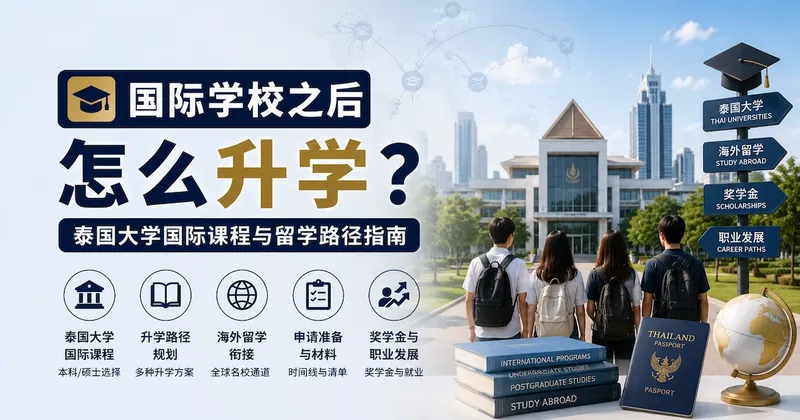
Three Paths After International School
Graduates of Thailand's international school system (IB, A-Level or American curriculum) typically choose among three routes: applying to universities in the West (the traditional main track), enrolling in a Thai university's international program (English-taught, lower cost, close to home), or returning to their home country's university system. This guide focuses on the second — an increasingly pragmatic choice for families already settled in Thailand.
How Good Are Thai International Programs?
Top Thai universities run English-taught international programs admitting local and international students alike. Common choices:
| University | Representative programs | Tuition (THB/year) |
|---|---|---|
| Chulalongkorn University | BBA, economics, engineering, communication | approx. 200,000-300,000 |
| Mahidol University (MUIC) | Full range at the International College | approx. 200,000-300,000 |
| Thammasat University | BBA, politics, journalism | approx. 150,000-250,000 |
| Assumption University (ABAC) | Established private all-English university | approx. 100,000-200,000 |
| KMITL / KMUTT | Engineering international programs | approx. 150,000-250,000 |
Four-year total cost (tuition plus living) usually lands between 600,000 and 1.2 million THB — roughly a quarter to a third of a comparable UK or US degree. Confirm tuition with each university's current published rates.
Admission Requirements
- High school credential: IB, A-Level and American diplomas all accepted; other national diplomas work too, sometimes with a curriculum-matching note for specific majors
- English: IELTS 5.5-6.5 or equivalent TOEFL; top programs ask more; some universities offer their own English test as a substitute
- Standardized tests: popular business programs may require SAT/GSAT; engineering looks at math and science grades
- Application: transcripts, recommendation letters, personal statement; some programs interview
Admissions run 2-3 rounds a year (October to May). First-round acceptance rates are higher for popular programs — start preparing a year ahead.
GED: The Fast Lane for Track-Switchers
The GED (US high school equivalency) is accepted by nearly all Thai university international programs in place of a high school diploma — four subjects passed and you can apply. It's a common route for students switching curricula or wanting to enter a year early. Two cautions: each subject has minimum score requirements and selective programs set higher bars; and a pure-GED profile applying to top programs needs strong supporting material (activities, competitions, essays) to be convincing.
Student Visa Continuity
- After admission, the university issues an acceptance letter for a Non-ED visa application at a Thai embassy abroad (in-country conversion from another visa is sometimes possible — ask first)
- After enrollment the university helps extend the stay to one year at Immigration, renewed annually with an enrollment certificate
- The Non-ED carries no work rights; internships must be arranged through the university within Immigration's rules
- 90-day reporting and re-entry permit rules apply as usual — see our 90-day report and re-entry permit guide
- A parent can hold a guardian visa until the child turns 20; after that the basis changes, and parents staying on need another visa type — see the school and guardian visa guide
Degree Recognition and Careers
Degrees from Thai public universities and the major private ones are widely recognized internationally. If credentials matter for your home country's public sector or licensing bodies, verify the university's standing with your national recognition authority before enrolling — especially for newly launched or joint-venture programs.
FAQ
Can my child apply without our home country's national exam results?
Yes. International programs admit on international-student criteria: high school transcripts, English scores and standardized tests where required. No national exam needed — a natural advantage for international school students.
Can graduates stay and work in Thailand?
Yes, but the employer must sponsor a Non-B visa and work permit, meeting registered capital and Thai staff ratios. Entry-level roles cluster in multinational firms, tourism, education and digital industries; a strong language combination is the core edge.
Is an international program degree different from a Thai-language degree?
The degree certificate carries identical standing; the differences are teaching language and cost. International programs cost roughly 2-4 times the Thai-language track, but for students without Thai they are the only realistic option.
Need Help?
TaiHuBang provides university pathway and visa continuity consulting: program selection, application guidance, GED route planning, Non-ED visas and long-stay solutions for parents. See our visa services, or submit an inquiry — a consultant will reply within 24 hours.
Related Articles
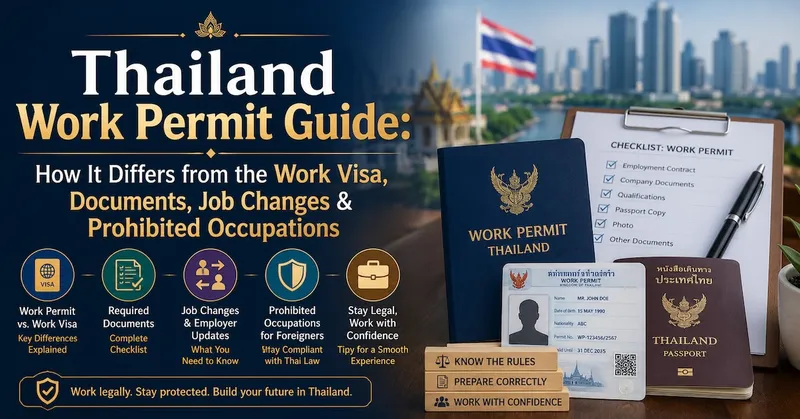
Thailand Work Permit Guide: How It Differs from the Work Visa, Documents, Job Changes & Prohibited Occupations
To work legally in Thailand, a work visa (Non-B) alone isn't enough — you also need a Work Permit, and the two are different: the work visa is permission to enter and stay, while the work permit authorises you to do a specified job for a specified employer. Typically you first hold a Non-B visa, then the company applies for your work permit, and only both together make employment legal. The permit is employer-initiated and tied to a specific company and position, so changing jobs means reapplying or amending it, and the company must meet capital and Thai-to-foreign staff ratio requirements (commonly four Thai employees per foreigner). Thailand also has a list of occupations prohibited or restricted for foreigners; working out of scope or without a permit is illegal and can bring fines, deportation and a blacklist. This guide covers the permit-versus-visa distinction, documents and process, handling job changes, and prohibited occupations, subject to current Ministry of Labour rules.
7/24/2026
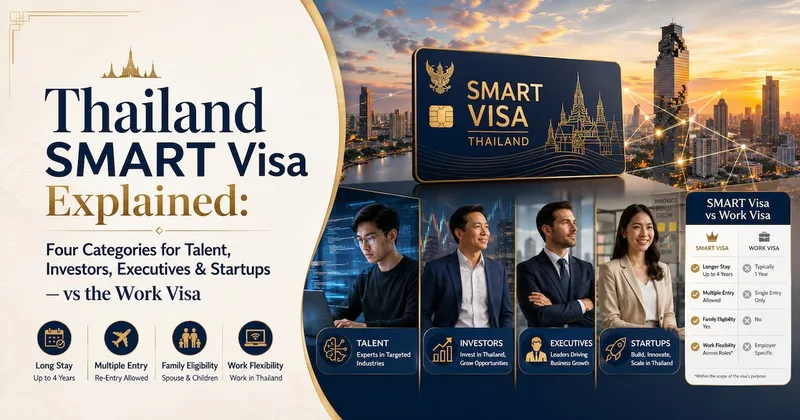
Thailand SMART Visa Explained: Four Categories for Talent, Investors, Executives & Startups — vs the Work Visa
The SMART Visa is Thailand's special visa to attract talent in targeted industries (technology, digital, innovation), in four categories: Highly-Skilled Talent (T), Investor (I), Executive (E) and Startup (S). Its appeal: up to a four-year visa for those who qualify, the ability to work within the approved scope without a separate work permit, 90-day reporting relaxed to once a year, and dependants who can join — with spouses generally allowed to work. But the bar is defined: your role must fall in a BOI-endorsed targeted industry and meet salary or investment thresholds, with certification by the relevant authority, so vetting is stricter than an ordinary work visa. It differs from the standard "work visa + work permit" route, which suits most employed foreigners, whereas SMART targets high-end talent, investors and founders in targeted industries. This guide covers the four categories' requirements, benefits and how to choose between SMART, the work visa and LTR, subject to current BOI and agency rules.
7/22/2026
Thailand LTR Visa Guide: The Four Categories, Requirements, Tax Perks and Ten-Year Residence
The LTR (Long-Term Resident) visa is Thailand's long-stay visa to attract wealthy individuals, affluent retirees, remote-working professionals and highly skilled experts. It offers up to around ten years of residence (typically issued in stages, renewed on continued eligibility), plus perks such as annual reporting instead of 90-day reporting, multiple re-entry, the option of a digital work permit, and preferential personal income tax for some categories. It targets people with higher income, assets or investment, so the bar and paperwork are higher than a tourist visa or DTV — but you get a far more hassle-free long-term status. This guide covers the four LTR categories, their income/asset thresholds, the perks, and how to choose between LTR, the Privilege visa, DTV and retirement visas — subject to the BOI and Immigration's current rules.
7/21/2026