 泰互帮
泰互帮Thailand Work Permit Guide: How It Differs from the Work Visa, Documents, Job Changes & Prohibited Occupations
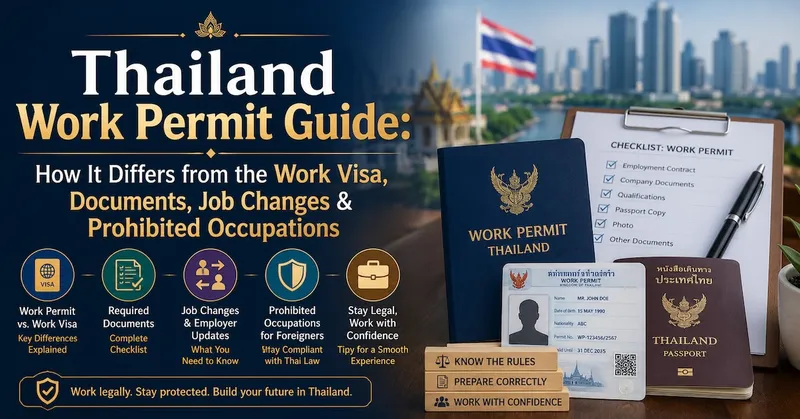
The work visa and work permit are two different things
- Work visa (Non-B) = entry/stay permission: it lets you enter and stay for work purposes, but on its own you can't start working
- Work permit = employment authorisation: it approves you to do a specified job for a specified employer, applied for by the company — only both together make employment legal
- Order of steps: usually get the Non-B visa first, then the company applies for your work permit, then renew both as the visa expires
- For the visa side and job market, see the work visa guide and changing jobs in Thailand
Requirements and documents for a work permit
- A compliant employer: the company needs sufficient registered capital, must meet the Thai-to-foreign staff ratio (commonly four Thai employees per foreigner), and operate and pay taxes normally
- Your documents: passport and Non-B visa, education and work-experience proof, a medical certificate, photos (per Ministry of Labour requirements)
- Company documents: registration papers, financials/tax proof, social security enrolment, job description — company basics in the monthly compliance guide
- The role must genuinely match: the permit states your specific position and workplace, which your actual work must reflect
Changing jobs or employers — what happens to the permit
- The permit is tied to the employer: it's valid only for the current company and position and can't carry over to a new company
- Handle resignation promptly: on leaving, the old permit should be cancelled/returned, and the basis for the Non-B renewal disappears — don't linger in unlawful status
- Reapply at the new employer: the new company must apply for a fresh permit (and handle the visa accordingly); a poor handover leaves a gap
- Amendments for role/location: promotions, transfers or added workplaces require a permit amendment — don't go out of scope yourself
Prohibited occupations and common pitfalls
- Restricted-occupation list: Thailand reserves certain occupations for Thai nationals (some manual labour, crafts, certain guiding roles); confirm your role isn't restricted before applying
- Working without a permit is illegal: working with no permit (including minding a friend's shop or online work deemed done in Thailand) can bring fines, deportation and a blacklist
- Working out of scope: holding a permit for role A but doing role B, or working at a location not on the permit, is out of scope and equally risky
- Fake "nominee" employment: buying a permit without genuine employment exposes the company and individual to penalties — avoid it
- Overstay/lapsed status: keep the permit and visa renewed together; if it lapses, stop working — see the overstay guide
Frequently asked questions
Can I work in Thailand just with a work visa?
No. The work visa (Non-B) is only entry/stay permission for work purposes; to work legally you also need the company to obtain your work permit, which approves you to do a specified job for a specified employer — both together make employment legal. The usual flow is Non-B entry first, then the work permit, then renewing both in sync. Working with only a visa and no permit is unlicensed work and can bring fines, deportation and a blacklist. So don't assume a visa lets you start — the work permit is the key step, subject to current Ministry of Labour rules.
Can I keep my old work permit after changing companies?
No. The permit is tied to your current employer and position and is valid only for the original company, so a new job requires a fresh application. The correct approach: when leaving, have the old permit cancelled/returned and handle the Non-B visa transition; at the new employer, the new company applies for a new permit and handles the visa accordingly. A poor handover leaves an unlicensed gap during which you can't work. Before quitting abruptly or job-hopping often, secure that the new employer can sponsor a permit, to avoid a visa/permit lapse and unlawful status.
Which occupations can foreigners not do in Thailand?
Thailand maintains a list of occupations reserved for Thai nationals — some manual labour, crafts and certain services (like some guiding or street vending) are restricted or prohibited for foreigners, so even with a company you can't get a permit for those roles. Before applying, confirm your actual role isn't on the restricted list, and that the position stated on the permit matches your real work, without going out of scope. The list and enforcement details change and fall under foreign-employment compliance, so whether a specific role is permissible follows current Ministry of Labour rules — if unsure, confirm before signing on.
Need help?
Taihubang offers consultation and support for work permits and work visas: assessing employer eligibility and ratio requirements, personal and company document checklists, permit application/amendment/cancellation guidance, visa-and-permit handover when changing jobs, and checking the prohibited-occupation list. We don't arrange "nominee permits"; everything follows current Ministry of Labour and agency rules, verified officially. See our visa service or submit an enquiry; an adviser replies within 24 hours.
Related Articles

Thailand SMART Visa Explained: Four Categories for Talent, Investors, Executives & Startups — vs the Work Visa
The SMART Visa is Thailand's special visa to attract talent in targeted industries (technology, digital, innovation), in four categories: Highly-Skilled Talent (T), Investor (I), Executive (E) and Startup (S). Its appeal: up to a four-year visa for those who qualify, the ability to work within the approved scope without a separate work permit, 90-day reporting relaxed to once a year, and dependants who can join — with spouses generally allowed to work. But the bar is defined: your role must fall in a BOI-endorsed targeted industry and meet salary or investment thresholds, with certification by the relevant authority, so vetting is stricter than an ordinary work visa. It differs from the standard "work visa + work permit" route, which suits most employed foreigners, whereas SMART targets high-end talent, investors and founders in targeted industries. This guide covers the four categories' requirements, benefits and how to choose between SMART, the work visa and LTR, subject to current BOI and agency rules.
7/22/2026
Thailand LTR Visa Guide: The Four Categories, Requirements, Tax Perks and Ten-Year Residence
The LTR (Long-Term Resident) visa is Thailand's long-stay visa to attract wealthy individuals, affluent retirees, remote-working professionals and highly skilled experts. It offers up to around ten years of residence (typically issued in stages, renewed on continued eligibility), plus perks such as annual reporting instead of 90-day reporting, multiple re-entry, the option of a digital work permit, and preferential personal income tax for some categories. It targets people with higher income, assets or investment, so the bar and paperwork are higher than a tourist visa or DTV — but you get a far more hassle-free long-term status. This guide covers the four LTR categories, their income/asset thresholds, the perks, and how to choose between LTR, the Privilege visa, DTV and retirement visas — subject to the BOI and Immigration's current rules.
7/21/2026
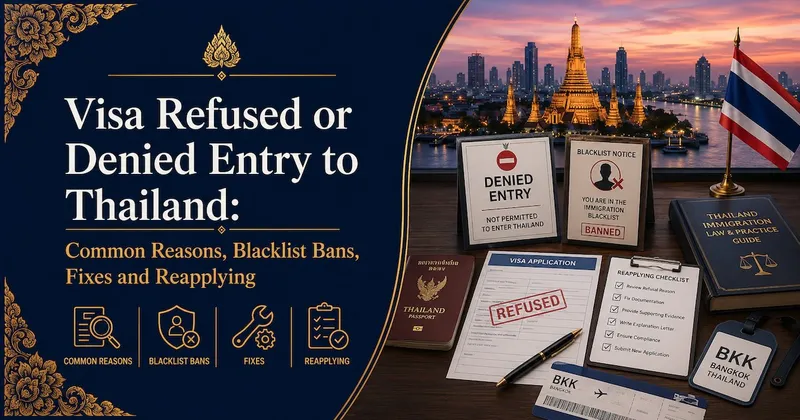
Visa Refused or Denied Entry to Thailand: Common Reasons, Blacklist Bans, Fixes and Reapplying
A refused visa, a stop at the border or being turned back at the airport are among the most stressful moments. First separate two things: a visa refusal at an embassy/consulate, and being denied entry by Immigration at a Thai checkpoint (turned back on the same flight). Thailand has broad discretion over visas and entry, and most refusals/denials have no formal appeal — the right move is to understand the real reason, fix it and reapply or switch to the correct visa. If overstaying etc. put you on a blacklist (entry ban), a ban period applies. This guide covers common reasons, the blacklist mechanism, whether you can appeal, and practical fixes, subject to Thai embassies and Immigration's current rules.
7/12/2026