 泰互帮
泰互帮Visa Refused or Denied Entry to Thailand: Common Reasons, Blacklist Bans, Fixes and Reapplying
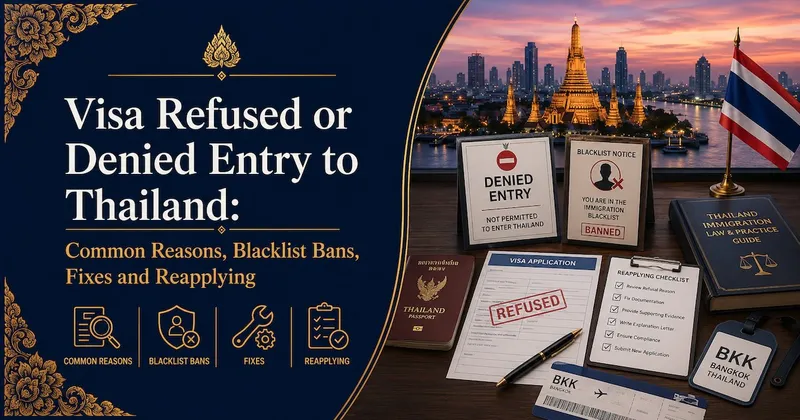
First Separate Them: Refusal, Denial of Entry, Deportation
- Visa refusal: your visa application at a Thai embassy/consulate is refused — you get no visa, usually over documents or the wrong application type
- Denial of entry: you have a visa or visa-exempt entry but an Immigration officer refuses entry at the airport/checkpoint and turns you back — on-the-spot discretion
- Deportation/removal: being required to leave for overstay, illegal work or offences, often carrying an entry ban (blacklist)
- Unsure which visa you need or how long visa-exempt stay lasts? See the visa types overview and tourist visa and entry guide
Why Visas Get Refused: Common Reasons
- Insufficient or unconvincing documents: funds proof, itinerary, invitation, employment/enrolment letters missing or doubtful
- Wrong visa type: what you plan to do doesn't match the visa applied for (e.g. really intending to work but applying for a tourist visa)
- Adverse history: overstays, prior deportation, frequent border runs — see the overstay guide
- Suspected immigration intent or unlawful purpose: the consul suspects you'll stay on or do what the visa doesn't allow
- Bottom line: a refusal usually means this application's documents/type didn't reassure the consul — pin down the reason and you can often turn it around
Why You Get Denied Entry / Turned Back at the Border
- Frequent visa-exempt/tourist entries: many short tourist trips in a short span raise suspicion of de facto long stay or illegal work, and you may be stopped
- Can't show purpose and departure plan: no clear itinerary, no onward ticket, insufficient funds — the officer can refuse entry
- Suspected illegal work: equipment, samples or chats making the officer suspect you're here to work without a work permit
- On the blacklist: an entry ban not yet expired from a past overstay/deportation means direct refusal
- Entry is officer discretion — a visa doesn't guarantee entry; attitude, documents and history all matter
Blacklist and Entry Bans: the Long-Term Cost of Overstaying
- Overstay triggers bans: whether you leave voluntarily or are caught, overstay can bring an entry ban of several years or longer by duration — see the overstay guide for periods
- Deportation is worse: removal for offences usually carries a longer blacklist
- Hard to enter during a ban: while a ban runs, visa applications or entry attempts are likely refused, and forcing it is risky
- Checking/clearing it: whether you're blacklisted and can address it must be verified through official channels — don't believe "pay to wipe it clean" claims
Can You Appeal? Practical Fixes
- Most have no formal appeal: refusals/denials usually have no administrative appeal — rather than dwell on appealing, fix the root cause and reapply
- After a refusal: establish the reason, strengthen documents or switch to the correct visa type, and reapply, with professional help preparing the file if needed
- After a denial: understand the reason honestly; if frequent tourist entries were questioned, get the proper corresponding visa (work, study, retirement, Elite) rather than keep running the border
- If blacklisted: verify the ban and its period, and wait it out or address it through lawful channels — don't force entry during a ban
- Never falsify: forged documents or false statements, once detected, are far worse than a refusal and can mean a long ban
FAQ
If my Thailand visa is refused, can I apply again?
Yes — a refusal generally doesn't bar you from reapplying; the key is finding the real reason and fixing it. Common reasons are weak or doubtful documents, a visa type not matching your actual purpose, or adverse history like overstays. Most refusals have no formal appeal, so rather than appeal, strengthen funds proof, itinerary, employment/enrolment and invitation, or switch to the correct visa type and reapply. Never falsify — detected false documents are far worse than a refusal. If unsure, have a professional review the file, subject to the embassy's current rules.
Why can I be denied entry at the airport even with a visa?
Because entry is the officer's on-the-spot discretion — a visa is a prerequisite, not a guarantee. Common denial situations: frequent visa-exempt/tourist entries in a short span raising suspicion of de facto long stay or illegal work; being unable to show an itinerary or lacking an onward ticket and funds; being suspected of coming to work without a permit; or already being on the blacklist (unexpired entry ban). So arrive with complete documents, a clear purpose and clean history. If you need to stay long or work, get the proper visa rather than repeated tourist entries, subject to Immigration's current rules.
I'm blacklisted for overstaying — how long until I can re-enter Thailand?
It depends on the overstay length and whether you left voluntarily or were caught. Thailand imposes entry bans that scale with duration, from several years to longer, and deportation is usually more severe. During a ban, visa applications or entry attempts are likely refused and forcing it is risky. Whether you're blacklisted and when a ban expires should be verified through official channels — don't trust "pay to clear it" offers. The practical path is to wait out the ban and reapply lawfully. See our overstay guide for specific consequences and periods, subject to Immigration's current rules.
Is it a problem to keep entering Thailand on tourist visas or visa-exempt?
Yes, there's risk. Repeatedly entering on tourist visas or visa-exempt in a short span (border runs) easily makes an officer suspect de facto long stay or working without a permit, and you may be questioned or denied entry at the checkpoint. Tourist status is for short stays; relying on it to live long term is unstable. If you actually need to stay, work, study or retire, get the proper corresponding visa (work visa plus permit, study visa, retirement visa, Elite visa), which is both compliant and spares you the worry of denial, subject to Immigration's current rules.
Need Help?
TaiHuBang offers consultation and document assistance on visa and entry issues: assessing refusal reasons and preparing reapplication files, advice on matching the right visa type, comparing options to move from frequent tourist status to a proper long-stay visa, and guidance on officially verifying blacklist/entry-ban status. We do not falsify documents and make no "guaranteed pass / clearing" promises, with everything subject to Thai embassies and Immigration's current rules. See our visa services or submit an enquiry, and an advisor will reply within 24 hours.
Related Articles
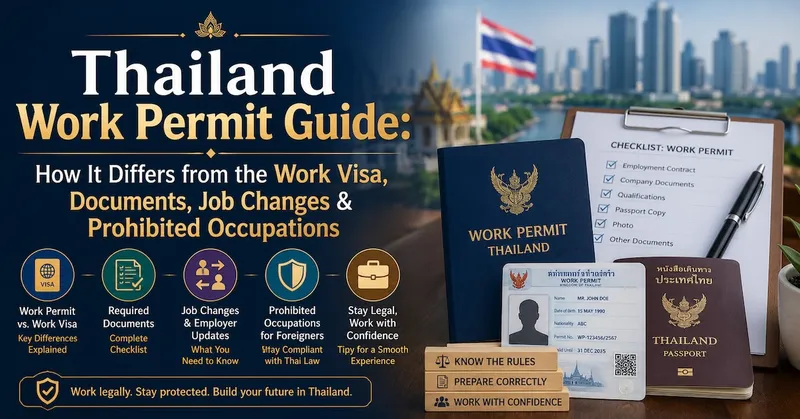
Thailand Work Permit Guide: How It Differs from the Work Visa, Documents, Job Changes & Prohibited Occupations
To work legally in Thailand, a work visa (Non-B) alone isn't enough — you also need a Work Permit, and the two are different: the work visa is permission to enter and stay, while the work permit authorises you to do a specified job for a specified employer. Typically you first hold a Non-B visa, then the company applies for your work permit, and only both together make employment legal. The permit is employer-initiated and tied to a specific company and position, so changing jobs means reapplying or amending it, and the company must meet capital and Thai-to-foreign staff ratio requirements (commonly four Thai employees per foreigner). Thailand also has a list of occupations prohibited or restricted for foreigners; working out of scope or without a permit is illegal and can bring fines, deportation and a blacklist. This guide covers the permit-versus-visa distinction, documents and process, handling job changes, and prohibited occupations, subject to current Ministry of Labour rules.
7/24/2026

Thailand SMART Visa Explained: Four Categories for Talent, Investors, Executives & Startups — vs the Work Visa
The SMART Visa is Thailand's special visa to attract talent in targeted industries (technology, digital, innovation), in four categories: Highly-Skilled Talent (T), Investor (I), Executive (E) and Startup (S). Its appeal: up to a four-year visa for those who qualify, the ability to work within the approved scope without a separate work permit, 90-day reporting relaxed to once a year, and dependants who can join — with spouses generally allowed to work. But the bar is defined: your role must fall in a BOI-endorsed targeted industry and meet salary or investment thresholds, with certification by the relevant authority, so vetting is stricter than an ordinary work visa. It differs from the standard "work visa + work permit" route, which suits most employed foreigners, whereas SMART targets high-end talent, investors and founders in targeted industries. This guide covers the four categories' requirements, benefits and how to choose between SMART, the work visa and LTR, subject to current BOI and agency rules.
7/22/2026
Thailand LTR Visa Guide: The Four Categories, Requirements, Tax Perks and Ten-Year Residence
The LTR (Long-Term Resident) visa is Thailand's long-stay visa to attract wealthy individuals, affluent retirees, remote-working professionals and highly skilled experts. It offers up to around ten years of residence (typically issued in stages, renewed on continued eligibility), plus perks such as annual reporting instead of 90-day reporting, multiple re-entry, the option of a digital work permit, and preferential personal income tax for some categories. It targets people with higher income, assets or investment, so the bar and paperwork are higher than a tourist visa or DTV — but you get a far more hassle-free long-term status. This guide covers the four LTR categories, their income/asset thresholds, the perks, and how to choose between LTR, the Privilege visa, DTV and retirement visas — subject to the BOI and Immigration's current rules.
7/21/2026