 泰互帮
泰互帮Tourist Visa, Visa on Arrival and Visa-Exempt Entry to Thailand: Length of Stay, Documents and Extensions
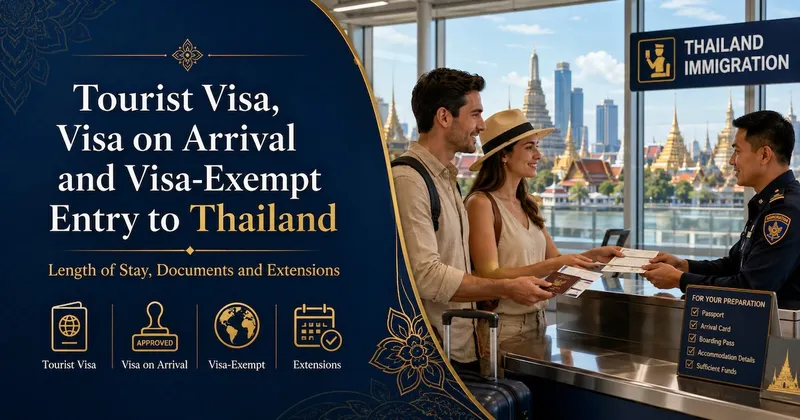
First, the Three Short-Stay Entry Types
- Visa exemption: China and Thailand now have mutual visa exemption, so ordinary passport holders can enter for a short stay and get stamped in at Immigration on arrival — the simplest route, good for sightseeing and short visits. The length of stay shifts with policy, so always check the current official rules before you go
- Visa on Arrival (VOA): processed on the spot at designated checkpoints for specific cases and nationalities, with a shorter stay, on-site queuing and required documents; usually unnecessary for those already visa-exempt
- Tourist Visa (TR / eVisa): applied for before travel via Thailand's eVisa system or an embassy/consulate — suited to those wanting a longer stay or a more secure entry record; single-entry and multiple-entry (METV) forms differ
In short: visa-exempt is easiest for short sightseeing; a tourist visa in advance suits longer stays, frequent trips, or wanting a more secure entry.
Length of Stay and Extensions
- The stay for visa-exempt / tourist visas is whatever the officer stamps in your passport on entry — don't work it out yourself from the visa type; read the stamp, don't guess
- Extensions are possible: most short stays can be extended once at an Immigration office before expiry (commonly 30 days, for an official fee), with an extension form, photos and accommodation documents
- Extend before expiry — once you overstay it's a different matter entirely; see our Thailand overstay guide
What Documents to Prepare
- Passport valid for at least 6 months with blank pages
- Onward or return ticket: often required to show a confirmed departure for visa-exempt and VOA entry
- Proof of accommodation: a hotel booking or host address
- Proof of funds: Immigration may spot-check the funds you carry (cash or equivalent), to the checkpoint's current standard — rarely checked but keep it ready
- A tourist visa (eVisa) additionally needs photos, an itinerary and financial evidence uploaded per the system's checklist
The Risks of Frequent Entries and Border Runs
Using visa-exempt entries repeatedly to live here long term (the "visa run") is a grey-area move, and the risk rises year on year:
- Visa-exempt entries by land are capped in number, and frequent short-interval entries on one passport invite secondary questioning or even refused entry
- Officers have discretion to judge whether you're "living here long term under the guise of tourism," and refused entry comes with no compensation
- If you truly want to stay long term, the right answer is the appropriate long-stay visa — don't force it with short-stay entries; the instability and stress aren't worth it
Turning a Short Entry Into a Long Stay
How you enter determines whether you can convert in-country or must leave and reapply, and the rules change from time to time. For a long stay, pick the right visa for your purpose:
- Digital nomads and remote workers: the DTV digital nomad visa
- Asset holders wanting a hassle-free long stay: the Thailand Elite visa and retirement vs Elite visa comparison
- Working in Thailand: the work visa and work permit; accompanying parents: the guardian visa
Frequently Asked Questions
Do Chinese passport holders still need a visa for Thailand now?
China and Thailand now have mutual visa exemption, so an ordinary passport holder can usually enter visa-free for short sightseeing and get stamped on arrival — the exact stay per the latest Thai Immigration and Chinese embassy announcements (policy changes, so don't rely on old guides' day counts). For a longer stay, frequent trips or extra certainty, you can still get a tourist visa in advance. Checking the latest official rules before travel is safest.
Can visa-exempt stays be extended, and for how long?
Most short stays can be extended once at an Immigration office before expiry (commonly 30 days, for an official fee and with documents). The key is to do it before the stamped expiry date — even one day over counts as overstay, an entirely different matter. Extension counts and days are per Immigration's current rules; for long-term needs, a long-stay visa is far less hassle.
Can I live here long term on repeated visa-exempt entries?
Not advisable. Land visa-exempt entries are capped, and frequent short-interval entries on one passport invite secondary questioning or refused entry, with no compensation for refusal. This is the grey-area "visa run," and the risk keeps rising as policy tightens. If you truly want to stay long term, get the right long-stay visa for your purpose (DTV, Elite, retirement, work visa, etc.).
Do they really check return tickets and funds on entry?
They spot-check, especially on visa-exempt and VOA entry — officers may require a confirmed onward itinerary and the funds you carry, and can refuse entry if you fall short. Most people aren't examined closely, but having a return ticket, proof of accommodation and some cash ready is the safe play — don't gamble. A tourist visa (eVisa) requires these at the application stage per the system's checklist.
Need a Hand?
TaiHuBang provides visa process guidance and document support: advice on choosing an entry method, tourist visa (eVisa) application help, and guidance on in-country extensions and conversions to long-stay visas. We only offer compliant process support — no "guaranteed visa" promises, everything per Immigration's current rules. See our visa service, or submit an inquiry and a consultant will reply within 24 hours.
Related Articles
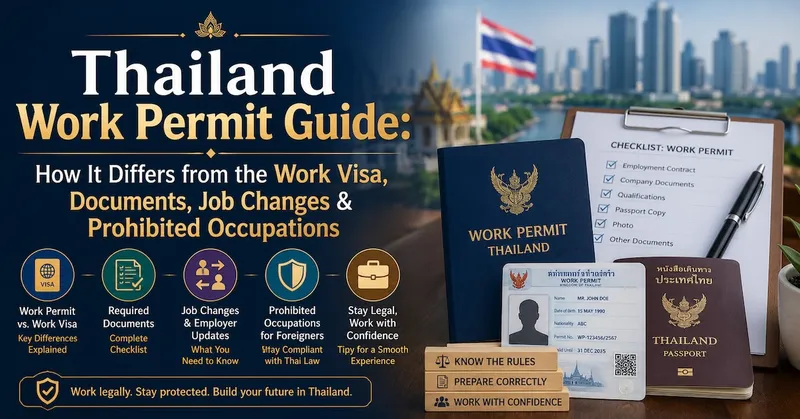
Thailand Work Permit Guide: How It Differs from the Work Visa, Documents, Job Changes & Prohibited Occupations
To work legally in Thailand, a work visa (Non-B) alone isn't enough — you also need a Work Permit, and the two are different: the work visa is permission to enter and stay, while the work permit authorises you to do a specified job for a specified employer. Typically you first hold a Non-B visa, then the company applies for your work permit, and only both together make employment legal. The permit is employer-initiated and tied to a specific company and position, so changing jobs means reapplying or amending it, and the company must meet capital and Thai-to-foreign staff ratio requirements (commonly four Thai employees per foreigner). Thailand also has a list of occupations prohibited or restricted for foreigners; working out of scope or without a permit is illegal and can bring fines, deportation and a blacklist. This guide covers the permit-versus-visa distinction, documents and process, handling job changes, and prohibited occupations, subject to current Ministry of Labour rules.
7/24/2026
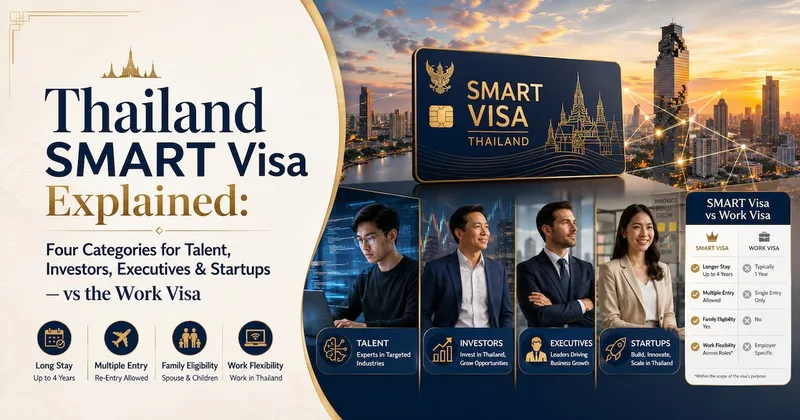
Thailand SMART Visa Explained: Four Categories for Talent, Investors, Executives & Startups — vs the Work Visa
The SMART Visa is Thailand's special visa to attract talent in targeted industries (technology, digital, innovation), in four categories: Highly-Skilled Talent (T), Investor (I), Executive (E) and Startup (S). Its appeal: up to a four-year visa for those who qualify, the ability to work within the approved scope without a separate work permit, 90-day reporting relaxed to once a year, and dependants who can join — with spouses generally allowed to work. But the bar is defined: your role must fall in a BOI-endorsed targeted industry and meet salary or investment thresholds, with certification by the relevant authority, so vetting is stricter than an ordinary work visa. It differs from the standard "work visa + work permit" route, which suits most employed foreigners, whereas SMART targets high-end talent, investors and founders in targeted industries. This guide covers the four categories' requirements, benefits and how to choose between SMART, the work visa and LTR, subject to current BOI and agency rules.
7/22/2026
Thailand LTR Visa Guide: The Four Categories, Requirements, Tax Perks and Ten-Year Residence
The LTR (Long-Term Resident) visa is Thailand's long-stay visa to attract wealthy individuals, affluent retirees, remote-working professionals and highly skilled experts. It offers up to around ten years of residence (typically issued in stages, renewed on continued eligibility), plus perks such as annual reporting instead of 90-day reporting, multiple re-entry, the option of a digital work permit, and preferential personal income tax for some categories. It targets people with higher income, assets or investment, so the bar and paperwork are higher than a tourist visa or DTV — but you get a far more hassle-free long-term status. This guide covers the four LTR categories, their income/asset thresholds, the perks, and how to choose between LTR, the Privilege visa, DTV and retirement visas — subject to the BOI and Immigration's current rules.
7/21/2026