 泰互帮
泰互帮Retiring in Thailand as a Foreigner: Visa, Healthcare, Monthly Budget and Long-Term Care
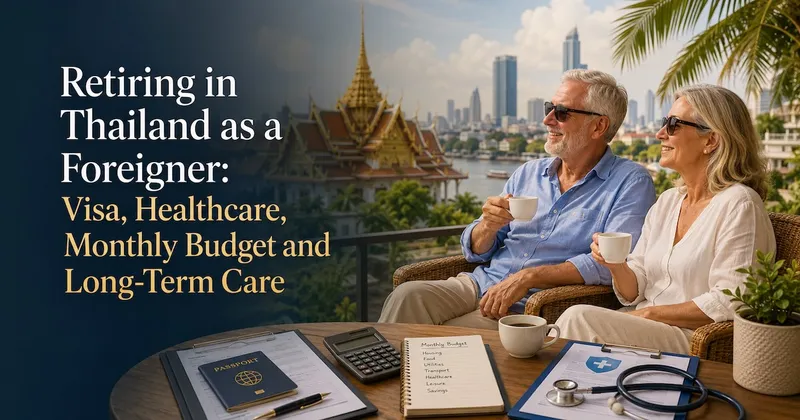
Visa: How the Retirement Visa Works from Age 50
- Age threshold: the retirement visa (Non-O / O-A / O-X types) generally requires the applicant to be at least 50
- Proof of funds: a common standard is around 800,000 baht on deposit in a Thai bank (held for the required months), or qualifying monthly income, or a deposit-plus-income combination — exact figures and holding periods per Immigration's current rules
- Health insurance: some retirement categories (such as O-A) require insurance meeting a set coverage — confirm before applying
- Annual renewal + 90-day report: retirement visas usually renew yearly and, like all long stays, require a 90-day report — don't confuse the two; see our 90-day report and re-entry permit guide
- Under 50 but wanting a long stay? Compare other routes like the Elite visa — see our retirement vs Elite visa comparison and Thailand Elite visa guide
Healthcare: The Part Retirement Should Prioritize
- Public vs private: Thai private hospitals (including several internationally known ones) have great facilities, English or Chinese service and quick treatment, but cost more; public is cheaper but with long queues and a language barrier. Retirees generally lean private plus insurance — for choosing a hospital see our Thailand hospital guide
- Buy insurance early, while healthy: the older you are and the more pre-existing conditions, the harder to insure or the higher the premium — arrange it before arrival or while in good health; for cover see our Thailand health insurance guide and life and accident insurance guide
- Regular medication and chronic-condition management: translate your prescriptions and records, find the local equivalent medicines and a specialist, and don't let chronic care lapse
Monthly Budget: What Retirement Actually Costs
- Location drives cost: Chiang Mai is the most affordable (around 30,000–40,000 baht a month lives well); Bangkok, Phuket and Pattaya run higher; for Chiang Mai's climate and burning-season truth see our Chiang Mai long-stay guide
- The big items: rent, health insurance, daily food and transport; buy vs long-term rent depends on your years here and funds, with foreign-ownership limits covered in the property guides
- Exchange rates and moving money in: if you retire on foreign income or savings, watch the rate and use compliant routes — see our currency exchange and remittance guide; staying 183+ days brings tax residency, see our tax residency and foreign income guide
Long-Term Care and End-of-Life: The Earlier the Better
- Carers and retirement communities: labor costs for carers are low, and retirement communities and elder-care facilities are maturing in Chiang Mai, Bangkok and elsewhere — visit and compare if you'll need long-term care
- Will and inheritance: with property and deposits in Thailand, a Thai will greatly simplifies handling your estate — see our Thailand will and inheritance guide
- Emergency contacts and consular help: keep consular protection, emergency contacts and insurance-claim info on one page — see our emergency help guide
Who Retirement in Thailand Suits — and Doesn't
- Better suited: those with stable foreign income or savings, able to self-pay private care or willing to insure, who enjoy a warm climate and slower pace and have some English or a willingness to join the Chinese community
- Be cautious: those relying entirely on free public care, without an insurance budget, with serious chronic conditions needing frequent specialist follow-up, or unable to adapt to the language and cultural gap
- Best to test with a longer stay (one to three months) before deciding — don't sell up and move in one leap
Frequently Asked Questions
What age and how much money do I need for a Thai retirement visa?
Usually 50 or over, with funds typically around 800,000 baht on deposit in a Thai bank (held for the required months) or qualifying monthly income, and some categories require health insurance — exact figures, holding periods and coverage per Immigration's current rules. Retirement visas usually renew yearly and need a 90-day report. Under 50, consider the Elite visa or other long-stay routes. Policy changes, so verify against the latest official requirements before applying.
Roughly how much does retiring in Thailand cost per month?
It depends on city and lifestyle. Chiang Mai is cheapest — around 30,000–40,000 baht a month lives comfortably; Bangkok, Phuket and Pattaya run higher. The big items are rent, health insurance and daily spending. Renting solo is more flexible than buying for a family. Do budget insurance and potential self-pay care — the part of retirement you can least afford to skimp on. Best to test-live for a month or two and track spending before committing to a long-term plan.
Do I really need health insurance to retire here — isn't public care cheap?
Strongly recommended. Public hospitals are indeed cheap but come with long queues and a language barrier, and retirees have a higher chance of sudden serious illness where a single major private surgery can be substantial out of pocket. And the older you are the harder and pricier to insure — arranging it while healthy and before arrival is most economical. Those with pre-existing conditions should plan even earlier. Choose cover and limits by budget and health.
How do I leave my Thai property and deposits to family when I'm gone?
Making a Thai will in advance is key — with property and deposits here, a local will greatly simplifies matters and spares your family cross-border trips and long legal processes. Also keep your insurance beneficiary, emergency contacts and consular info clear. Foreigners' inheritance in Thailand has its own rules (condo foreign quota, land limits) — see the will and inheritance guide, and settle important arrangements with a professional.
Need a Hand?
TaiHuBang helps retirees settle in Thailand: process guidance for retirement and Elite visas, 90-day report and renewal reminders, accompanied medical interpretation, and referrals for will and insurance matters. All visa matters are per Immigration's current rules, with no "guaranteed visa" promises. See our visa service, or submit an inquiry and a consultant will reply within 24 hours.
Related Articles
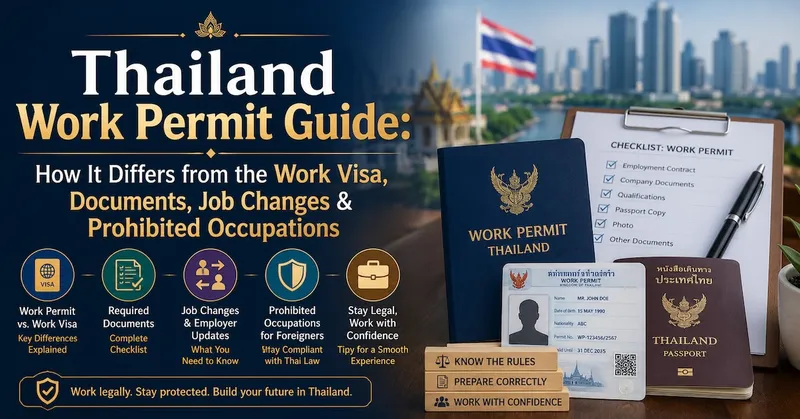
Thailand Work Permit Guide: How It Differs from the Work Visa, Documents, Job Changes & Prohibited Occupations
To work legally in Thailand, a work visa (Non-B) alone isn't enough — you also need a Work Permit, and the two are different: the work visa is permission to enter and stay, while the work permit authorises you to do a specified job for a specified employer. Typically you first hold a Non-B visa, then the company applies for your work permit, and only both together make employment legal. The permit is employer-initiated and tied to a specific company and position, so changing jobs means reapplying or amending it, and the company must meet capital and Thai-to-foreign staff ratio requirements (commonly four Thai employees per foreigner). Thailand also has a list of occupations prohibited or restricted for foreigners; working out of scope or without a permit is illegal and can bring fines, deportation and a blacklist. This guide covers the permit-versus-visa distinction, documents and process, handling job changes, and prohibited occupations, subject to current Ministry of Labour rules.
7/24/2026
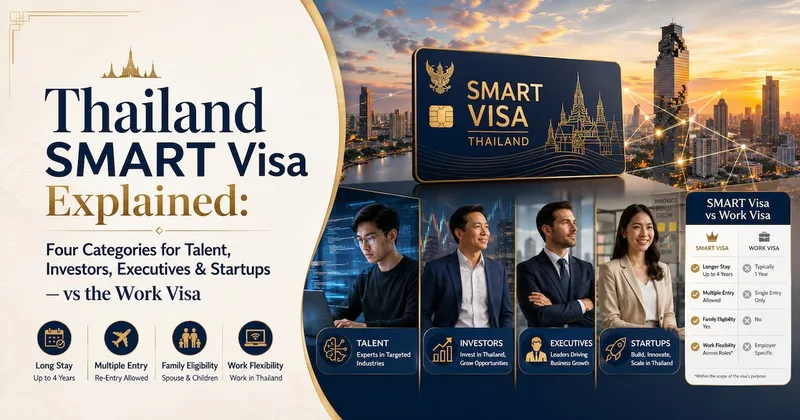
Thailand SMART Visa Explained: Four Categories for Talent, Investors, Executives & Startups — vs the Work Visa
The SMART Visa is Thailand's special visa to attract talent in targeted industries (technology, digital, innovation), in four categories: Highly-Skilled Talent (T), Investor (I), Executive (E) and Startup (S). Its appeal: up to a four-year visa for those who qualify, the ability to work within the approved scope without a separate work permit, 90-day reporting relaxed to once a year, and dependants who can join — with spouses generally allowed to work. But the bar is defined: your role must fall in a BOI-endorsed targeted industry and meet salary or investment thresholds, with certification by the relevant authority, so vetting is stricter than an ordinary work visa. It differs from the standard "work visa + work permit" route, which suits most employed foreigners, whereas SMART targets high-end talent, investors and founders in targeted industries. This guide covers the four categories' requirements, benefits and how to choose between SMART, the work visa and LTR, subject to current BOI and agency rules.
7/22/2026
Thailand LTR Visa Guide: The Four Categories, Requirements, Tax Perks and Ten-Year Residence
The LTR (Long-Term Resident) visa is Thailand's long-stay visa to attract wealthy individuals, affluent retirees, remote-working professionals and highly skilled experts. It offers up to around ten years of residence (typically issued in stages, renewed on continued eligibility), plus perks such as annual reporting instead of 90-day reporting, multiple re-entry, the option of a digital work permit, and preferential personal income tax for some categories. It targets people with higher income, assets or investment, so the bar and paperwork are higher than a tourist visa or DTV — but you get a far more hassle-free long-term status. This guide covers the four LTR categories, their income/asset thresholds, the perks, and how to choose between LTR, the Privilege visa, DTV and retirement visas — subject to the BOI and Immigration's current rules.
7/21/2026