 泰互帮
泰互帮Buying and Living in Pattaya and Chonburi: Areas, Real Yields and Villa Risks
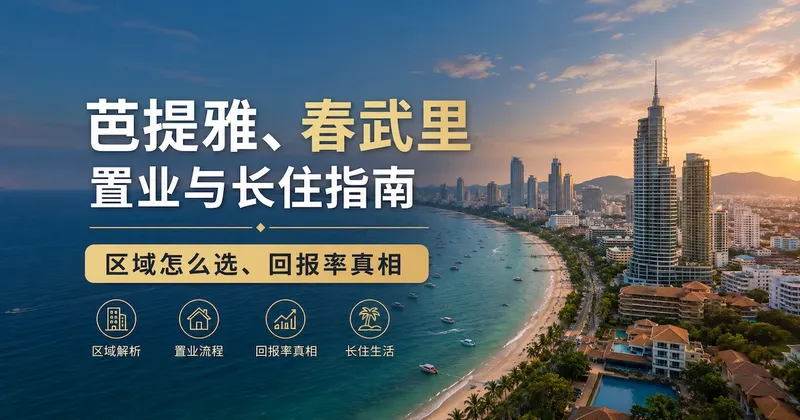
Why Pattaya and Chonburi?
Chonburi province anchors Thailand's Eastern Economic Corridor (EEC), with Japanese and Chinese factories concentrated around Sriracha, while Pattaya is a mature seaside resort city. The pull for Chinese buyers is practical: low absolute prices for sea-view condos (plenty of one-bedrooms at 1.5–4 million THB), about 1.5 hours from Suvarnabhumi, living costs below Bangkok, and real high-season rental demand. Foreign condo ownership rules — the 49% quota and inbound funds evidence — are nationwide; see our property purchase guide.
Which Part of Pattaya?
- Central Pattaya: most convenient and loudest — bar streets and malls; suits short-let investment, not family living
- Jomtien: the most concentrated Chinese-buyer district — deep condo supply, mature Chinese agents and restaurants, a cleaner beach than downtown; works for both living and letting
- Na Jomtien / Bang Saray: further south, quiet resort living with low-density sea-view projects; good for retirement living, but rental income swings hard between seasons
- East Pattaya: the villa zone east of the railway — pool houses from two to three million THB, but strictly car-dependent
- Sriracha: a livable industrial-belt city with an established Japanese community and international schools including Rugby School Thailand; suits families working in the EEC
- Bang Saen: a university town, deeply local, cheapest housing — for very tight budgets comfortable without Chinese-language infrastructure
Is the "8% Guaranteed Return" Real?
Unpack the marketing: most "guaranteed returns" are simply priced into the unit upfront, and once the guarantee period (typically 3–5 years) ends, rents revert to market. Real long-let gross yields on Pattaya condos generally run 4–6%; net yields fall further after management fees (commonly 35–60 THB/sqm/month), repairs, vacancy and letting commissions. Daily short-lets earn more in high season but demand hands-on operation, sit under the Hotel Act, and are banned outright by many buildings' juristic rules. Before buying, read the fee schedule, letting restrictions and the guarantee contract's default clauses — condo governance is covered in our condo fees and juristic management guide.
What About Villas and the Land Problem?
Foreigners cannot own Thai land, and every villa workaround has a price: a 30-year leasehold (renewal promises exist but their enforceability is uncertain), ownership by a Thai spouse, or a Thai company holding the land (a shell structure holding only land risks being ruled an illegal nominee arrangement). There is no zero-risk structure — only structures whose risks you know and accept. Commission an independent lawyer for due diligence before signing, and never rubber-stamp with the developer's own lawyer. Structures should follow formal legal advice.
Is the Living Infrastructure Enough?
- Healthcare: Bangkok Hospital Pattaya is the regional flagship private hospital with Chinese-language coordinators; critical cases reach Bangkok in 1.5 hours — the wider system is described in our medical care guide
- Education: Regents International School Pattaya and Rugby School Thailand (Chonburi) cover K12 at fees below equivalent Bangkok schools
- Transport: in-town hops run on songthaews (10–20 THB) and motorbikes, but family life essentially requires a car — see our driver's license guide and car buying guide
- Long-stay status: over-50s default to the retirement visa; under-50s look at Elite or DTV — compared in our retirement vs Elite guide
FAQ
How easy is it to resell a Pattaya condo?
Liquidity is the market's honest weakness: supply is deep, resale competition fierce, and exits run months or years, with distress sales taking real discounts. Units within the foreign quota sell relatively better. Buy for resale from day one — near the beach and amenities, reputable developer, compact layouts — and plan holding periods of five years or more.
Can you live in Pattaya without a car?
Along Jomtien and the central coastal strip, yes: songthaews cover the main roads and delivery and ride-hailing are mature. But supermarket runs, hospital visits, school drop-offs and errands in Sriracha all strain without one, and East Pattaya villa life is impossible car-free. Long-stay families should budget as if a car is mandatory.
Sriracha or Pattaya for raising children?
Sriracha is the more domestic choice: calm, safe, quality-of-life amenities built up by the Japanese community, and short school runs — at the cost of less entertainment and prices propped up by industrial payrolls. Pattaya wins on amenities and seaside living if you deliberately settle away from the tourist zones. Working in the EEC, choose Sriracha; pure retirement or holiday living, choose the Jomtien–Na Jomtien line.
Will the high-speed rail and new airport lift prices?
The three-airport high-speed rail and U-Tapao expansion are EEC flagship projects, but construction has slipped repeatedly and delivery timing is uncertain. The sound posture: treat them as long-term upside, not a reason to buy — judge the deal on today's rent and use value, and count infrastructure as bonus if it lands. Follow official project announcements.
Need Help?
TaiHuBang supports property purchases: contract review and title due diligence, legal opinions on villa holding structures, rental-guarantee risk assessment and transfer accompaniment. See our legal services, or submit an inquiry — a consultant will reply within 24 hours.
Related Articles

Can a Thai Company Legally Hold Land or Property? Nominee Risks, Compliant Structures & Alternatives
Since foreigners can't directly own Thai land or landed houses, some think of "registering a Thai company to hold the land." That route exists in specific compliant cases, but the most common version on the market — using Thai people as nominee shareholders to make up 51% Thai ownership while a foreigner actually controls the company — is an illegal nominee arrangement: Thai law prohibits using nominees to circumvent the ban on foreign land ownership, and if caught you can face forced disposal of the land, fines and even criminal liability, with the nominee Thais also liable. True compliance depends on whether the company genuinely operates and whether the Thai shareholders genuinely invest and hold rights — not a shell set up purely to hold land. For safer holding, foreigners more commonly buy a freehold condo (which foreigners may own), sign a long-term lease (leasehold, up to about 30 years, renewable), or use BOI/special permits where qualified. This guide covers the red lines of company land-holding, nominee risks and safer alternatives, subject to the Land Code; consult a lawyer for major decisions.
8/4/2026
You Bought Property in Thailand — Now How Do You Stay Legally? A Property Owner's Visa Guide
Buying property in Thailand doesn't let you stay legally — a purchase carries no residency, and you still need a valid visa to live there long-term. Common lawful long-stay routes for owners include: a retirement visa for those 50+ retiring, an Elite visa for easy long stays, the LTR 10-year visa for qualifying high-asset/remote/specialist profiles, a work visa for the employed, a dependant visa if your spouse is Thai, and DTV for remote workers. Which to choose depends on your age, whether you work, your income/assets and your long-stay goal — and has little to do with which property you bought. Owners should also mind obligations like 90-day reporting and TM30 address notification. This guide explains a property owner's visa options by profile and how to pair property with a visa, subject to current Immigration and agency rules.
8/1/2026
Living in Thailand Long-Term: Elite Visa or Buy Property — Which Is Worth It? Budget, Goals & Flexibility
Planning to live in Thailand long-term, many agonise over spending the budget on an Elite visa membership or on property. In fact the two solve different problems and don't replace each other: the Elite (Thailand Privilege) visa solves "what lawful status lets you stay long-term" (long-stay convenience, but no work rights and it expires or must be renewed/repurchased), while buying property solves "where to live and whether to sink assets into Thailand" (own-use/investment, but buying grants no residency). To truly live long-term you usually need both — a visa for status and housing (rented or bought) for a home — not one or the other. If the budget stretches to only one first, it comes down to your core goal: for lawful long stay first, choose the visa; for asset landing or long-term own-use first, consider buying but still arrange a visa. This guide weighs them across the problem solved, cost nature, flexibility and exit difficulty, subject to current Immigration and agency rules.
8/1/2026