 泰互帮
泰互帮Buying a Car in Thailand as a Foreigner: Registration, Loans and Ownership Transfer
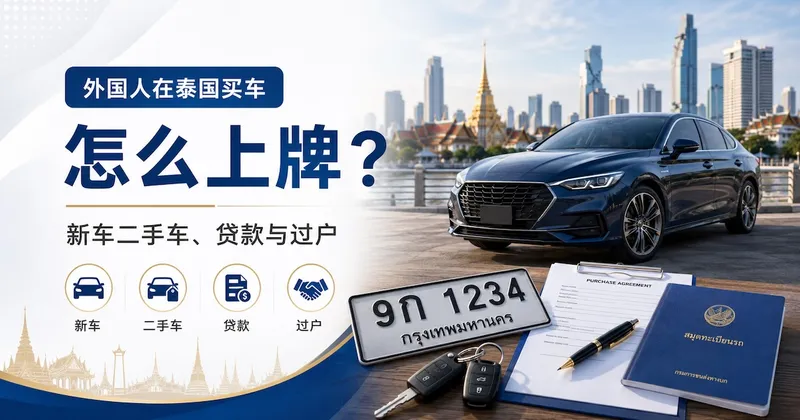
Can Foreigners Buy a Car in Thailand?
Yes. Foreigners on any visa can buy a new or used car in Thailand with cash and register it in their own name. The difference: holders of long-term visas (work visa, Privilege/Elite visa, retirement visa) with a work permit or proof of residence have a smoother process and are the only ones with a realistic chance of financing. Tourists can still buy outright, but some Department of Land Transport (DLT) offices ask for more residence documentation.
Buying a New Car
- Choose and reserve: test drive at the dealer, pay a deposit (typically 5,000-20,000 THB)
- Prepare documents: passport, valid visa, proof of residence (work permit, Certificate of Residence from Immigration based on your TM30 record, or an address letter from your embassy)
- Pay and collect: full payment or loan disbursement, then take delivery
- Registration: the dealer usually handles registration and insurance; you drive on red (temporary) plates until the white plates arrive, normally within 2-6 weeks
What to Check When Buying Used
- Verify the Blue Book (vehicle registration book): owner name, engine number, and chassis number must match the actual car
- Check for outstanding finance: a car whose Blue Book is held by a finance company cannot be transferred directly
- Check fines and unpaid tax: have the seller clear them before transfer
- Do the transfer in person at the DLT: the vehicle is inspected and the name changed on the spot, avoiding agent fraud
Car Loans for Foreigners
Thai finance companies generally require: a valid long-term visa plus work permit (usually with one year or more remaining), proof of income in Thailand (employment contract, payslips, bank statements), and a higher down payment than Thai nationals (commonly 25%-50%). Some brand-affiliated finance companies are more flexible; approval is case by case. Financing on a tourist visa is essentially impossible.
Ownership Transfer (Used Cars)
- Buyer and seller (or an agent with power of attorney) go to the DLT where the vehicle is registered
- Submit: Blue Book, sale contract, both parties' documents (foreigner: passport + visa + proof of residence), transfer application form
- Vehicle inspection on site (engine and chassis numbers checked)
- Pay the transfer fee (a few hundred THB) plus any applicable taxes
- Name changed in the Blue Book, usually the same day or within a few working days
Yearly Running Costs
| Item | Notes | Approx. cost (THB/year) |
|---|---|---|
| Road tax (tax sticker) | Based on engine size and age | 1,000-7,000 |
| Compulsory insurance (Por Ror Bor) | Legally required third-party cover | 600-1,200 |
| Voluntary insurance (Class 1) | Recommended for new cars | 12,000-25,000 |
| Annual inspection (TorRorOr) | Required yearly from the 7th year | 200-400 |
FAQ
Can I buy and register a car on a tourist visa?
You can buy with cash. For registration you need proof of residence — usually a Certificate of Residence from Immigration (based on your TM30), or an embassy address letter accepted by some offices. Requirements vary by DLT office, so call ahead.
Should I register the car under a Thai friend's or a company's name?
Registering under someone else's name is not recommended — legally the car belongs to the registered owner, and you have little recourse in a dispute. Company ownership makes sense only for a genuinely operating business and has tax implications; consult an accountant first.
Can I buy a car that still has finance on it?
Yes, but the sequence is: loan settled → finance company releases the Blue Book → transfer. Make sure payment and Blue Book release happen simultaneously through a reputable channel.
Need Help?
TaiHuBang assists with purchase contract review, accompanied ownership transfer, and loan document consulting. See our legal consulting service, or submit an inquiry — a consultant will reply within 24 hours.
Related Articles
Can a Thai Company Legally Hold Land or Property? Nominee Risks, Compliant Structures & Alternatives
Since foreigners can't directly own Thai land or landed houses, some think of "registering a Thai company to hold the land." That route exists in specific compliant cases, but the most common version on the market — using Thai people as nominee shareholders to make up 51% Thai ownership while a foreigner actually controls the company — is an illegal nominee arrangement: Thai law prohibits using nominees to circumvent the ban on foreign land ownership, and if caught you can face forced disposal of the land, fines and even criminal liability, with the nominee Thais also liable. True compliance depends on whether the company genuinely operates and whether the Thai shareholders genuinely invest and hold rights — not a shell set up purely to hold land. For safer holding, foreigners more commonly buy a freehold condo (which foreigners may own), sign a long-term lease (leasehold, up to about 30 years, renewable), or use BOI/special permits where qualified. This guide covers the red lines of company land-holding, nominee risks and safer alternatives, subject to the Land Code; consult a lawyer for major decisions.
8/4/2026
You Bought Property in Thailand — Now How Do You Stay Legally? A Property Owner's Visa Guide
Buying property in Thailand doesn't let you stay legally — a purchase carries no residency, and you still need a valid visa to live there long-term. Common lawful long-stay routes for owners include: a retirement visa for those 50+ retiring, an Elite visa for easy long stays, the LTR 10-year visa for qualifying high-asset/remote/specialist profiles, a work visa for the employed, a dependant visa if your spouse is Thai, and DTV for remote workers. Which to choose depends on your age, whether you work, your income/assets and your long-stay goal — and has little to do with which property you bought. Owners should also mind obligations like 90-day reporting and TM30 address notification. This guide explains a property owner's visa options by profile and how to pair property with a visa, subject to current Immigration and agency rules.
8/1/2026

Living in Thailand Long-Term: Elite Visa or Buy Property — Which Is Worth It? Budget, Goals & Flexibility
Planning to live in Thailand long-term, many agonise over spending the budget on an Elite visa membership or on property. In fact the two solve different problems and don't replace each other: the Elite (Thailand Privilege) visa solves "what lawful status lets you stay long-term" (long-stay convenience, but no work rights and it expires or must be renewed/repurchased), while buying property solves "where to live and whether to sink assets into Thailand" (own-use/investment, but buying grants no residency). To truly live long-term you usually need both — a visa for status and housing (rented or bought) for a home — not one or the other. If the budget stretches to only one first, it comes down to your core goal: for lawful long stay first, choose the visa; for asset landing or long-term own-use first, consider buying but still arrange a visa. This guide weighs them across the problem solved, cost nature, flexibility and exit difficulty, subject to current Immigration and agency rules.
8/1/2026