 泰互帮
泰互帮Can a Thai Company Legally Hold Land or Property? Nominee Risks, Compliant Structures & Alternatives
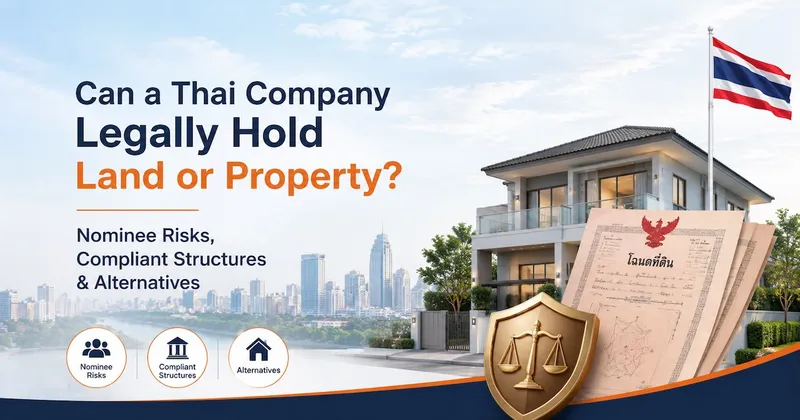
The red line: foreigners can't directly own land, and company nominees are a trap
- Foreigners can't directly own land/landed houses: a basic Land Code limit — condos yes, land no; on what you can buy see the foreigner's property guide
- The common illegal version of "company holding land": using Thai nominee shareholders to reach 51% Thai ownership while a foreigner truly controls a shell set up only to hold land — a prohibited nominee circumvention
- The consequences are heavy: if deemed a nominee arrangement, you can face forced disposal of the land, fines, even criminal liability, with the nominee Thais also liable
- Watch for such "packaging" at the buying stage — see top property-buying pitfalls
What kind of company land-holding might be compliant?
- Genuine operations: the company exists for real business with actual activity — not a shell "just to hold land"
- Genuine Thai shareholders: Thai shareholders who genuinely invest and truly hold rights and dividends — not paid to lend their name under a secret "waiver" agreement
- A structure that withstands scrutiny: shareholding, fund sources and control must survive an agency review; covert 100% foreign control is a nominee arrangement
- The essential distinction: compliance turns on "genuine operations + genuine Thai shareholders," while holding-by-nominee is illegal — a line only a lawyer should judge case by case; don't copy a template
Safer alternatives (what most people use)
- Buy a freehold condo: foreigners may legally own freehold condos (within the building's foreign quota) with compliant fund remittance — the easiest way to hold; see how owners stay long-term
- Long-term lease (leasehold): for land/villas, a registered lease up to about 30 years with renewal terms gives long-term use rather than ownership
- A Thai spouse: land held by a Thai spouse has its own rules (fund-source declarations, etc.) — follow them and consult a lawyer
- BOI/special permits: qualifying BOI-promoted projects may hold land for operations under specific conditions — see the BOI guide
- Inheritance: passing property to family — see foreign property inheritance
If you genuinely use a company structure, watch this
- Real business first, then land: reversing the order (deciding to hold land, then assembling a company) is the fastest way to trip the nominee wire
- Count the compliance cost: the company needs ongoing bookkeeping, tax and audit — see monthly compliance and accounting outsourcing
- No secret side-agreements: having Thai shareholders sign a "waiver/holding-on-trust" side deal is the fatal evidence if investigated
- A lawyer for major decisions: land-holding structures carry criminal exposure, so have a licensed lawyer design for your specific case; this article isn't legal advice
Frequently asked questions
Can a foreigner buy land by registering a Thai company?
In theory a Thai company can hold land, but for a foreigner this route is high-risk and easily illegal. It turns on whether the company genuinely operates and whether Thai shareholders genuinely invest and hold rights. The most common market practice — using Thai people as nominees to make up 51% Thai ownership while a foreigner fully controls a shell set up only to hold land — is a prohibited nominee arrangement, and if caught can lead to forced disposal of the land, fines or even criminal liability, with the nominee Thais also liable. To hold land/villas lawfully, a long-term leasehold, a freehold condo, or BOI where qualified are safer — consult a lawyer, subject to the current Land Code.
What happens if I use Thai nominee shareholders to hold land?
The consequences can be serious. Using Thai nominee shareholders to circumvent the ban on foreign land ownership is expressly prohibited. If an agency deems it a nominee arrangement, you can face forced disposal/loss of the land, fines, even criminal liability for those involved, and the Thai nominees are liable too. Having them sign "waiver" or "holding-on-trust" side agreements is exactly the direct evidence used against you. This isn't a grey area that's fine "because everyone does it" — it's a red line with real enforcement risk. To hold land/villas, use compliant alternatives and consult a lawyer rather than gamble.
To avoid the trap, how can a foreigner legally hold property?
Several common, relatively safe ways: first buy a freehold condo, which foreigners may legally own (within the building's foreign quota) with compliant fund remittance — the easiest; second sign a registered long-term lease (leasehold) on land/villas, up to about 30 years with renewal terms, for long-term use; third, if your spouse is Thai, have them hold land per the rules (fund declarations, etc.); fourth, qualifying BOI projects may hold land for operations under conditions. All are far safer than "company-nominee land-holding." The choice depends on your purpose (own-use/investment/business) and status, so consult a lawyer for major decisions, subject to current rules.
Need help?
Taihubang advises on compliant property-holding structures and connects you with lawyers: assessing whether a freehold condo, long-term lease or (where qualified) BOI suits you, explaining the legal red lines of company land-holding and nominees, and helping you avoid nominee traps. We expressly don't arrange illegal nominees; this article and our consultation aren't legal advice, and major decisions rely on a licensed lawyer's case-specific opinion, subject to the Land Code and related rules. See our legal service or submit an enquiry; an adviser replies within 24 hours.
Related Articles
You Bought Property in Thailand — Now How Do You Stay Legally? A Property Owner's Visa Guide
Buying property in Thailand doesn't let you stay legally — a purchase carries no residency, and you still need a valid visa to live there long-term. Common lawful long-stay routes for owners include: a retirement visa for those 50+ retiring, an Elite visa for easy long stays, the LTR 10-year visa for qualifying high-asset/remote/specialist profiles, a work visa for the employed, a dependant visa if your spouse is Thai, and DTV for remote workers. Which to choose depends on your age, whether you work, your income/assets and your long-stay goal — and has little to do with which property you bought. Owners should also mind obligations like 90-day reporting and TM30 address notification. This guide explains a property owner's visa options by profile and how to pair property with a visa, subject to current Immigration and agency rules.
8/1/2026
Living in Thailand Long-Term: Elite Visa or Buy Property — Which Is Worth It? Budget, Goals & Flexibility
Planning to live in Thailand long-term, many agonise over spending the budget on an Elite visa membership or on property. In fact the two solve different problems and don't replace each other: the Elite (Thailand Privilege) visa solves "what lawful status lets you stay long-term" (long-stay convenience, but no work rights and it expires or must be renewed/repurchased), while buying property solves "where to live and whether to sink assets into Thailand" (own-use/investment, but buying grants no residency). To truly live long-term you usually need both — a visa for status and housing (rented or bought) for a home — not one or the other. If the budget stretches to only one first, it comes down to your core goal: for lawful long stay first, choose the visa; for asset landing or long-term own-use first, consider buying but still arrange a visa. This guide weighs them across the problem solved, cost nature, flexibility and exit difficulty, subject to current Immigration and agency rules.
8/1/2026
Can Buying Property Meet a Thai Visa's Investment Threshold? The LTR High-Net-Worth Route Explained
People often ask whether buying property in Thailand can earn a long-term visa. The answer needs care: buying alone grants no visa, but certain long-term visas — especially the LTR high-net-worth category (Wealthy Global Citizen) — set "investment into Thailand at a threshold" as one condition, and property investment may count toward that requirement where it complies. That is "using a purchase to meet a visa threshold," not "a purchase automatically granting a visa." To use property this way, you typically must meet multiple thresholds — total assets, annual income, and investment into Thailand (which can include property, government bonds, direct investment) — with defined rules on investment form, valuation and holding, and strict documentation. This guide explains the relationship between property investment and visa thresholds, the LTR high-net-worth category's broad requirements, and how this differs from "buying doesn't grant status," subject to current BOI and agency rules on qualifying investment.
8/1/2026