 泰互帮
泰互帮Living Long-Term in Chiang Mai: Areas, the Burning Season and Monthly Costs

Who Is Chiang Mai For?
Chiang Mai is Thailand's second city but a different temperament from Bangkok: living costs 30–50% lower, effectively no traffic jams, a pleasantly cool dry season, and deeply established nomad and retiree communities. The weaknesses are just as clear: the February–April burning season, no rail transit so life runs on wheels, and a thin job market — it suits people whose income doesn't depend on local employment (remote workers, retirees, school families), not job seekers.
Which Area to Live In
- Old City: atmospheric and tourist-dense, old housing stock, few new condos — great for a short stay, but most long-stayers move out
- Nimman: the nomad and cafe headquarters, dense condos, walkable life, and the city's highest rents (one-bedrooms about 12,000–20,000 THB/month)
- Hang Dong / south of the airport: the villa belt — 8,000–25,000 THB/month rents detached houses with gardens, international schools line this corridor; first choice for families, strictly car-based
- Mae Rim: the northern valley, the best natural setting, home to Prem International School and its boarding and accompanying families
- San Kamphaeng / San Sai direction: strongly local and cheap, for tight budgets comfortable in a Thai-language environment
What Does a Month Cost?
- Rent: condo one-bedrooms 8,000–15,000 THB (Nimman core a tier higher); detached villas 15,000–35,000 THB, roughly double the space of Bangkok at the same price
- Food: local meals 50–80 THB; 6,000–10,000 THB/month feeds one person very well
- Transport: no BTS/MRT; songthaews start at 30 THB but route loosely, so long-stayers buy a motorbike or car — see our driver's license guide and car buying guide
- A single long-stayer commonly runs 20,000–35,000 THB/month all-in — 30%+ below Bangkok at equal quality of life (your consumption mix decides)
How Bad Is the Burning Season, Really?
In the late dry season (roughly February to mid-April), agricultural burning across the north combines with valley topography to push Chiang Mai's PM2.5 regularly into the world's worst-city rankings; outdoor activity suffers on heavy days, hardest on children and anyone with respiratory sensitivity. How residents actually cope: air purifiers at home and an AQI app always on, less outdoor time in the peak, and a solid share simply leave for the islands or home for those two months. Price the burning season into the decision — it is part of the Chiang Mai lifestyle, not a freak event. On healthcare, private hospitals including Bangkok Hospital Chiang Mai cover routine needs and checkups well; see our medical care guide.
Which Visa Route?
- Remote workers: the DTV (Destination Thailand Visa) is the current mainstream path — see our DTV guide
- Over 50: the retirement visa renews annually with friendly financial thresholds; bigger budgets wanting simplicity look at Elite — compared in our retirement vs Elite guide
- School families: enroll the child, then a guardian visa for the parent — see the guardian visa guide; Chiang Mai international school fees typically run 30%+ below equivalent Bangkok schools
- The long-stay housekeeping — 90-day reports and re-entry permits — is covered in our 90-day report guide
Is Buying Worth It?
Chiang Mai condos are cheap (new city-center builds commonly 60,000–100,000 THB/sqm), but see two things clearly: rental demand is long-let and price growth historically mild, so the investment case is weaker than the live-in case; and villa land mostly cannot be foreign-owned, with the same holding-structure legal risks as anywhere in Thailand. Buy primarily to live in, keep the budget comfortable, and run formal title due diligence — foreign ownership rules are in our property purchase guide.
FAQ
Do you have to leave during the burning season?
Depends on constitution and tolerance. Many residents ride it out with purifiers and reduced outdoor time; a meaningful share schedule two months away in the southern islands every year. Families with young children, elderly members or respiratory conditions should plan as if leaving is necessary — and book flights and island stays early, since it's high season.
Can you live in Chiang Mai without riding a motorbike?
Yes, within a limited radius. Around Nimman, walking plus ride-hailing works; in Hang Dong or Mae Rim, nothing moves without a vehicle. Grab and Bolt cover the city at prices below Bangkok, but heavy reliance adds up. Past six months of residence, a license plus a used car or motorbike is close to mandatory.
Is 20,000 THB a month enough for a digital nomad?
Enough, at the lean end: an 8,000–10,000 THB one-bedroom, mostly local food, motorbike transport. The archetypal nomad life — Nimman condo, cafe workdays, weekly Western meals — sits more comfortably at 25,000–35,000 THB. Earning in dollars or RMB, Chiang Mai remains first-tier value among nomad cities worldwide.
Chiang Mai or Bangkok for a family with children?
Budget and lifestyle decide. Chiang Mai wins on school fees, housing costs, nature and short school runs; Bangkok wins on school depth (the elite legacy schools), healthcare and career options. Young children + limited budget + remote-working parents favors Chiang Mai; chasing top-tier schools or a local career favors Bangkok — see our Bangkok neighborhood guide.
Need Help?
TaiHuBang supports long-stay relocation: visa route assessment and document assistance, lease and purchase contract review, and international school selection. See our visa services, or submit an inquiry — a consultant will reply within 24 hours.
Related Articles

Can a Thai Company Legally Hold Land or Property? Nominee Risks, Compliant Structures & Alternatives
Since foreigners can't directly own Thai land or landed houses, some think of "registering a Thai company to hold the land." That route exists in specific compliant cases, but the most common version on the market — using Thai people as nominee shareholders to make up 51% Thai ownership while a foreigner actually controls the company — is an illegal nominee arrangement: Thai law prohibits using nominees to circumvent the ban on foreign land ownership, and if caught you can face forced disposal of the land, fines and even criminal liability, with the nominee Thais also liable. True compliance depends on whether the company genuinely operates and whether the Thai shareholders genuinely invest and hold rights — not a shell set up purely to hold land. For safer holding, foreigners more commonly buy a freehold condo (which foreigners may own), sign a long-term lease (leasehold, up to about 30 years, renewable), or use BOI/special permits where qualified. This guide covers the red lines of company land-holding, nominee risks and safer alternatives, subject to the Land Code; consult a lawyer for major decisions.
8/4/2026
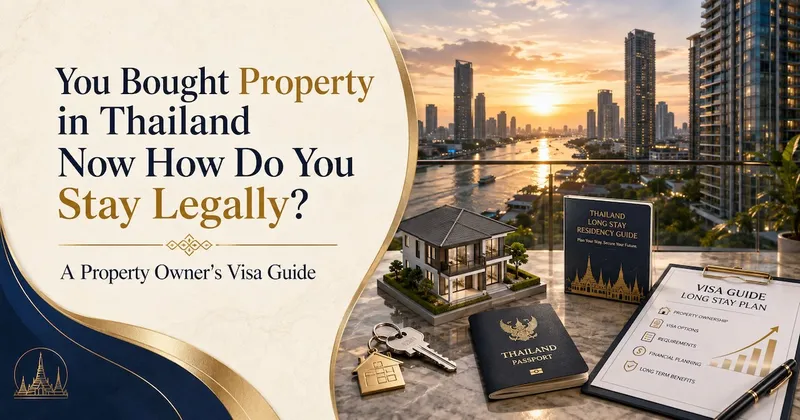
You Bought Property in Thailand — Now How Do You Stay Legally? A Property Owner's Visa Guide
Buying property in Thailand doesn't let you stay legally — a purchase carries no residency, and you still need a valid visa to live there long-term. Common lawful long-stay routes for owners include: a retirement visa for those 50+ retiring, an Elite visa for easy long stays, the LTR 10-year visa for qualifying high-asset/remote/specialist profiles, a work visa for the employed, a dependant visa if your spouse is Thai, and DTV for remote workers. Which to choose depends on your age, whether you work, your income/assets and your long-stay goal — and has little to do with which property you bought. Owners should also mind obligations like 90-day reporting and TM30 address notification. This guide explains a property owner's visa options by profile and how to pair property with a visa, subject to current Immigration and agency rules.
8/1/2026

Living in Thailand Long-Term: Elite Visa or Buy Property — Which Is Worth It? Budget, Goals & Flexibility
Planning to live in Thailand long-term, many agonise over spending the budget on an Elite visa membership or on property. In fact the two solve different problems and don't replace each other: the Elite (Thailand Privilege) visa solves "what lawful status lets you stay long-term" (long-stay convenience, but no work rights and it expires or must be renewed/repurchased), while buying property solves "where to live and whether to sink assets into Thailand" (own-use/investment, but buying grants no residency). To truly live long-term you usually need both — a visa for status and housing (rented or bought) for a home — not one or the other. If the budget stretches to only one first, it comes down to your core goal: for lawful long stay first, choose the visa; for asset landing or long-term own-use first, consider buying but still arrange a visa. This guide weighs them across the problem solved, cost nature, flexibility and exit difficulty, subject to current Immigration and agency rules.
8/1/2026