 泰互帮
泰互帮Thailand DTV Visa Guide: Requirements, Documents and Common Mistakes
What Is the DTV?
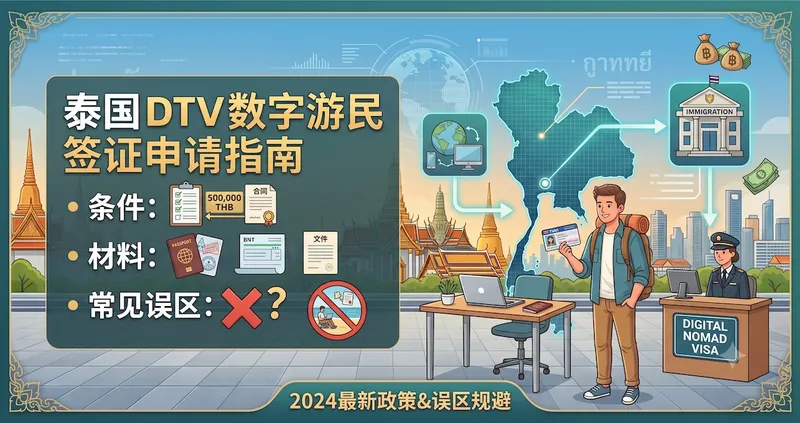
The DTV (Destination Thailand Visa), launched in July 2024, is a long-term multiple-entry visa for two groups: digital nomads and freelancers working remotely for overseas employers or clients (Workcation track), and people joining Thai cultural activities — Muay Thai training, Thai cooking courses, long-term medical care (Soft Power track).
Core Benefits
- Valid 5 years, multiple entries
- Up to 180 days per entry, extendable once inside Thailand for another 180 days
- Spouse and children under 20 can apply as dependents
- No minimum annual stay, and no Thai bank deposit requirement like the retirement visa
Eligibility
- Aged 20 or over
- Financial proof: at least 500,000 THB in liquid funds, usually shown via 3 months of bank statements or a deposit certificate
- Workcation track: employment certificate and contract from an overseas employer, or for freelancers a portfolio, client contracts and income records
- Soft Power track: an enrollment or appointment letter from a Thai institution — gym, cooking school, or hospital confirmation
Document Checklist
- Passport (valid 6+ months)
- Photo on white background
- Financial proof (bank statements or deposit certificate, in English)
- Track-specific documents: employment contract / portfolio, or the Thai institution's confirmation letter
- Thai address or itinerary (required by some embassies)
Applications go through the official Thai e-Visa website and must be filed at an embassy or consulate outside Thailand. The fee is around 10,000 THB (priced in local currency, varying slightly by post). Processing typically takes 5-15 working days.
Common Rejection Reasons
- Bank statements showing a large lump sum deposited just before applying, rather than stable holdings
- Thin freelance evidence — self-description without contracts or payment records
- Unverifiable remote employer, or an employment letter that doesn't state remote work is permitted
- Soft Power confirmation letters from institutions of questionable standing
Common Misconceptions
Can I work for a Thai company on a DTV?
No. The DTV allows remote work for overseas employers or clients only. Employment by a Thai company still requires a Non-B visa plus a work permit.
Does the DTV mean 5 years of continuous residence?
No. Each entry is capped at 180 days (about 360 with the in-country extension), after which you must exit and re-enter. Long stays also raise tax questions: 180+ days in a calendar year makes you a Thai tax resident, and foreign income remitted into Thailand may become taxable — plan ahead.
Can I apply while inside Thailand?
No, the DTV must be applied for outside Thailand. Applicants in Thailand typically travel to a nearby post (Vientiane, Phnom Penh, Kuala Lumpur). Jurisdiction and appointment rules differ by embassy — confirm before traveling.
DTV vs Other Long-Stay Visas
| Visa | Best for | Main threshold |
|---|---|---|
| DTV | Remote workers, freelancers, culture learners | 500,000 THB proof + track documents |
| Privilege (Elite) | Long-stayers with budget who want zero hassle | Membership from 650,000 THB |
| Retirement (Non-O) | Retirees aged 50+ | 800,000 THB deposit or income proof |
| LTR | High earners, wealthy retirees | High income/asset thresholds, complex criteria |
Need Help?
TaiHuBang provides full DTV application consulting: track assessment, document checklist review, financial proof guidance and submission tracking. See our visa services, or submit an inquiry — a consultant will reply within 24 hours.
Related Articles
Thailand Work Permit Guide: How It Differs from the Work Visa, Documents, Job Changes & Prohibited Occupations
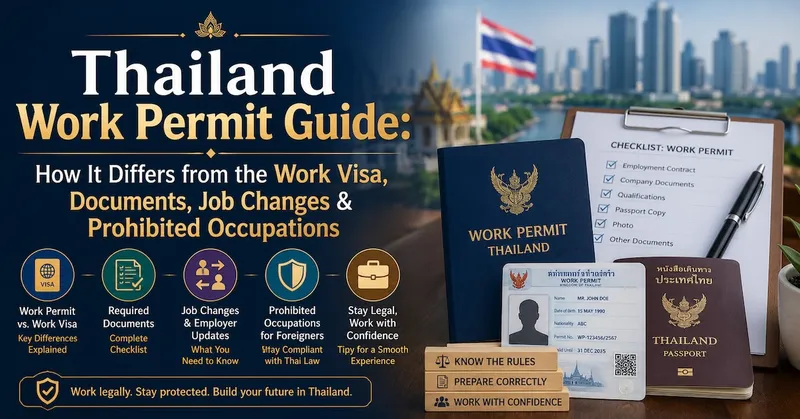
To work legally in Thailand, a work visa (Non-B) alone isn't enough — you also need a Work Permit, and the two are different: the work visa is permission to enter and stay, while the work permit authorises you to do a specified job for a specified employer. Typically you first hold a Non-B visa, then the company applies for your work permit, and only both together make employment legal. The permit is employer-initiated and tied to a specific company and position, so changing jobs means reapplying or amending it, and the company must meet capital and Thai-to-foreign staff ratio requirements (commonly four Thai employees per foreigner). Thailand also has a list of occupations prohibited or restricted for foreigners; working out of scope or without a permit is illegal and can bring fines, deportation and a blacklist. This guide covers the permit-versus-visa distinction, documents and process, handling job changes, and prohibited occupations, subject to current Ministry of Labour rules.
7/24/2026
Thailand SMART Visa Explained: Four Categories for Talent, Investors, Executives & Startups — vs the Work Visa
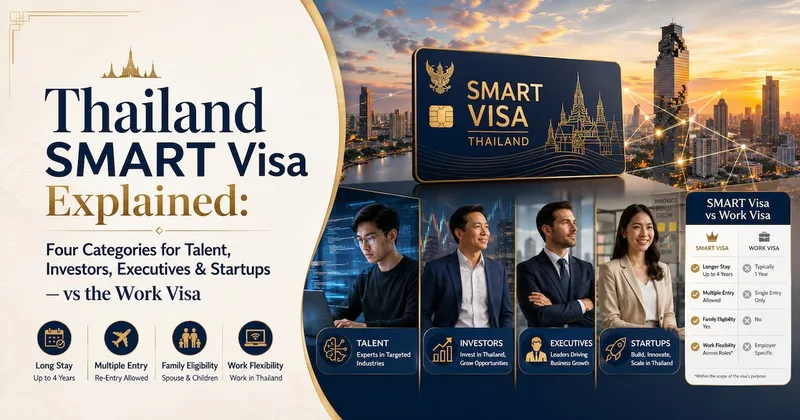
The SMART Visa is Thailand's special visa to attract talent in targeted industries (technology, digital, innovation), in four categories: Highly-Skilled Talent (T), Investor (I), Executive (E) and Startup (S). Its appeal: up to a four-year visa for those who qualify, the ability to work within the approved scope without a separate work permit, 90-day reporting relaxed to once a year, and dependants who can join — with spouses generally allowed to work. But the bar is defined: your role must fall in a BOI-endorsed targeted industry and meet salary or investment thresholds, with certification by the relevant authority, so vetting is stricter than an ordinary work visa. It differs from the standard "work visa + work permit" route, which suits most employed foreigners, whereas SMART targets high-end talent, investors and founders in targeted industries. This guide covers the four categories' requirements, benefits and how to choose between SMART, the work visa and LTR, subject to current BOI and agency rules.
7/22/2026
Thailand LTR Visa Guide: The Four Categories, Requirements, Tax Perks and Ten-Year Residence
The LTR (Long-Term Resident) visa is Thailand's long-stay visa to attract wealthy individuals, affluent retirees, remote-working professionals and highly skilled experts. It offers up to around ten years of residence (typically issued in stages, renewed on continued eligibility), plus perks such as annual reporting instead of 90-day reporting, multiple re-entry, the option of a digital work permit, and preferential personal income tax for some categories. It targets people with higher income, assets or investment, so the bar and paperwork are higher than a tourist visa or DTV — but you get a far more hassle-free long-term status. This guide covers the four LTR categories, their income/asset thresholds, the perks, and how to choose between LTR, the Privilege visa, DTV and retirement visas — subject to the BOI and Immigration's current rules.
7/21/2026