 泰互帮
泰互帮Thailand Permanent Residence (PR) and Citizenship Guide: Conditions, Quotas, Process and How It Differs from Long-Stay Visas
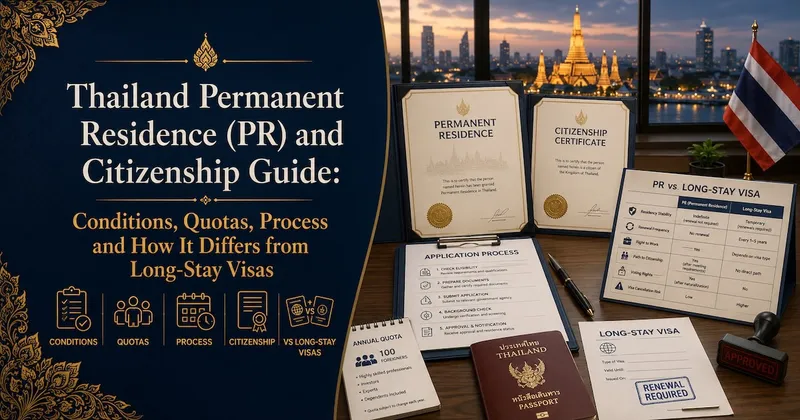
First, Separate Three Things: Long-Stay Visa, PR, Citizenship
- Long-stay visa: work, retirement, Elite visas etc. let you stay long term, but you must renew on schedule and report every 90 days — you remain a foreigner
- Permanent residence (PR): once granted you no longer renew a visa yearly and can reside long term, shedding part of the renewal and 90-day burden, but you're still a foreign national and there are conditions to maintain it
- Citizenship (naturalizing as Thai): obtaining Thai nationality — the top tier and highest bar, usually requiring PR first plus stricter conditions
- Unsure which visa you should be on now? See the Thailand visa types overview
Permanent Residence (PR): Who Can Apply and Rough Conditions
- Long lawful residence plus tax filings: usually several consecutive years (commonly around three) holding a valid work visa (extensions) and filing personal income tax — residence and tax records are central
- Annual nationality quota: Thailand's PR has an annual cap set per nationality — places are limited and competition exists
- Application categories: common ones include work/investment, supporting a Thai family member, experts, etc., with different documents and thresholds
- Finances and background: income/tax level, clean criminal record and a medical check are typically reviewed
- Bottom line: PR suits those already working formally, filing tax and planning to stay long term — not something you get early on
The PR Process and Timeline
- Confirm eligibility: check whether work-visa extension years and tax records meet the bar
- Gather documents: passport and visa history, work and tax proof, criminal record, medical check, photos, etc.
- File in the open application window: PR applications usually have a specific annual intake window — miss it and you wait a year
- Review and interview/Thai: the process may involve an interview, basic Thai communication and background checks
- Long approval time: from filing to result often takes a long time (possibly over a year) — be patient
After PR you still get a residence book, do address registration, etc., and follow the rules to maintain it. Exact years, quotas, documents and window depend on Immigration's current announcements — don't copy old information.
Citizenship (Naturalization): a Higher Bar
- Usually needs PR first: naturalization typically requires holding PR and continuing to reside for a set period
- Language and integration: a degree of Thai ability (listening/speaking, and cultural checks such as singing have appeared in practice) may be required
- Income and character: stable income, clean record, and contribution/integration in Thailand are assessed together
- Spouse route: foreigners married to Thai nationals may have somewhat different naturalization conditions, but residence and income requirements remain — to register first see registering a marriage in Thailand and the marriage visa guide
- Citizenship raises major issues like whether you'd give up your original nationality — consider your home country's nationality policy too, not just Thailand's
Most People Don't Actually Need PR/Citizenship
- Just want a hassle-free long stay: the Elite visa trades a fee for years of residency, far faster than grinding out PR
- Retirement: a retirement visa meets the residence need
- Working: a stable work visa plus work permit already lets you live and work long term
- PR/citizenship mainly matters to those wanting to escape renewals entirely, put down deep roots, or weigh identity itself — decide the purpose before committing to this long process
FAQ
Do I automatically get permanent residence after living in Thailand a certain number of years?
No — you must apply and pass review. A common bar is several consecutive years (around three) on a valid work visa with extensions and personal income tax filings, plus an annual per-nationality quota, and checks on finances, criminal record, medical and possibly an interview. Long residence is only one prerequisite — it doesn't mean you qualify or will be approved, and retirement/Elite visa years don't convert into PR. Plan work-visa and tax records early if aiming for PR, subject to Immigration's current rules.
How does permanent residence (PR) differ from the Elite or retirement visa?
Elite and retirement visas are essentially long-stay visas — renew on schedule, extend and do 90-day reporting; you remain a visa-holding foreigner. PR is a permanent-residence status: once granted you don't renew a visa yearly, shedding part of the renewal and reporting burden, but the bar is high, the timeline long and quotas limited. If you just want an easy long stay, the Elite/retirement visa is faster and simpler; only if you've worked and filed tax long term and want to root deeply is PR's long process worth it. Choose by purpose, don't grind for a "green card."
Does naturalizing as Thai mean giving up my original nationality?
That depends on both Thailand and your home country's rules. Thai naturalization has a very high bar (usually PR first plus residence, language and income conditions), and whether you must give up your original nationality hinges largely on whether your home country recognizes dual nationality — for example, China does not recognize dual nationality, so acquiring a foreign one may affect your Chinese nationality status. This is a major life decision — consult both countries' policies fully rather than one side, subject to Thailand's Ministry of Interior and your home country's current law.
How long does a PR application take, and when can I file?
The timeline is usually long — from filing to result possibly over a year — and PR applications generally have only a specific annual intake window, so miss it and you wait a year. That means preparing work-visa extension years, tax records, criminal record and medical check in advance and watching for the year's announcement. The process may also involve an interview and basic Thai communication. So PR is a long-term move needing patience and planning, with exact windows and timelines per Immigration's current announcements.
Need Help?
TaiHuBang offers consultation and document assistance for permanent and long-term residence: PR eligibility assessment (checking work-visa years and tax records), document preparation and intake-window tracking, and comparison advice on long-stay visa options. Citizenship raises major matters like dual nationality — we provide information only, with the final say resting on Immigration, the Ministry of Interior and your home country's current law, and we make no promises on outcomes. See our visa services or submit an enquiry, and an advisor will reply within 24 hours.
Related Articles
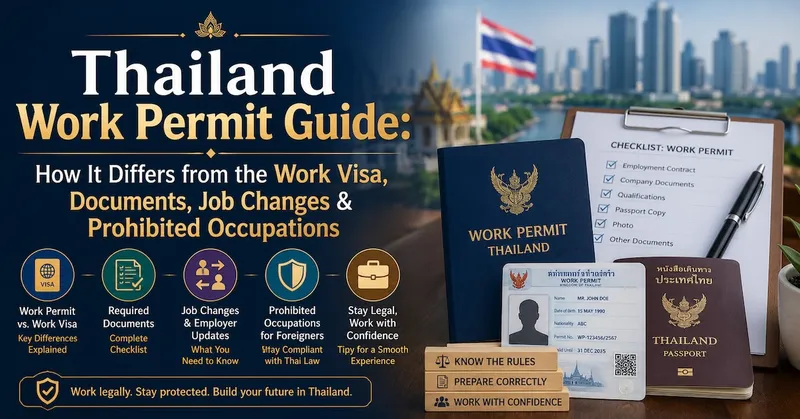
Thailand Work Permit Guide: How It Differs from the Work Visa, Documents, Job Changes & Prohibited Occupations
To work legally in Thailand, a work visa (Non-B) alone isn't enough — you also need a Work Permit, and the two are different: the work visa is permission to enter and stay, while the work permit authorises you to do a specified job for a specified employer. Typically you first hold a Non-B visa, then the company applies for your work permit, and only both together make employment legal. The permit is employer-initiated and tied to a specific company and position, so changing jobs means reapplying or amending it, and the company must meet capital and Thai-to-foreign staff ratio requirements (commonly four Thai employees per foreigner). Thailand also has a list of occupations prohibited or restricted for foreigners; working out of scope or without a permit is illegal and can bring fines, deportation and a blacklist. This guide covers the permit-versus-visa distinction, documents and process, handling job changes, and prohibited occupations, subject to current Ministry of Labour rules.
7/24/2026

Thailand SMART Visa Explained: Four Categories for Talent, Investors, Executives & Startups — vs the Work Visa
The SMART Visa is Thailand's special visa to attract talent in targeted industries (technology, digital, innovation), in four categories: Highly-Skilled Talent (T), Investor (I), Executive (E) and Startup (S). Its appeal: up to a four-year visa for those who qualify, the ability to work within the approved scope without a separate work permit, 90-day reporting relaxed to once a year, and dependants who can join — with spouses generally allowed to work. But the bar is defined: your role must fall in a BOI-endorsed targeted industry and meet salary or investment thresholds, with certification by the relevant authority, so vetting is stricter than an ordinary work visa. It differs from the standard "work visa + work permit" route, which suits most employed foreigners, whereas SMART targets high-end talent, investors and founders in targeted industries. This guide covers the four categories' requirements, benefits and how to choose between SMART, the work visa and LTR, subject to current BOI and agency rules.
7/22/2026
Thailand LTR Visa Guide: The Four Categories, Requirements, Tax Perks and Ten-Year Residence
The LTR (Long-Term Resident) visa is Thailand's long-stay visa to attract wealthy individuals, affluent retirees, remote-working professionals and highly skilled experts. It offers up to around ten years of residence (typically issued in stages, renewed on continued eligibility), plus perks such as annual reporting instead of 90-day reporting, multiple re-entry, the option of a digital work permit, and preferential personal income tax for some categories. It targets people with higher income, assets or investment, so the bar and paperwork are higher than a tourist visa or DTV — but you get a far more hassle-free long-term status. This guide covers the four LTR categories, their income/asset thresholds, the perks, and how to choose between LTR, the Privilege visa, DTV and retirement visas — subject to the BOI and Immigration's current rules.
7/21/2026