 泰互帮
泰互帮Arrested or Detained in Thailand: What to Do in the First 48 Hours
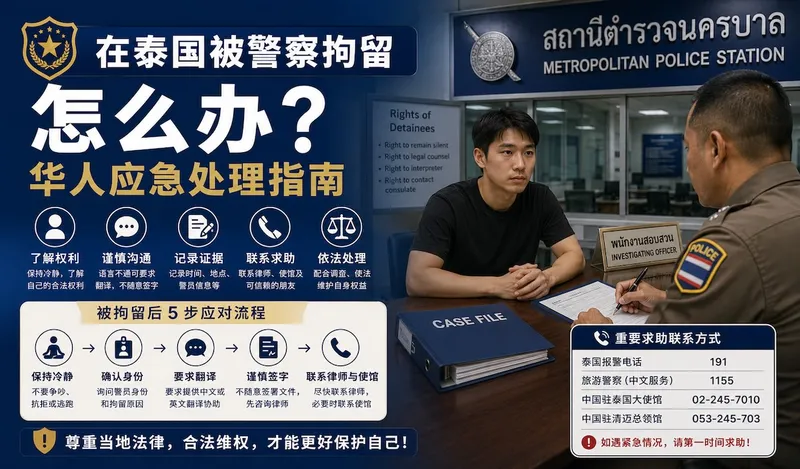
Understand Thai Criminal Procedure First
After Thai police detain a suspect, the usual sequence is: questioning and a written record at the police station, transfer to the prosecutor or a court detention request within 48 hours, then detention or bail once the court rules, followed by investigation, indictment and trial. Importantly, Thailand allows lawyers to get involved from the earliest stage of detention, and bail can be requested early.
Your Rights When Detained
- The right to know the charge against you
- The right to remain silent and not be forced to confess
- The right to meet a lawyer and have one present during questioning
- The right to an interpreter
- The right to contact family or your embassy
- The right to apply for bail
Foreign nationals can ask the police to notify their embassy or consulate. Consular officers may visit and provide lawyer lists, but consular protection is not legal defense — you still need to retain your own lawyer.
What to Do in the First 48 Hours
- Stay calm; confirm the charge and the name of the police station
- Do not sign a Thai-language statement without an interpreter and a lawyer — you have the right to refuse to sign documents you cannot read
- Contact family or a trusted friend immediately with the station location and case number
- Retain a lawyer experienced in Thai criminal procedure as soon as possible
- Do not promise money to anyone to "make it go away" — this is a classic setup for secondary fraud
How Bail Works
Bail is available for the vast majority of charges in Thailand. Your lawyer files the request with the court along with security — cash, a fixed deposit certificate, or Thai real estate — ranging from tens of thousands to millions of THB depending on the charge. The court weighs flight risk, fixed residence, and visa status. Once bailed, you typically surrender your passport and must appear at every hearing.
Common Case Types to Watch
- Visa overstay: an offense fined at 500 THB per day (capped at 20,000); long overstays can mean detention, deportation and blacklisting
- Working without a work permit: both employer and employee are punished; serious cases lead to detention and deportation
- Gambling and scam-related cases: Thailand is cracking down hard — never lend out your bank account or SIM card
- Traffic accidents: causing injury can carry criminal liability; report to police and your insurer at the scene, and never flee
What Family Members Can Do
- Confirm where the person is held: police station, Immigration Detention Center (IDC), or court remand
- Retain a lawyer to visit and review the charge and case file
- Prepare bail security and supporting documents
- Verify information through the embassy channel and beware of "pay to get them out" scams
FAQ
Does detention always lead to a conviction?
No. The prosecutor can decide not to indict, and minor offenses may end with a fine. Early involvement of a competent lawyer — checking evidence and procedure — usually improves the outcome significantly.
Can I leave Thailand while on bail?
Your passport is generally held by the court during bail. Leaving without court permission is bail-jumping: the security is forfeited and an arrest warrant issued. Follow the bail conditions strictly.
What if the written statement doesn't match what I said?
You have the right to refuse to sign a statement that misrepresents you, and to demand corrections or note your objection. This is exactly why an interpreter and lawyer should be present.
Need Help?
TaiHuBang connects you with licensed Thai criminal lawyers, providing initial case assessment, lawyer referral, bail application assistance and family communication support. In an emergency, reach us via phone or WhatsApp on the contact page, or submit an inquiry describing the situation.
Related Articles
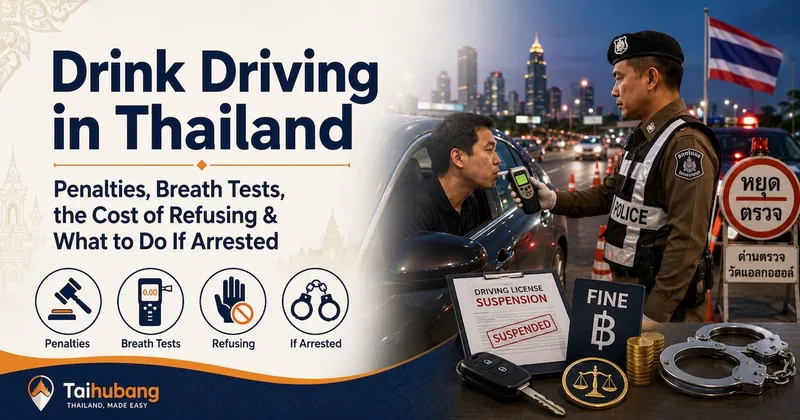
Drink Driving in Thailand: Penalties, Breath Tests, the Cost of Refusing & What to Do If Arrested
Drink driving in Thailand is a criminal offence, not a simple fine. Police checkpoints are common (especially on holidays, alcohol-ban days and at night), and a blood or breath alcohol level over the legal limit is an offence, with penalties including fines, imprisonment (often suspended), licence suspension and community service — sharply increased if you cause injury or death. Refusing a breath test is usually treated as a presumption of drink driving and penalised, so refusing doesn't pay. Foreigners are covered too; with a language barrier, stay calm, cooperate, and ask for an interpreter and lawyer if needed. Thailand also has statutory alcohol-ban days (certain Buddhist holidays, election days) when sales are prohibited and enforcement is stricter. This guide covers the legal limit, penalties, the cost of refusing, what to do if arrested, and how to avoid trouble; standards and penalties follow current Thai law — consult a lawyer if charged.
8/14/2026
Facing a Criminal Case in Thailand: How to Find a Lawyer, Legal Fees, Legal Aid, Interpreters & Consular Help
If you're taken in, summoned or caught up in a criminal case in Thailand, the two urgent things are: contact a lawyer as soon as possible, and notify your embassy or consulate. You have the right to remain silent and to a lawyer — don't sign Thai-language documents you can't read without a lawyer and interpreter. Finding a criminal lawyer means checking they're licensed, have experience in similar cases, and can arrange Chinese/English interpretation; if you can't afford one, Thailand also has legal aid and public defender systems. Fees depend on case type, stage (investigation, bail, trial) and complexity, usually quoted by stage, with bail bonds separate. Your embassy can provide consular help — visits, relaying information, lists of local lawyers — but cannot interfere with the courts or guarantee an outcome. This guide covers finding a lawyer, how fees work, legal aid and interpreters, and the limits of consular help; procedures and rights follow current Thai law, and you should consult a licensed lawyer for your case.
8/5/2026
Facing Criminal Charges in Thailand: Common Offences, Detention and the Bail Process
Beyond drugs, the criminal trouble foreigners most often fall into in Thailand includes assault, fraud and financial disputes, illegal work, visa overstay, drink-driving and traffic offences, and defamation. Once criminal proceedings begin, the path is roughly report/arrest, police investigation, prosecution and trial, with bail available while awaiting trial. The key moves are: stay silent, don't sign documents you can't read, engage a criminal lawyer quickly, and contact your embassy if needed. This guide explains common criminal offences in Thailand, the full path from arrest to judgment, how to apply for bail, and traps foreigners should watch — so you know which step you're at and what to do next, subject to Thai law and a practising lawyer's advice.
7/21/2026