 泰互帮
泰互帮Drink Driving in Thailand: Penalties, Breath Tests, the Cost of Refusing & What to Do If Arrested
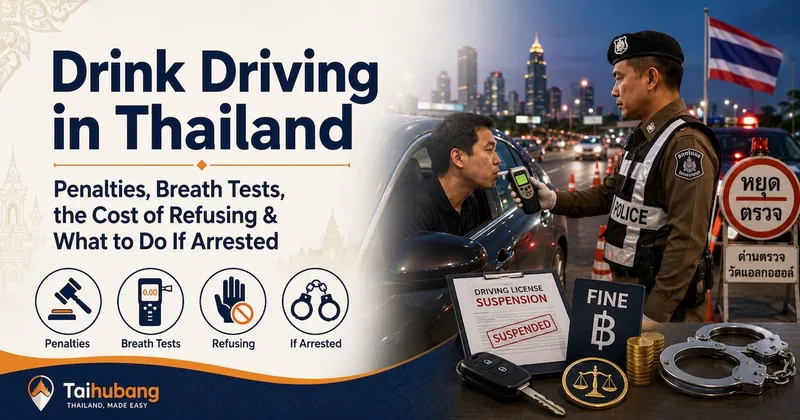
Drink driving in Thailand is a crime — don't treat it lightly
- A criminal offence, not a minor ticket: drink driving in Thailand is a crime that can involve imprisonment (often suspended), fines, licence suspension and community service
- Checked often: police set up checkpoints at night, on holidays and alcohol-ban days, with especially strict enforcement around Songkran and New Year
- Over the limit is an offence: a breath or blood alcohol level over the legal limit is drink driving, with a lower limit for certain groups such as new licence holders
- Same for motorbikes: riding a motorbike drunk is equally illegal and dangerous — see the motorbike guide
How heavy are the penalties, and if you cause a crash
- Base penalties: a fine + possible imprisonment (often suspended for first offences) + licence suspension + community service, increased for repeat offences
- Causing a crash: injuring or killing someone while drunk sharply increases criminal liability and adds civil compensation — see the traffic accident guide
- Insurance may deny: for a drink-driving crash, insurers may deny or partly deny the claim, leaving you liable — see the car insurance guide
- Affects your visa/record: a criminal conviction can affect your visa and record — don't gamble
Being tested, and the cost of refusing
- Refusing a test ≠ getting off: refusing without valid reason is usually presumed to be drink driving and penalised — refusing doesn't pay
- Cooperate but keep your rights: while taking the test, ask for an interpreter and lawyer for any statement/signing — don't sign what you can't read
- If arrested: you may be taken to the station and face bail — see the charges and bail guide; finding a lawyer in the criminal lawyer guide
- Notify the embassy: seek consular help if needed — channels in the emergency help guide
How to avoid trouble
- Don't drive if you drink: use Grab, a taxi or a designated driver, or pre-book a private transfer
- Mind alcohol-ban days and festivals: some Buddhist holidays and election days ban alcohol sales with stricter enforcement — see the holidays and calendar guide
- Morning-after alcohol can be over the limit: heavy drinking the night before can still put you over the next morning
- Self-drive means extra care: road trips are checked too — see the self-drive guide
Frequently asked questions
Can you go to jail for drink driving in Thailand?
Possibly. Drink driving in Thailand is a criminal offence, with penalties including fines, imprisonment, licence suspension and community service; imprisonment is often suspended for first offences, but repeat or serious cases can bring actual jail time. If drink driving causes a crash with injury or death, liability increases sharply, with civil compensation, and insurers may deny the claim. A conviction can also affect your visa and record. So don't treat it as "just a fine" — it's a crime that leaves a record and can mean jail. If you drink, use Grab, a taxi or a designated driver; penalties follow current Thai law, and you should consult a lawyer if charged.
Can I refuse a breath test when stopped?
It's not advisable. In Thailand, refusing a breath test without valid reason is usually presumed to be drink driving and penalised accordingly, so refusing doesn't "pay" and may make things worse. The right approach is to cooperate with the test while keeping your rights: for any statement or Thai document, ask for an interpreter and lawyer present, and don't sign what you can't read. If taken to the station and charged, engage a licensed lawyer promptly and you can notify your embassy. Cooperating with enforcement and protecting your rights aren't in conflict — just don't outsmart yourself by refusing or signing blindly, subject to current rules.
What happens if a foreign tourist is caught drink driving?
Foreigners are subject to Thai law too — being a tourist grants no exemption. You may be taken to the station, charged and need bail, with penalties including fines, imprisonment (possibly suspended) and suspension of your driving privileges in Thailand; causing a crash is more serious. With a language barrier, stay calm, cooperate, ask for an interpreter, and don't sign statements you can't read, then engage a licensed lawyer promptly and, if needed, notify your embassy for consular help (visits, lists — but no interference with the courts). A criminal record can also affect your visa. The safest choice is simply not to drink and drive; handling and penalties follow current Thai law.
Need help?
Taihubang connects you with and advises on drink-driving/traffic criminal cases in Thailand: linking you with licensed lawyers, arranging interpretation, explaining bail and trial process and fee structure, and helping you communicate with your embassy. We are not a law firm and make no "guaranteed suspended sentence" or "guaranteed acquittal" promises; we advocate not driving after drinking and can arrange transfers to avoid the risk. Everything rests on a licensed lawyer's opinion and current Thai law; this article isn't legal advice. See our criminal-defence referral service or submit an enquiry.
Related Articles
Facing a Criminal Case in Thailand: How to Find a Lawyer, Legal Fees, Legal Aid, Interpreters & Consular Help
If you're taken in, summoned or caught up in a criminal case in Thailand, the two urgent things are: contact a lawyer as soon as possible, and notify your embassy or consulate. You have the right to remain silent and to a lawyer — don't sign Thai-language documents you can't read without a lawyer and interpreter. Finding a criminal lawyer means checking they're licensed, have experience in similar cases, and can arrange Chinese/English interpretation; if you can't afford one, Thailand also has legal aid and public defender systems. Fees depend on case type, stage (investigation, bail, trial) and complexity, usually quoted by stage, with bail bonds separate. Your embassy can provide consular help — visits, relaying information, lists of local lawyers — but cannot interfere with the courts or guarantee an outcome. This guide covers finding a lawyer, how fees work, legal aid and interpreters, and the limits of consular help; procedures and rights follow current Thai law, and you should consult a licensed lawyer for your case.
8/5/2026
Facing Criminal Charges in Thailand: Common Offences, Detention and the Bail Process
Beyond drugs, the criminal trouble foreigners most often fall into in Thailand includes assault, fraud and financial disputes, illegal work, visa overstay, drink-driving and traffic offences, and defamation. Once criminal proceedings begin, the path is roughly report/arrest, police investigation, prosecution and trial, with bail available while awaiting trial. The key moves are: stay silent, don't sign documents you can't read, engage a criminal lawyer quickly, and contact your embassy if needed. This guide explains common criminal offences in Thailand, the full path from arrest to judgment, how to apply for bail, and traps foreigners should watch — so you know which step you're at and what to do next, subject to Thai law and a practising lawyer's advice.
7/21/2026
Arrested on Drug Charges in Thailand: Offences, Sentencing, Bail and What Families Should Do
Drug offences in Thailand are serious crimes with heavy sentences. The line between possession, transport and trafficking mainly turns on quantity and circumstances, and larger amounts or an inferred intent to distribute can mean long imprisonment or worse. If arrested, the key is to stay calm, not sign Thai documents you can't read, and get a lawyer and your embassy involved quickly; families should immediately engage a criminal lawyer to learn the charges, place of detention and bail prospects. Thailand allows bail, but in drug cases it is often hard, with high sureties, and always at the court's discretion. This guide explains common drug offences and sentencing logic, what the accused and family should do, and how bail and consular help work — subject to Thai law and a practising lawyer's advice.
7/19/2026