 泰互帮
泰互帮Arrested on Drug Charges in Thailand: Offences, Sentencing, Bail and What Families Should Do
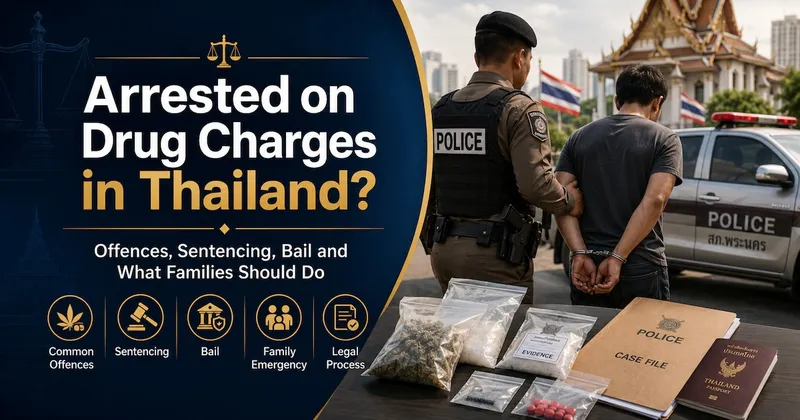
Understand This First: Drugs Are a Serious Crime in Thailand
- Sentences are generally heavy: Thailand takes a hard line on drugs. Possession, use, transport, production and trafficking are all criminal offences, with trafficking/intent to distribute the most severe — possibly long imprisonment or worse
- "Possession" can be treated as "intent to distribute": above a certain quantity threshold you may be presumed to be selling rather than using, which changes the charge and sentence entirely
- Cannabis is not fully legal: Thailand's cannabis policy has shifted in recent years and is still changing, but recreational use, cross-border carrying and selling to minors can still be illegal — don't treat "cannabis is legal in Thailand" as a shield; policy is per current regulations
- Foreigners get no special treatment: drug cases are strict for locals and foreigners alike, and a language barrier only puts you at a disadvantage
How Offences and Sentences Are Broadly Graded
The charge and sentence mainly depend on the drug type, quantity, your role (use/possession/transport/trafficking), prior record and whether it's organised. Roughly:
- Personal use / small possession: relatively lighter, but still a criminal record and possibly compulsory rehabilitation or imprisonment
- Larger-quantity possession: easily presumed "intent to distribute", raising the sentence significantly
- Transport, production, trafficking: the most serious tier; with large quantities the penalties are extreme
- "Carrying across a border" is highest-risk: caught at airport security or in couriered parcels, it is often handled as transport/smuggling — never carry unknown packages or luggage for anyone
Exact thresholds, charge determinations and sentencing ranges are per Thailand's current narcotics laws and the court's discretion. This article is not legal advice; rely on a practising lawyer's analysis of the actual file.
If You Are Arrested: What to Do on the Spot
- Stay calm; do not resist or flee: physical resistance can worsen things and may create new charges
- Don't talk loosely or admit things: you have the right to remain silent — don't rush to "explain" without a lawyer and interpreter, as offhand remarks can be recorded as damaging statements
- Don't sign Thai documents you can't read: ask for translation; if you don't understand it, don't sign — signing may amount to a confession or waiver of rights
- Ask to contact a lawyer and your embassy: clearly state you want to notify your embassy/consulate and reach a lawyer — this is your right
- Remember key details: which police station/detention centre, the officers and the case number, so family and lawyer can follow up
What Families Can Do (at Home or in Thailand)
- Engage a Thai criminal lawyer immediately: let the lawyer verify the place of detention, charges, case progress and bail prospects — trying to find out remotely is slow and easily misled
- Contact your embassy/consulate: consular officers can provide a list of lawyers, coordinate visits and notify family — consular protection — but they cannot interfere with the judiciary or "get someone out". See who to turn to in an emergency in Thailand
- Prepare identity and relationship documents: passports and proof of kinship are needed for visits and appointing a lawyer
- Beware "connections can get them released" scams: anyone claiming that paying for connections will drop the case or guarantee bail is usually a second-round scam; serious drug cases have no shortcuts. If defrauded, see what to do if you're scammed in Thailand
- General detention steps are also covered in what to do if detained by police in Thailand
How Bail Works — and Whether Release Is Possible
- Thailand allows bail applications: but whether it's granted is at the discretion of police/prosecutor/court by stage; for serious drug cases or where flight or tampering risk is perceived, bail is difficult
- Sureties are usually high: cash or property can be used; the amount depends on the charge and circumstances, and is often not low in drug cases
- Bail is not the end of the case: release means awaiting trial; the case still proceeds through investigation, prosecution and trial
- Leave it to the lawyer: timing, documents and surety method for a bail application matter — let a criminal lawyer handle it based on the case, and don't line up random guarantors yourself
Frequently Asked Questions
If I'm arrested for a small amount of cannabis or drugs for personal use, is it serious?
It depends on the substance, quantity and circumstances, so it can't be generalised — but drugs are always a criminal matter in Thailand. Even small personal-use amounts can lead to a criminal record, compulsory rehabilitation or imprisonment, and for foreigners can affect future visas and entry. Cannabis policy has shifted recently and is still changing, but recreational use, cross-border carrying and selling to minors may still be illegal — don't treat "cannabis is legal in Thailand" as a universal shield. After arrest, don't judge severity yourself or explain offhand; contact a lawyer and your embassy first. The precise characterisation and consequences are per current law and a practising lawyer's advice.
What's the difference between being caught for "possession" and charged with "trafficking"?
The difference is large and directly sets the sentencing tier. Plain possession is relatively lighter, while trafficking/intent to distribute is the most serious tier. The key is quantity and circumstances — above a threshold you may be presumed to be selling rather than using, and even if you claim personal use you can be charged with the heavier offence. In addition, seizing packaging or weighing tools, large cash or chat records alongside the drugs can be used as evidence of trafficking. Because the line rests on evidence and characterisation, it's all the more important to get a specialist criminal lawyer involved early to review the file and argue for the more accurate charge, per Thai law and the court's discretion.
My family member was arrested on drug charges in Thailand — what can I do from home?
The three most effective things: first, engage a local Thai criminal lawyer quickly to verify the place of detention, charges, progress and bail prospects — finding out remotely is slow and easily misled; second, contact your embassy/consulate for consular protection (lawyer lists, visit coordination, notifying family), while understanding that consular officers cannot interfere with the judiciary or guarantee release; third, prepare passports and proof of kinship for visits and appointing a lawyer. One warning: anyone claiming that "paying for connections will drop the case or guarantee bail" is usually running a second-round scam targeting families — serious drug cases have no back door, so don't get scammed again.
If I hire a lawyer, is bail or a reduced sentence guaranteed?
No — any claim guaranteeing "release" or "a reduced sentence" is not credible. What a lawyer can do is argue lawfully: check whether the evidence was lawfully obtained, whether the charge is accurate and whether the procedure had defects, file a bail application at the right stage, and argue mitigating factors on sentencing. But whether bail is granted and how the case is ultimately decided rests with the police/prosecutor/court, depending on objective factors like drug type and quantity, your role and prior record. Choose a lawyer by their criminal-defence experience and ability to explain the strategy clearly — not by who promises the nicer outcome. Everything is per Thai law and the handling lawyer's advice.
Need Help?
Taihubang provides emergency coordination for drug and criminal cases in Thailand: matching a criminal-defence lawyer, coordinating detention visits and case communication, helping families with documents and translation, and guidance on contacting the consulate. We never promise "bail success", "dropped charges" or "connections to get someone out", and make no unlawful arrangements — everything is per Thai law and the handling lawyer's advice. As time is critical, please see our criminal-defence service or submit an enquiry, and we'll connect you with a lawyer as soon as possible.
Related Articles
Drink Driving in Thailand: Penalties, Breath Tests, the Cost of Refusing & What to Do If Arrested
Drink driving in Thailand is a criminal offence, not a simple fine. Police checkpoints are common (especially on holidays, alcohol-ban days and at night), and a blood or breath alcohol level over the legal limit is an offence, with penalties including fines, imprisonment (often suspended), licence suspension and community service — sharply increased if you cause injury or death. Refusing a breath test is usually treated as a presumption of drink driving and penalised, so refusing doesn't pay. Foreigners are covered too; with a language barrier, stay calm, cooperate, and ask for an interpreter and lawyer if needed. Thailand also has statutory alcohol-ban days (certain Buddhist holidays, election days) when sales are prohibited and enforcement is stricter. This guide covers the legal limit, penalties, the cost of refusing, what to do if arrested, and how to avoid trouble; standards and penalties follow current Thai law — consult a lawyer if charged.
8/14/2026
Facing a Criminal Case in Thailand: How to Find a Lawyer, Legal Fees, Legal Aid, Interpreters & Consular Help
If you're taken in, summoned or caught up in a criminal case in Thailand, the two urgent things are: contact a lawyer as soon as possible, and notify your embassy or consulate. You have the right to remain silent and to a lawyer — don't sign Thai-language documents you can't read without a lawyer and interpreter. Finding a criminal lawyer means checking they're licensed, have experience in similar cases, and can arrange Chinese/English interpretation; if you can't afford one, Thailand also has legal aid and public defender systems. Fees depend on case type, stage (investigation, bail, trial) and complexity, usually quoted by stage, with bail bonds separate. Your embassy can provide consular help — visits, relaying information, lists of local lawyers — but cannot interfere with the courts or guarantee an outcome. This guide covers finding a lawyer, how fees work, legal aid and interpreters, and the limits of consular help; procedures and rights follow current Thai law, and you should consult a licensed lawyer for your case.
8/5/2026
Facing Criminal Charges in Thailand: Common Offences, Detention and the Bail Process
Beyond drugs, the criminal trouble foreigners most often fall into in Thailand includes assault, fraud and financial disputes, illegal work, visa overstay, drink-driving and traffic offences, and defamation. Once criminal proceedings begin, the path is roughly report/arrest, police investigation, prosecution and trial, with bail available while awaiting trial. The key moves are: stay silent, don't sign documents you can't read, engage a criminal lawyer quickly, and contact your embassy if needed. This guide explains common criminal offences in Thailand, the full path from arrest to judgment, how to apply for bail, and traps foreigners should watch — so you know which step you're at and what to do next, subject to Thai law and a practising lawyer's advice.
7/21/2026