 泰互帮
泰互帮Job Hunting and Changing Jobs in Thailand: Work Permit Transfers and Restricted Occupations

The Fundamental Rule: The Permit Belongs to the Job
A Thai work permit names a specific employer, position and workplace. Change employers and the permit must be redone, with the Non-B visa moving in step. That dictates the core logic of switching jobs in Thailand: line up the new employer's paperwork before touching the old. The baseline process is covered in our work visa guide; this article focuses on job hunting and transitions. Details follow current Labour Ministry and Immigration rules.
Where Foreigners Find Jobs
- Online: JobsDB and LinkedIn dominate white-collar hiring, JobThai skews local; foreigner-friendly roles cluster in sales, e-commerce, education, tourism and manufacturing management
- Recruiters: active in mid-to-senior roles and around Japanese and Chinese corporate communities; trilingual candidates command a premium
- Community referrals: chambers of commerce and industry groups convert well — but vet the company regardless, because a shell company cannot sponsor a work permit
- Vet the employer's capacity: sponsoring one foreigner conventionally requires 2 million THB registered capital and a 4:1 Thai-to-foreign staff ratio; asking about the current foreign staff's permits in the interview is entirely fair
Salary Talks: Immigration Has Benchmarks
Immigration applies monthly salary guidelines by nationality when extending work visas (commonly cited figures range from 25,000 to 50,000 THB depending on nationality group — verify current practice), and offers below your benchmark can complicate extensions. On package structure, know the local norms: a 13th month is not standard, provident funds vary by company, social security (SSO) is mandatory, and statutory annual leave is a minimum of six days. Employment rights are covered in our labor law guide.
The Right Sequence for Changing Jobs
- Secure the offer and confirm the new employer qualifies to sponsor
- Negotiate dates with both employers: when the old permit is canceled, the visa permission built on it ends too, leaving very little time to depart or convert status
- The safe pattern: new employer's application ready to file the moment the old permit is canceled; if the handover can't be seamless, exit, obtain a fresh Non-B abroad and re-enter
- BOI-promoted companies process through the One Stop Service Center — materially faster than the standard track
- On departure, settle taxes and collect your withholding certificate (50 Tawi) — needed for next year's filing and future fund repatriation; see our tax filing guide
The classic mistake: resigning in frustration and then starting the search. A status gap means visa runs or border bounces — far costlier than enduring another month or two.
Which Occupations Are Off-Limits?
The Labour Ministry maintains a list of occupations reserved for Thai nationals (historically 39 items, periodically revised). The ones that catch foreigners most often:
- Tour guiding (leading groups without a Thai guide license is illegal and actively enforced)
- Hairdressing, beauty services and Thai massage
- Manual labor, street vending and market stalls
- Legal services and court representation (Thai lawyers appear in court)
- Signing audits as an accountant (management roles are fine; licensed sign-off is not)
Beyond the list, your actual duties must match the permit: registered as "marketing manager" while leading tours daily is still illegal work.
Freelancing and Remote Work: Where Is the Line?
- Providing paid services to local clients without a work permit is illegal work — side gigs, buying-agent operations and brokering included — punishable by fines, detention and deportation with a record
- Remote work for overseas employers on visas like the DTV is the sanctioned direction, but employment by a Thai entity or serving the Thai market is outside it; get advice on edge cases before acting
- The compliant solo routes: register a Thai company to sponsor your own permit (costs in our company registration guide) or use a reputable employer-of-record — vetting the EOR's own compliance carefully
FAQ
If I'm laid off, does my visa die immediately?
When the work permit is canceled, the visa permission tied to it ends without a generous grace period. Confirm the cancellation date with HR immediately and plan in parallel: convert to a tourist status, exit, or have the new employer expedite. Statutory severance scales with tenure — verify full payment before signing anything; see the labor law guide.
Can I start working while the permit is still in process?
No. Working before issuance is illegal work, with penalties for you and the employer. Legitimate companies schedule start dates after approval; an employer saying "start now, we'll sort the permit later" is itself a red flag.
Does helping a friend's shop or livestream selling on weekends count as illegal work?
Very likely yes. Thai law doesn't make payment the sole test of "work" — sustained labor can qualify, and publicly visible activities like livestream selling are especially exposed to reports. Don't gamble residence status on pocket money.
Need Help?
TaiHuBang supports work permit transitions: employer qualification pre-checks, transfer sequencing, expedited filing referral and status bridging after layoffs. See our visa services, or submit an inquiry — a consultant will reply within 24 hours.
Related Articles
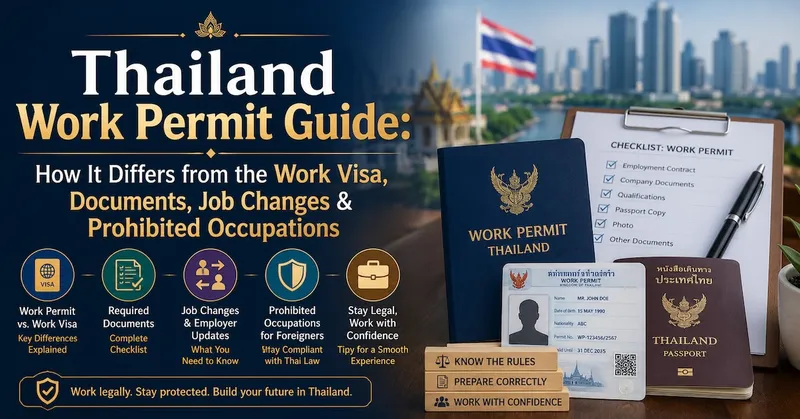
Thailand Work Permit Guide: How It Differs from the Work Visa, Documents, Job Changes & Prohibited Occupations
To work legally in Thailand, a work visa (Non-B) alone isn't enough — you also need a Work Permit, and the two are different: the work visa is permission to enter and stay, while the work permit authorises you to do a specified job for a specified employer. Typically you first hold a Non-B visa, then the company applies for your work permit, and only both together make employment legal. The permit is employer-initiated and tied to a specific company and position, so changing jobs means reapplying or amending it, and the company must meet capital and Thai-to-foreign staff ratio requirements (commonly four Thai employees per foreigner). Thailand also has a list of occupations prohibited or restricted for foreigners; working out of scope or without a permit is illegal and can bring fines, deportation and a blacklist. This guide covers the permit-versus-visa distinction, documents and process, handling job changes, and prohibited occupations, subject to current Ministry of Labour rules.
7/24/2026

Thailand SMART Visa Explained: Four Categories for Talent, Investors, Executives & Startups — vs the Work Visa
The SMART Visa is Thailand's special visa to attract talent in targeted industries (technology, digital, innovation), in four categories: Highly-Skilled Talent (T), Investor (I), Executive (E) and Startup (S). Its appeal: up to a four-year visa for those who qualify, the ability to work within the approved scope without a separate work permit, 90-day reporting relaxed to once a year, and dependants who can join — with spouses generally allowed to work. But the bar is defined: your role must fall in a BOI-endorsed targeted industry and meet salary or investment thresholds, with certification by the relevant authority, so vetting is stricter than an ordinary work visa. It differs from the standard "work visa + work permit" route, which suits most employed foreigners, whereas SMART targets high-end talent, investors and founders in targeted industries. This guide covers the four categories' requirements, benefits and how to choose between SMART, the work visa and LTR, subject to current BOI and agency rules.
7/22/2026

Thailand LTR Visa Guide: The Four Categories, Requirements, Tax Perks and Ten-Year Residence
The LTR (Long-Term Resident) visa is Thailand's long-stay visa to attract wealthy individuals, affluent retirees, remote-working professionals and highly skilled experts. It offers up to around ten years of residence (typically issued in stages, renewed on continued eligibility), plus perks such as annual reporting instead of 90-day reporting, multiple re-entry, the option of a digital work permit, and preferential personal income tax for some categories. It targets people with higher income, assets or investment, so the bar and paperwork are higher than a tourist visa or DTV — but you get a far more hassle-free long-term status. This guide covers the four LTR categories, their income/asset thresholds, the perks, and how to choose between LTR, the Privilege visa, DTV and retirement visas — subject to the BOI and Immigration's current rules.
7/21/2026