 泰互帮
泰互帮Living as a Digital Nomad in Thailand: DTV Visa, Choosing a City, Workspaces, Internet and Tax
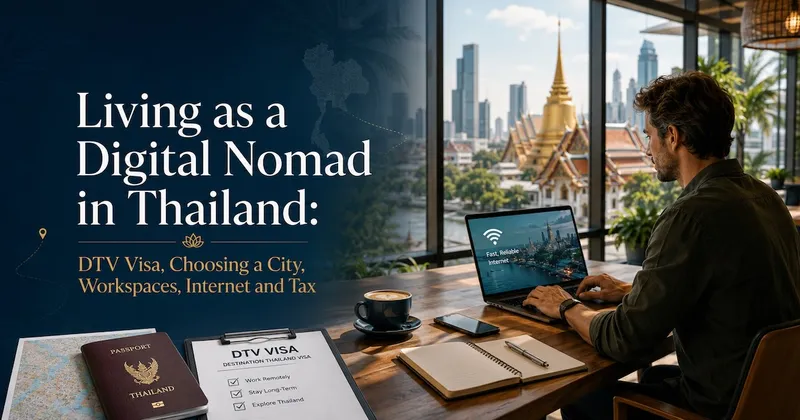
Visa: DTV Makes Digital Nomads Legal
- The DTV (Destination Thailand Visa) is Thailand's long-stay visa for remote workers and freelancers, multi-entry with a long stay per entry, moving "working remotely from Thailand" from grey to lawful
- For eligibility, documents and common misconceptions see our DTV digital nomad visa guide; unsure which long-stay visa to pick? Stop doing repeated tourist-visa runs — for the risks see our tourist visa and entry guide
- Note: the DTV is a stay permit, not local work authorization — serving Thai local clients or being employed by a Thai company still requires solving work legality
Choosing a City: Bangkok vs Chiang Mai vs the Islands
- Bangkok: strongest infrastructure, densest coworking and community, easy transport and healthcare — for those wanting efficiency and networks; for areas see our Bangkok neighborhood guide
- Chiang Mai: cheapest, slower pace, the strongest nomad scene — the downside being the burning season (about Feb–Apr) with poor air; see our Chiang Mai long-stay guide
- Islands (Phuket, Samui, etc.): great scenery, good for a short change of scene; living long term means accepting weaker internet and healthcare than the big cities
Workspaces and Internet: Coworking and Cafés
- Coworking spaces: everywhere in Bangkok and Chiang Mai, with flexible day passes and monthly plans — more stable and social than cafés
- An internet backup is essential: home broadband plus a phone 5G hotspot so video calls don't drop — for broadband see our internet and TV guide, for SIMs our SIM card guide
- Time-zone advantage: Thailand is just one hour from China, so working with home teams and clients has almost no time-zone cost — one of the most China-friendly time zones for global nomads
Cost: Roughly How Much a Month
- Chiang Mai cheapest, Bangkok mid-range, islands pricier in peak season; the big items are rent, coworking and food
- Short lets are flexible but pricier per unit — settle in and switch to a long lease to save; for setting up see our settling-in guidance
- Budget health insurance as a fixed cost — don't go uninsured; for care see our medical guide
Tax: The Hidden Homework of 183 Days
A point many nomads overlook: 183 days in Thailand in a year makes you a Thai tax resident, regardless of visa. Once a resident, under the 2024 rules foreign income remitted into Thailand that year must be filed. Don't discover the issue when you remit — plan your fund structure ahead and keep source records; for details see our tax residency and foreign income guide.
Healthcare, Community and Sustainability
- Healthcare: get insurance covering outpatient and inpatient care, so private hospitals are worry-free in an emergency — see our Thailand hospital guide
- Community: nomad life gets lonely — actively plug into coworking communities, interest groups and the Chinese circle; see our Chinese community resources map
- Sustainability: build visa, tax, insurance and social life as a long-term system rather than "just coming to try it out" — that's what decides whether Thailand truly becomes a second home
Frequently Asked Questions
Is remote work in Thailand as a digital nomad legal?
Working remotely for a foreign employer or clients on a DTV or similar long-stay visa is a route Thailand has recently opened up lawfully — far safer than repeated tourist-visa runs. Note that the DTV is a stay permit, not local work authorization — serving Thai local clients or being employed by a Thai company still needs a work permit. Legality turns on "who you work for and what visa you hold" — don't force it on a tourist visa long term, which is risky as policy tightens.
Bangkok or Chiang Mai — which is better for a digital nomad?
It depends on what you want. Choose Bangkok for efficiency, networks, easy healthcare and the strongest infrastructure; choose Chiang Mai for low cost, a slow pace and the densest nomad scene, but accept the Feb–Apr burning season. Many split time between the two or migrate seasonally (leaving Chiang Mai in burning season). Islands suit a short change of scene; long term means accepting weaker internet and healthcare. Test-live a month or two in each before setting a long-term base.
Do I pay tax as a digital nomad in Thailand?
Possibly. It's about days, not the visa: 183 days in Thailand in a year makes you a tax resident, after which under the 2024 rules foreign income remitted that year must be filed. Whether you actually owe tax depends on income type, amount and China–Thailand treaty credits. Don't ignore this — plan your fund structure ahead, keep tax-paid records, and consult a professional if needed, all per the Revenue Department's current rules.
Is the internet stable enough for remote work?
City internet is mature — Bangkok and Chiang Mai's broadband and 5G handle video calls and up/downloads fine, and coworking spaces are especially stable. The key is a dual backup: home broadband plus a phone hotspot, avoiding a single point of failure ruining a meeting. Islands and remote areas are less stable, so those heavily reliant on the internet should favor the big cities. During outages, coworking spaces and malls are reliable backup workspots.
Need a Hand?
TaiHuBang helps digital nomads settle in Thailand: DTV and other long-stay visa guidance, settling-in support (housing, broadband, SIM, bank account), and tax and insurance referrals. Visa matters are per Immigration's current rules. See our visa service, or submit an inquiry, and browse our community Q&A; a consultant will reply within 24 hours.
Related Articles
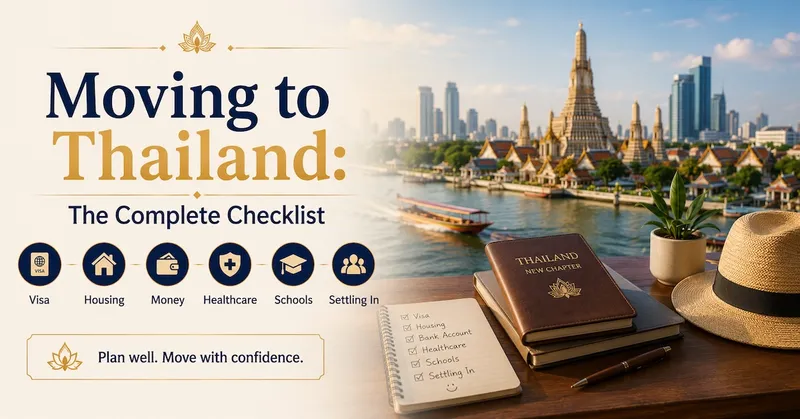
Moving to Thailand: The Complete Checklist — Visa, Housing, Money, Healthcare, Schools & Settling In
Planning to move to Thailand feels overwhelming, but it breaks down into a clear timeline: decide how you'll stay long-term (visa), which city and district to live in (housing), how to bring and spend money (finances), how to handle healthcare and insurance (medical), how children will attend school (education), and the pile of on-the-ground tasks after arrival — SIM, broadband, utilities, driving licence, transport and community (settling in). This is a master checklist and roadmap for moving to Thailand, organised into three stages — before you go, the first month, and once settled — linking each step to the detailed guide that expands on it, so you build your life without missing anything. Specific rules follow current agency regulations; consult on professional matters.
7/24/2026

How Much Does It Cost to Live in Thailand per Month? Bangkok, Chiang Mai & Pattaya Cost Comparison
There's no single answer to how much a month in Thailand costs — it depends mainly on the city, housing tier and lifestyle. The biggest item is rent (central Bangkok condos are priciest; Chiang Mai and Pattaya are cheaper), followed by food (street food is very cheap, while restaurants and imported groceries push it up sharply), transport (BTS/MRT and taxis in Bangkok, motorbikes elsewhere), utilities, health insurance, and visa and sundries. Roughly three tiers: frugal (local food, a small unit outside the core), comfortable (a one-bed in a decent area, eating out often with occasional leisure), and generous (a good unit in the core, restaurants often, a helper, insurance). This guide breaks down each cost by city and spending tier to help you estimate your monthly budget; actual figures fluctuate with exchange rates, location and personal habits.
7/24/2026

Postpartum Care & Confinement Centres in Thailand: Services, Prices, Visas & How to Choose
More Chinese families in and heading to Thailand are choosing postpartum confinement care there. Thai confinement centres typically offer postpartum lodging, confinement meals, mother-and-baby care, lactation support and postnatal recovery, with the environment and care experience as the main selling points. Choosing one comes down to four things: credentials and hygiene (properly registered, professional carers), services (carer ratio, meals, infant care, medical links), price and packages (per day/per package, whether care and meals are included), and location and hospital links (distance to the delivery/paediatric hospital and whether emergencies can reach care quickly). If you're travelling to give birth, also plan the visa, delivery hospital, birth registration and the baby's documents in advance. This guide covers services and pricing, how to choose, and how it connects with delivery and visas, subject to the centre's actual conditions and agency rules.
7/24/2026