 泰互帮
泰互帮10 Common Pitfalls Buying Property in Thailand: From Nominees to Stalled Projects
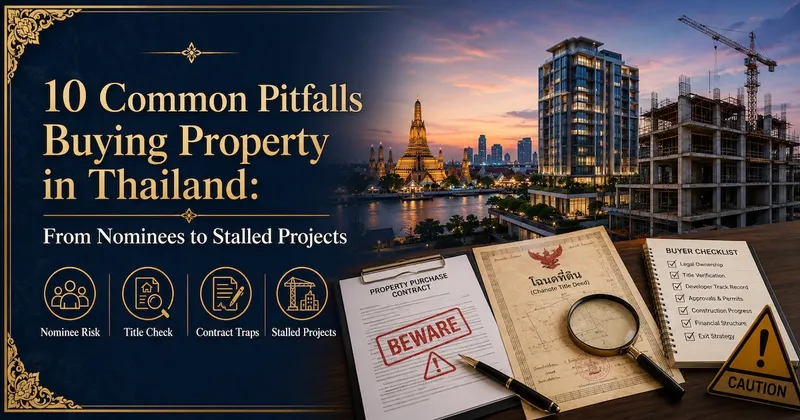
Pitfall 1: Nominee "Company Holding" to Buy Land
To buy a landed villa, setting up a Thai company with nominee Thai shareholders to dodge the rule that foreigners can't own land is the most common and most dangerous trap. It's a non-compliant nominee arrangement, and in a dispute or audit your title may be unprotected or lost. For landed property, use a compliant long-term lease (Leasehold) or a genuinely operating company structure, and consult a lawyer first — don't copy "everyone does it" advice. See the foreigner buying guide.
Pitfall 2: Paying a Deposit Without Checking the Quota
Condos have a 49% foreign quota, and popular projects may be full. Before the deposit, get the developer/agent to provide a quota confirmation that the unit is within the foreign quota with room left, or you may pay and be unable to register foreign title or transfer.
Pitfall 3: Trusting Verbal Promises and "Guaranteed Rent-Back"
A salesperson's verbal promises (handover date, rent-back, amenities) mean nothing unless written into the contract. "Guaranteed X% rent-back" is often a price-inflation tool, and honouring it depends on the developer operating — a real risk. Recompute coolly using the investment return breakdown.
Pitfall 4: Off-Plan from a Weak Developer That Delays or Stalls
Off-plan carries "pay first, receive later" time risk, and a poor-reputation, cash-strained developer can delay or even stall, with paid sums hard to recover. Check the delivery record, EIA and construction permits — see the off-plan guide.
Pitfall 5: Not Checking a Resale Home's Mortgage and Arrears
A resale home may carry a mortgage, seizure or unpaid management fees and utilities. Mortgaged homes must be discharged before transfer, and arrears settled before transfer or put on the seller — see the resale process.
Pitfall 6: Cash Settlement With No Provable Source of Funds
Paying the price in cash makes the source hard to prove and yields no FET certificate, blocking foreign-title transfer and future repatriation. The price should be remitted compliantly from abroad with a bank paper trail.
Pitfall 7: Skipping Lawyer Due Diligence
Signing the contract yourself to save the legal fee is saving pennies to risk pounds. A lawyer uncovers title, mortgage, dispute and contract traps; the fee is small against the price yet blocks the costliest pitfalls.
Pitfall 8: Ignoring the FET Certificate
The FET is key for foreign freehold transfer and the basis for compliantly repatriating sale proceeds later. Note the purchase purpose when remitting and keep the FET — don't discard it after remitting.
Pitfall 9: Being Misled by Renders and "Sure-Win" Talk
Off-plan renders and show units may differ from the delivered home; "sure-win" and "only goes up" are sales talk. Investment carries no guarantee — inspect strictly against the delivery standard and compute returns on a cool net basis.
Pitfall 10: Assuming Buying Grants a Visa
Buying doesn't equal residency or a visa — a common misconception. Long-term living needs a separate Elite or retirement visa — see the Elite visa guide and retirement living guide. Plan buying and the visa separately.
FAQ
What's the biggest pitfall for foreigners buying in Thailand?
The most dangerous is using nominee Thai shareholders in a "company holding" to buy land, dodging the rule that foreigners can't own land. Many do this to buy a landed villa, but it's a non-compliant nominee arrangement, and in a dispute, divorce, a nominee reneging or an official audit, your title may be unprotected or even lost. This isn't a "everyone does it, so it's fine" matter — it's on a legal red line. For landed property, the correct route is a compliant long-term lease (Leasehold) or a genuinely operating company structure, and you must consult a lawyer first. Paying a deposit without checking the foreign quota and trusting verbal rent-back promises are also frequent big traps. Subject to Thai law and the Land Department's current rules, with major decisions verified by a lawyer.
How do I avoid being scammed buying property in Thailand?
Three things block the vast majority of pitfalls: first, use a lawyer for due diligence — verifying title, seller identity, mortgages and arrears, the foreign quota and contract terms; the fee is small against the price and the best value; second, remit compliantly and keep the FET — the price from abroad, a bank paper trail, and the FET certificate, not cash settlement; third, put everything in the contract — handover date, tax split, rent-back promises, refund and default, furniture handover; verbal promises unwritten mean nothing. Add choosing a reputable developer and checking the quota before the deposit, and you avoid most traps. Not chasing "guaranteed sure-win" gimmicks and not skipping professional review are the most practical principles. Subject to the lawyer's opinion and the relevant rules.
Do I really need a lawyer, or can I do it myself to save money?
Strongly recommended, especially for foreigners, resale, villas, or company/lease structures. Doing it yourself saves the legal fee but saves pennies to risk pounds: whether title is clean, the seller genuine, mortgages or arrears exist, contract terms hide traps, and the foreign quota has room — these checks are technical and hard for an ordinary buyer to see clearly. A lawyer's due diligence and contract review cost only a small fraction of a multi-million-baht price yet block the costliest pitfalls. The cases that go badly wrong, with heavy losses, are often exactly those done alone to save the fee. Engage a vetted lawyer via legal consulting, subject to the lawyer's professional opinion.
Need Help?
TaiHuBang offers risk control and support across the Thai buying process: title and foreign-quota checks, mortgage and arrears due diligence, developer and rent-back contract background checks, remittance and FET guidance, contract review and Land Office transfer support, and lawyer referral. We only provide consulting, process guidance and document assistance — no nominee arrangements; this article is not investment advice, with professional conclusions verified against a lawyer and the Land Department's current rules. See legal consulting or submit an enquiry and an advisor will reply within 24 hours.
Related Articles
Thailand vs Malaysia vs Bali: Choosing Where to Buy in Southeast Asia and Foreign-Ownership Rules Compared
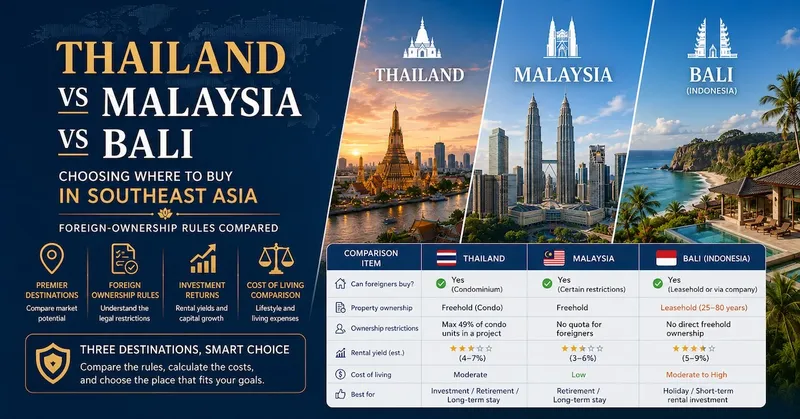
For buying in Southeast Asia, Thailand, Malaysia and Indonesia's Bali are three popular choices, but foreign-ownership rules, costs and suitability differ greatly. Thailand: foreigners can buy condo freehold (49% foreign quota), can't hold land individually, and villas use leasehold or a company; mature living, strong tourism, good value. Malaysia: foreigners can buy property above a local minimum price threshold (including landed property, rules by state), with the MM2H long-stay programme, widespread English and an English-style legal system. Bali (Indonesia): foreigners can't hold land title directly, commonly using Hak Pakai (right of use) or leasehold, with a strong holiday character and relatively complex rules. This guide compares the three on ownership, residency, cost and who they suit; each country's rules are subject to its official current rules, and this is not investment or legal advice.
7/16/2026
The Baht Exchange Rate and Buying Timing: How It Affects Your Thai Property Cost
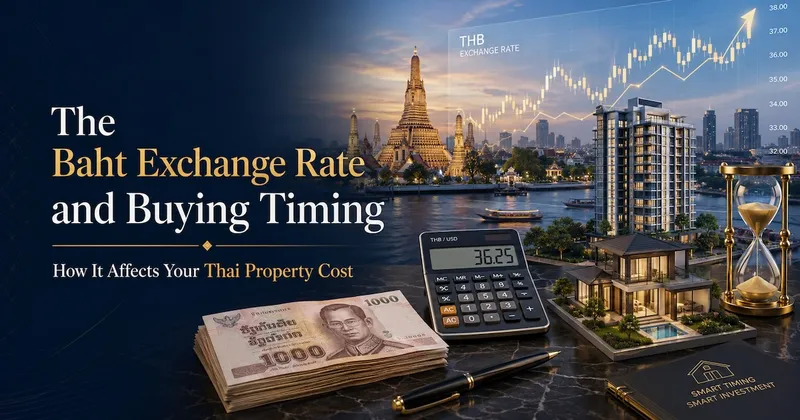
Thai property is priced in baht, but your funds are mostly in another currency, so the baht exchange rate directly affects your real purchase cost and your take-home proceeds when you later sell. Put simply: the stronger your currency against the baht (the more baht it buys), the cheaper the purchase; weaker, and it costs more. The rate also affects off-plan instalments (long span, big swings), the amount you repatriate on sale, and your return in your home currency. But be clear-eyed: rates are hard to predict, don't rush to buy chasing a rate, and don't count on the rate to make money — the home's location, title and price are what matter. The rational approach is to treat the rate as a cost variable in the budget, use tools to compute, and convert in tranches to spread risk. This guide explains how the rate affects buying and how to treat timing rationally; rates are live, not investment or financial advice.
7/16/2026
Thai Property Due Diligence Checklist: Title, Debts and Compliance to Verify Before Transfer
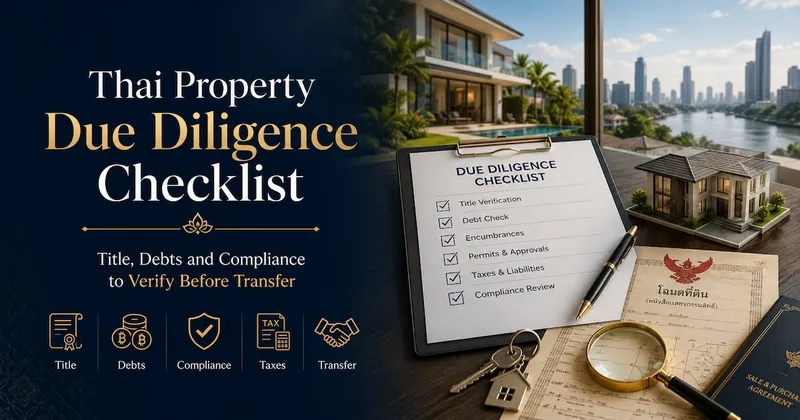
In Thailand, due diligence before transfer is the most important, most pitfall-blocking step. Five core areas to check: first, title — verify the deed type (whether Chanote), that the owner is the seller, and that area and boundaries match; second, debts and encumbrances — any mortgage, seizure, or unpaid management fees and utilities; third, the foreign quota (condos) and land limits (villas) — whether a foreigner can lawfully hold it; fourth, the developer and project (off-plan) — delivery record, EIA and construction permits; fifth, the contract and funds — review the sale contract and confirm funds can be remitted compliantly for the FET. Most of this needs a lawyer verifying originals at the Land Office. This guide gives a checklist to work against, subject to the Land Department's current rules and a lawyer.
7/16/2026