 泰互帮
泰互帮Buying Thai Property Remotely: The Power of Attorney (POA) Explained
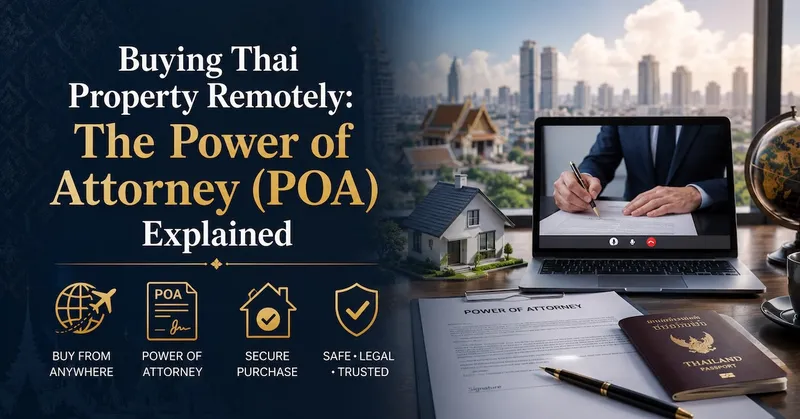
The Core of Remote Buying: the POA
- Transfer usually needs the buyer present: Land Office transfer registration generally requires the buyer in person — the main hurdle to remote buying
- The POA solves attendance: via a compliant Power of Attorney, you can authorise an agent in Thailand (usually a lawyer) to sign and handle the transfer for you
- Authority must be clear: the POA must specify the scope (which acts), the property, and the agent's identity, to avoid improper authorisation
The Full Remote Buying Process
- Remote viewing and due diligence: view by video and agent footage, with a lawyer checking title, quota and mortgages — due diligence can't be skipped
- Lawyer contract review: before signing remotely, a lawyer reviews the sale contract's terms, delivery and default clauses
- Prepare and notarise the POA: arrange the POA in your home country, usually requiring notarisation/legalisation, authorising the agent in Thailand to handle the transfer
- Remit from abroad for the FET: remit the price compliantly from overseas and obtain the FET — see funds and the FET
- Lawyer transfers using the POA: the agent uses the POA to transfer and pay taxes at the Land Office
- Receive the title: transfer done, title registered in your name, the deed collected by the agent or delivered as agreed
What to Watch When Arranging a POA
- Precise scope: spell out what the agent can do (sign the contract, handle transfer, pay taxes, collect the deed), neither too broad nor too narrow
- Notarisation/legalisation: a POA issued in your home country usually needs notarisation and required legalisation to be used at the Thai Land Office; format and requirements per the Land Office/lawyer's guidance
- Choose a trustworthy agent: the agent (usually a lawyer) holds important authority, so choose a reliable, accountable professional
- Fund safety: remotely, fund settlement especially needs a safe arrangement, to avoid "paid but not transferred" risk
Remote Buying Risks and Advice
- Not seeing the real thing: remote viewing inevitably has gaps — use multi-angle video and a trusted person on site, especially cautious with resale — see the resale process
- Authority and funds interlock: the POA, remittance and transfer can each block the deal if documents don't match — professional oversight throughout
- Strongly use a lawyer: remote buying relies on professionals even more than in person; the lawyer handles due diligence, contract review and POA transfer — the key to remote safety, against the buying process
FAQ
Can I complete a purchase remotely without being in Thailand?
Yes, but it must be arranged compliantly with professional oversight. The core hurdle is that Land Office transfer usually requires the buyer present, solved by arranging a Power of Attorney (POA) — lawfully authorising an agent in Thailand (usually a lawyer) to sign documents and handle the transfer for you. The full chain: remote viewing and due diligence, lawyer contract review, preparing and notarising the POA, remitting from abroad for the FET, the lawyer using the POA to transfer at the Land Office, and receiving the title. Remote handling demands more of documents, the scope of authority and fund compliance, and any weak link can block transfer. So remote buying relies on a reliable lawyer throughout even more than in person. Subject to the Land Department's current rules, with key steps verified by a lawyer.
How do I arrange a POA, and does it need notarising?
Yes. The POA is the legal document authorising an agent in Thailand to handle your purchase, and a POA issued in your home country usually needs notarisation and required legalisation to be accepted and used by the Thai Land Office; the exact format, language and legalisation requirements are per the Land Office's rules and your lawyer's guidance. The key to a POA is a precise scope of authority — spelling out what the agent can do (sign the sale contract, handle transfer, pay taxes, collect the deed), neither too narrow to complete nor too broad to be risky. The agent also holds important authority, so choose a trustworthy, accountable professional (usually a lawyer). Have the POA's drafting, notarisation and use guided by a lawyer throughout, to avoid format or authority issues blocking transfer. Subject to the Land Department's current rules.
What's the biggest risk of remote buying, and how do I reduce it?
Two main risks: first, not seeing the real thing — remote viewing can differ from reality, and resale may have condition or title issues; second, authority and funds interlock — the POA, remittance and transfer can each block the deal or even cause "paid but not transferred" if documents don't match or the sequence errs. Key ways to reduce it: first, don't skip due diligence — have a lawyer check title, quota and mortgages, and a trusted person view from multiple angles; second, use a safe fund-settlement arrangement — don't wire large sums straight to an unfamiliar party; third, use a reliable lawyer throughout — the lawyer handles due diligence, contract review and POA transfer, the core safeguard of remote buying. Subject to the Land Department's rules and the lawyer's opinion.
Need Help?
TaiHuBang offers consulting and process support for remote buying: remote due diligence and title checks, sale contract review, POA drafting and notarisation/legalisation guidance, overseas remittance and FET guidance, and lawyer POA-transfer support. We only provide consulting, process guidance and document assistance and don't handle your funds, with professional conclusions verified against a lawyer and the Land Department's current rules; this article is not investment advice. See legal consulting or submit an enquiry and an advisor will reply within 24 hours.
Related Articles
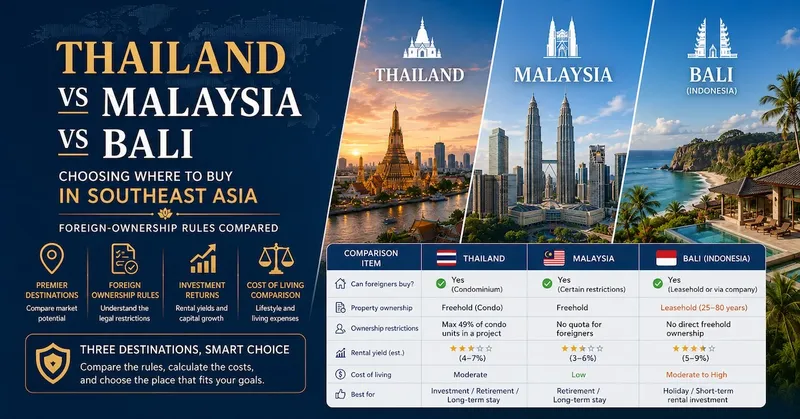
Thailand vs Malaysia vs Bali: Choosing Where to Buy in Southeast Asia and Foreign-Ownership Rules Compared
For buying in Southeast Asia, Thailand, Malaysia and Indonesia's Bali are three popular choices, but foreign-ownership rules, costs and suitability differ greatly. Thailand: foreigners can buy condo freehold (49% foreign quota), can't hold land individually, and villas use leasehold or a company; mature living, strong tourism, good value. Malaysia: foreigners can buy property above a local minimum price threshold (including landed property, rules by state), with the MM2H long-stay programme, widespread English and an English-style legal system. Bali (Indonesia): foreigners can't hold land title directly, commonly using Hak Pakai (right of use) or leasehold, with a strong holiday character and relatively complex rules. This guide compares the three on ownership, residency, cost and who they suit; each country's rules are subject to its official current rules, and this is not investment or legal advice.
7/16/2026
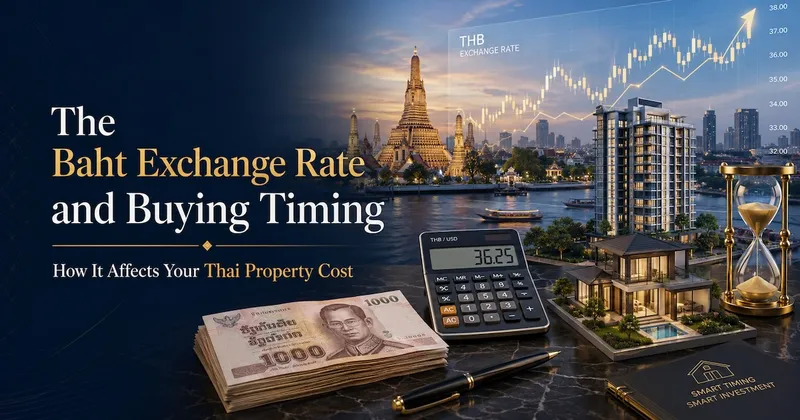
The Baht Exchange Rate and Buying Timing: How It Affects Your Thai Property Cost
Thai property is priced in baht, but your funds are mostly in another currency, so the baht exchange rate directly affects your real purchase cost and your take-home proceeds when you later sell. Put simply: the stronger your currency against the baht (the more baht it buys), the cheaper the purchase; weaker, and it costs more. The rate also affects off-plan instalments (long span, big swings), the amount you repatriate on sale, and your return in your home currency. But be clear-eyed: rates are hard to predict, don't rush to buy chasing a rate, and don't count on the rate to make money — the home's location, title and price are what matter. The rational approach is to treat the rate as a cost variable in the budget, use tools to compute, and convert in tranches to spread risk. This guide explains how the rate affects buying and how to treat timing rationally; rates are live, not investment or financial advice.
7/16/2026
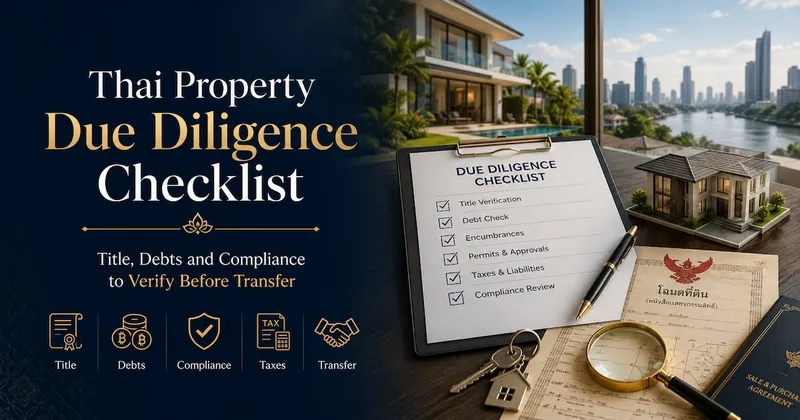
Thai Property Due Diligence Checklist: Title, Debts and Compliance to Verify Before Transfer
In Thailand, due diligence before transfer is the most important, most pitfall-blocking step. Five core areas to check: first, title — verify the deed type (whether Chanote), that the owner is the seller, and that area and boundaries match; second, debts and encumbrances — any mortgage, seizure, or unpaid management fees and utilities; third, the foreign quota (condos) and land limits (villas) — whether a foreigner can lawfully hold it; fourth, the developer and project (off-plan) — delivery record, EIA and construction permits; fifth, the contract and funds — review the sale contract and confirm funds can be remitted compliantly for the FET. Most of this needs a lawyer verifying originals at the Land Office. This guide gives a checklist to work against, subject to the Land Department's current rules and a lawyer.
7/16/2026