 泰互帮
泰互帮How to Buy Property in Thailand: The 8 Steps from Viewing to Land Office Transfer
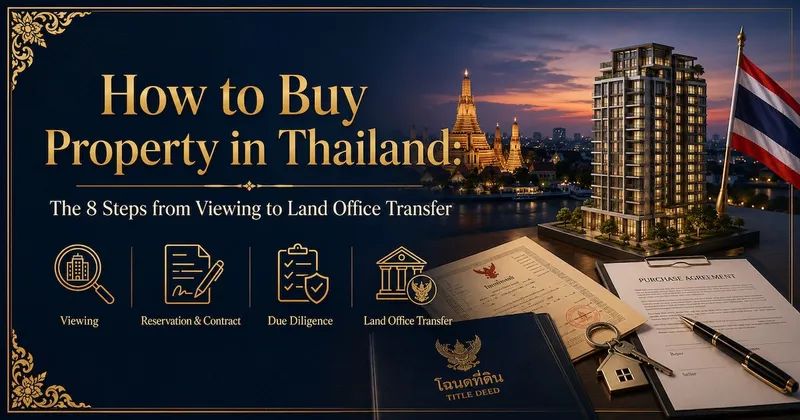
Step 1: Be Clear on Purpose and Budget First
- Purpose drives selection: own-use looks at amenities and commute; investment looks at rental yield and resale — different logic
- Budget must include taxes: beyond the price, reserve for transfer taxes, legal fees and furniture — see the Thai property taxes and fees guide
- Funds must be compliant: foreign buyers usually remit the price from abroad — plan the remittance route early
Step 2: Choose an Area and View
- Pick city and district first: Bangkok, Chiang Mai, Pattaya and Phuket each have a profile — for Bangkok, see the Bangkok area guide
- Off-plan vs resale: off-plan means show units and developer reputation; resale lets you see the real thing but check its condition
- Visit in person: transport, surroundings, management, floor, aspect and noise all need to be felt on site, not judged from renders
Step 3: Check Title and the Foreign Quota
- Check the title deed (Chanote): confirm clean title, no mortgage or dispute, and that the seller is the true owner
- Check the foreign quota: for condos, confirm the unit is within the 49% foreign quota with room left — see the foreigner buying guide
- Check the developer (off-plan): past projects, delivery record, EIA and construction permits
Step 4: Sign a Reservation and Pay a Deposit
- Reservation agreement: locks the unit for a deposit (amount varies), stating unit, price and the payment plan
- Read the refund terms: when and how much you can get back — clarify before signing
- Don't pay big sums yet: the reservation amount is limited; large payments belong after the contract and due diligence
Step 5: Lawyer Does Due Diligence
- Title and debt check: the lawyer verifies title, mortgages, arrears and co-ownership interests
- Contract review: sale terms, delivery standards, default liability, renewal terms (for leasehold)
- Why it's worth it: a legal fee is small against the price but blocks major title and contract pitfalls
Step 6: Sign the Sale Contract and Pay by Milestones
- Resale: after signing, usually pay the balance in one go and set a transfer date
- Off-plan: pay by construction milestones (signing, topping-out, handover), transferring at handover
- Pay through proper channels: keep a paper trail; avoid cash settlement that's hard to prove
Step 7: Remit the Price from Abroad and Obtain the FET
- Remit foreign currency, convert to baht: the bank issues the FET certificate; note the purchase purpose
- FET is key for transfer: foreign freehold registration typically requires it, proving overseas funds
- For mortgages, see the foreigner mortgage guide
Step 8: Transfer at the Land Office and Get the Title
- Both parties attend the Land Office: submit the title deed, passport, FET and the condo foreign-quota confirmation
- Pay transfer taxes on the spot: transfer fee, stamp duty etc. per the rules, split as the contract provides
- Receive the re-registered title deed: registration done, title now in the buyer's name
- If you can't attend in person, a Power of Attorney (POA) can be arranged lawfully for an agent to act
FAQ
How long does buying property in Thailand take?
It varies a lot by property type. Resale, with clean title and funds ready, typically completes in a few weeks to a month or two from contract, due diligence and remittance to Land Office transfer. Off-plan spans much longer — after the reservation and contract you pay by construction milestones and only transfer once the project is built and handed over, which can be one to several years. Key drivers are title checks, foreign-quota confirmation, compliant fund remittance and both parties' cooperation. Allow ample time, especially for overseas remittance and the FET, subject to the Land Department and developer's schedule.
Do I need a lawyer to buy property in Thailand?
It's not legally required but strongly recommended, especially for resale, villas, leasehold or company-held cases. The lawyer does due diligence — verifying clean title, checking for mortgages, arrears and disputes, confirming the seller is the true owner — and reviews the sale contract's delivery standards, default liability and renewal terms. Against the price, the legal fee is small yet blocks major title and contract pitfalls. Paying large sums on an agent's verbal promise is high-risk. To engage a vetted lawyer, connect via legal consulting, subject to the lawyer's professional opinion.
Can I buy Thai property remotely from abroad?
Yes, but it must be arranged properly. The key hurdle is that the Land Office transfer usually requires the buyer to attend; if you can't be there in person, you can lawfully arrange a Power of Attorney (POA) for an agent in Thailand (such as your lawyer) to handle the transfer. Funds must also be remitted compliantly from abroad with an FET, and the contract can be signed remotely by compliant means. Remote buying demands more of your documents, authorisation and fund trail, so have a lawyer assist throughout to avoid improper authorisation or missing proof of funds blocking the transfer, subject to the Land Department's current rules.
Need Help?
TaiHuBang offers consulting and support across the Thai buying process: title and quota checks, purchase contracts and due diligence, guidance on remittance and the FET, Land Office transfer document support, and Power of Attorney and lawyer referral. We only provide consulting, process guidance and document assistance — no non-compliant nominee arrangements — with professional conclusions verified against a lawyer and the Land Department's current rules; this article is not investment advice. See legal consulting or submit an enquiry and an advisor will reply within 24 hours.
Related Articles
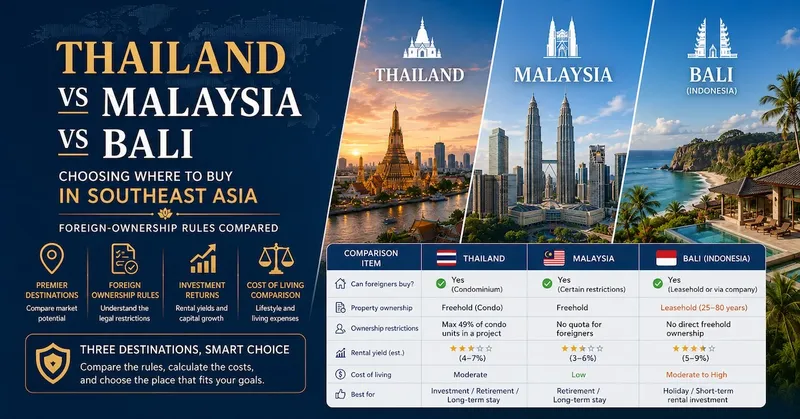
Thailand vs Malaysia vs Bali: Choosing Where to Buy in Southeast Asia and Foreign-Ownership Rules Compared
For buying in Southeast Asia, Thailand, Malaysia and Indonesia's Bali are three popular choices, but foreign-ownership rules, costs and suitability differ greatly. Thailand: foreigners can buy condo freehold (49% foreign quota), can't hold land individually, and villas use leasehold or a company; mature living, strong tourism, good value. Malaysia: foreigners can buy property above a local minimum price threshold (including landed property, rules by state), with the MM2H long-stay programme, widespread English and an English-style legal system. Bali (Indonesia): foreigners can't hold land title directly, commonly using Hak Pakai (right of use) or leasehold, with a strong holiday character and relatively complex rules. This guide compares the three on ownership, residency, cost and who they suit; each country's rules are subject to its official current rules, and this is not investment or legal advice.
7/16/2026
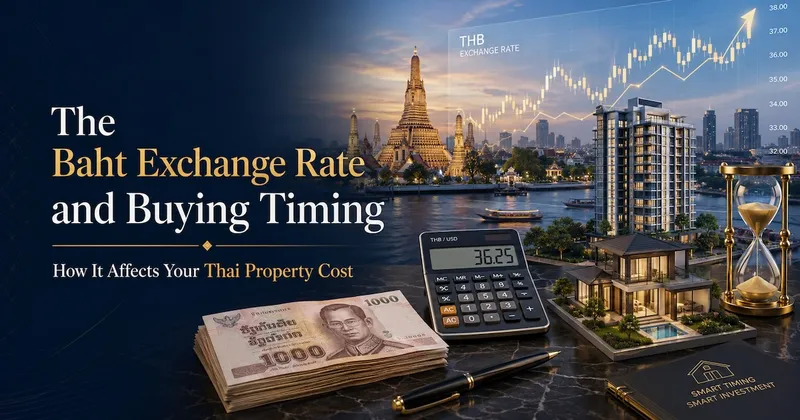
The Baht Exchange Rate and Buying Timing: How It Affects Your Thai Property Cost
Thai property is priced in baht, but your funds are mostly in another currency, so the baht exchange rate directly affects your real purchase cost and your take-home proceeds when you later sell. Put simply: the stronger your currency against the baht (the more baht it buys), the cheaper the purchase; weaker, and it costs more. The rate also affects off-plan instalments (long span, big swings), the amount you repatriate on sale, and your return in your home currency. But be clear-eyed: rates are hard to predict, don't rush to buy chasing a rate, and don't count on the rate to make money — the home's location, title and price are what matter. The rational approach is to treat the rate as a cost variable in the budget, use tools to compute, and convert in tranches to spread risk. This guide explains how the rate affects buying and how to treat timing rationally; rates are live, not investment or financial advice.
7/16/2026
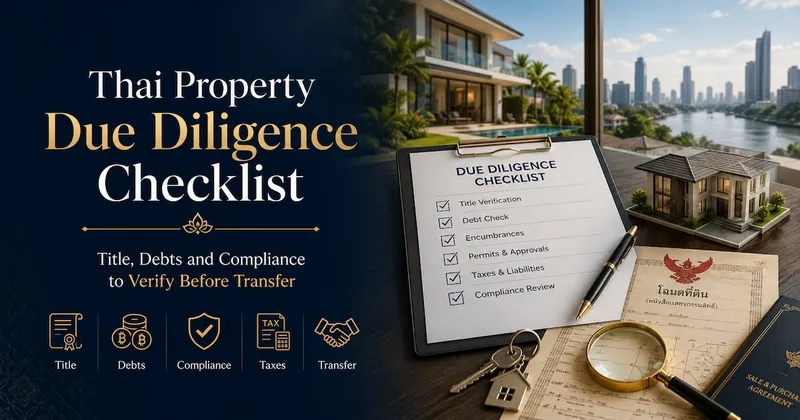
Thai Property Due Diligence Checklist: Title, Debts and Compliance to Verify Before Transfer
In Thailand, due diligence before transfer is the most important, most pitfall-blocking step. Five core areas to check: first, title — verify the deed type (whether Chanote), that the owner is the seller, and that area and boundaries match; second, debts and encumbrances — any mortgage, seizure, or unpaid management fees and utilities; third, the foreign quota (condos) and land limits (villas) — whether a foreigner can lawfully hold it; fourth, the developer and project (off-plan) — delivery record, EIA and construction permits; fifth, the contract and funds — review the sale contract and confirm funds can be remitted compliantly for the FET. Most of this needs a lawyer verifying originals at the Land Office. This guide gives a checklist to work against, subject to the Land Department's current rules and a lawyer.
7/16/2026