 泰互帮
泰互帮Taxes and Fees When Buying Property in Thailand: Transfer Fee, Stamp Duty and Holding Costs
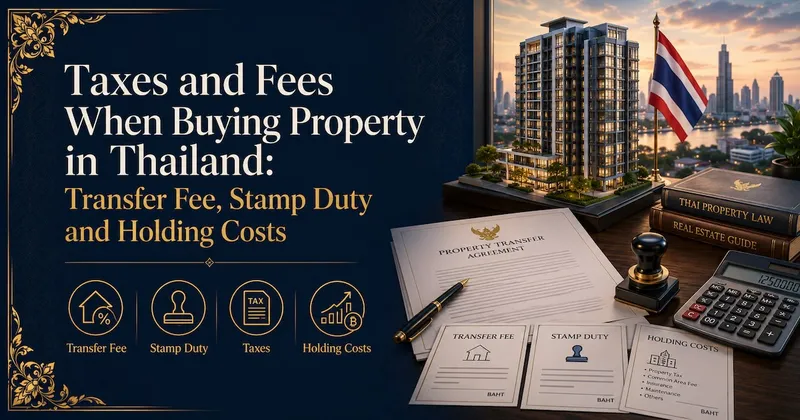
What's Mainly Due on Transfer Day
- Transfer fee: typically 2% of the appraised value, paid at the Land Office on registration — the biggest single item
- Stamp duty: about 0.5%, charged as an alternative to SBT below, not on top of it
- Specific business tax (SBT): about 3.3%, charged when the seller resells having held under 5 years (or not meeting the registered-residence condition); when SBT applies, stamp duty is not also charged
- Withholding tax: an individual seller pays on a progressive basis, a company at a fixed rate, withheld by the Land Office
Note: the tax base is usually the Land Office appraised value or the sale price, whichever is higher — subject to the Land Office.
Who Pays and How It's Split
- Set by contract: the law doesn't force who bears which item; buyer and seller state the split in the contract
- Common practice: the transfer fee is often split 50/50, while SBT and withholding tax usually fall on the seller — but the contract governs
- Off-plan from a developer: the developer may require the buyer to bear all or part of the transfer fee — check before signing
- Clarify who pays before the deposit: this directly affects your true total cost — don't discover extra costs on transfer day
Holding Costs After You Buy
- Common area (management) fee: condos charge per square metre of built area per month, varying with the project's tier
- Sinking fund: usually a one-off at handover, for major common-area maintenance
- Land and building tax: Thailand levies an annual tax on land and buildings by use and appraised value — own-use, rental and vacant differ; rates are low but note them
- Utilities: paid on use; for rentals, factor in vacancy costs
Taxes When You Later Sell
- The transfer taxes run again: selling also involves the transfer fee, stamp duty or SBT, and withholding tax
- Holding 5+ years saves more: reselling after 5 years (or meeting the registered-residence condition) applies stamp duty instead of the 3.3% SBT — a lower cost
- Repatriating funds: a foreign seller's proceeds must be remitted out compliantly — keep the original FET and transaction records to ease the outflow
A Simple Way to Total It Up
- Purchase budget = price + your share of transfer taxes + legal fees + furniture/fit-out (if needed)
- Holding cost = management fee + sinking fund + property tax + utilities (+ management and vacancy if renting)
- Exit cost = transfer taxes on sale + withholding tax; longer holding saves on some of it
- Factor all of these into returns — don't look at gross rent alone; pair with the mortgage guide for the maths
FAQ
How much tax and fees do I pay buying property in Thailand?
There's no single figure — it depends on the 5-year holding point and the contract split. The core transfer-day items are: transfer fee about 2% of appraised value, stamp duty 0.5% or (if the seller has held under 5 years) SBT about 3.3% (the two don't stack), plus the seller's withholding tax. Roughly, total transaction taxes usually come to a few percent of the deal, set by the tax base (appraised or sale price, whichever higher) and the split. There are also legal fees and, during ownership, management fees, sinking fund and property tax. Clarify the fee list and split before the deposit; exact amounts are subject to the Land Department and Revenue Department's current rules.
Does the buyer or seller pay the transfer fee and taxes?
It's agreed in the contract — the law doesn't force who bears which item. In practice the transfer fee is often split 50/50, while SBT and withholding tax usually fall on the seller, but that's just convention and the contract governs. When buying off-plan from a developer, the developer may require the buyer to bear all or part of the transfer fee. So before paying a deposit, get "who pays each item" written into or clarified in the contract — it directly affects your true total cost and avoids discovering extra costs on transfer day. Subject to the contract and Land Department rules.
What annual costs come with owning Thai property?
Four main types: first, the common area (management) fee, charged per square metre per month on condos, higher for premium projects; second, the sinking fund, usually a one-off at handover for major common maintenance; third, the land and building tax, an annual tax by use and appraised value (own-use, rental and vacant differ; overall low); fourth, utilities. If you rent it out, add management costs and vacancy. Include all of these when working out investment returns — don't look at gross rent alone. Rates are subject to Thailand's tax authorities' current rules.
Need Help?
TaiHuBang offers cost estimation and compliant support for Thai property transactions: a transfer-tax list and split consultation, holding-cost estimates, guidance on sale taxes and repatriating funds, and accountant and lawyer referral. We only provide consulting and process support, with professional tax conclusions verified against the Revenue Department, Land Department and a licensed accountant; this article is not investment or tax advice. See tax services and legal consulting, or submit an enquiry and an advisor will reply within 24 hours.
Related Articles
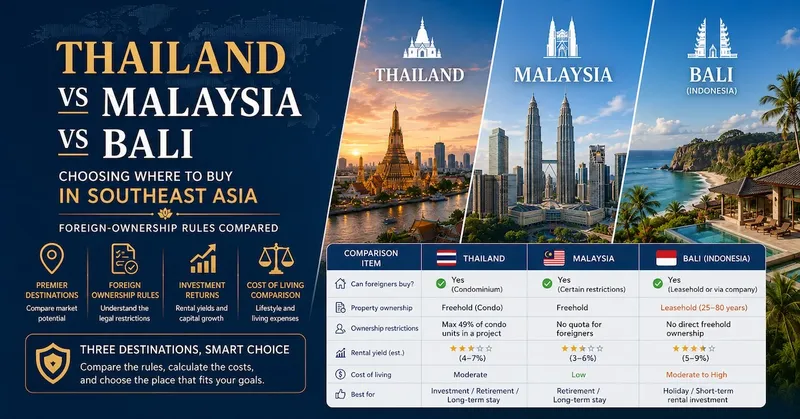
Thailand vs Malaysia vs Bali: Choosing Where to Buy in Southeast Asia and Foreign-Ownership Rules Compared
For buying in Southeast Asia, Thailand, Malaysia and Indonesia's Bali are three popular choices, but foreign-ownership rules, costs and suitability differ greatly. Thailand: foreigners can buy condo freehold (49% foreign quota), can't hold land individually, and villas use leasehold or a company; mature living, strong tourism, good value. Malaysia: foreigners can buy property above a local minimum price threshold (including landed property, rules by state), with the MM2H long-stay programme, widespread English and an English-style legal system. Bali (Indonesia): foreigners can't hold land title directly, commonly using Hak Pakai (right of use) or leasehold, with a strong holiday character and relatively complex rules. This guide compares the three on ownership, residency, cost and who they suit; each country's rules are subject to its official current rules, and this is not investment or legal advice.
7/16/2026
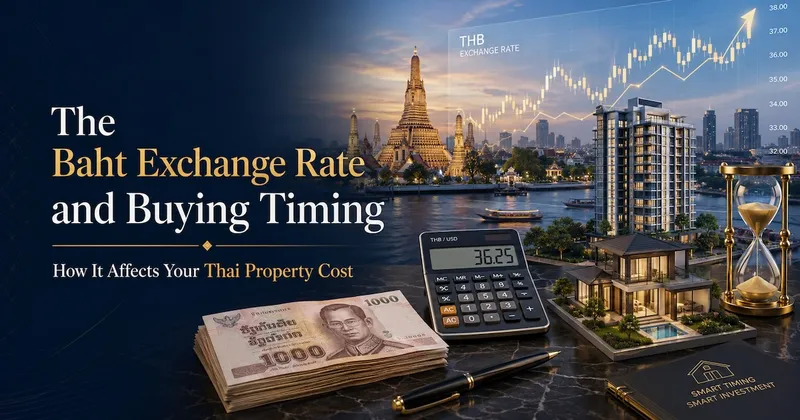
The Baht Exchange Rate and Buying Timing: How It Affects Your Thai Property Cost
Thai property is priced in baht, but your funds are mostly in another currency, so the baht exchange rate directly affects your real purchase cost and your take-home proceeds when you later sell. Put simply: the stronger your currency against the baht (the more baht it buys), the cheaper the purchase; weaker, and it costs more. The rate also affects off-plan instalments (long span, big swings), the amount you repatriate on sale, and your return in your home currency. But be clear-eyed: rates are hard to predict, don't rush to buy chasing a rate, and don't count on the rate to make money — the home's location, title and price are what matter. The rational approach is to treat the rate as a cost variable in the budget, use tools to compute, and convert in tranches to spread risk. This guide explains how the rate affects buying and how to treat timing rationally; rates are live, not investment or financial advice.
7/16/2026
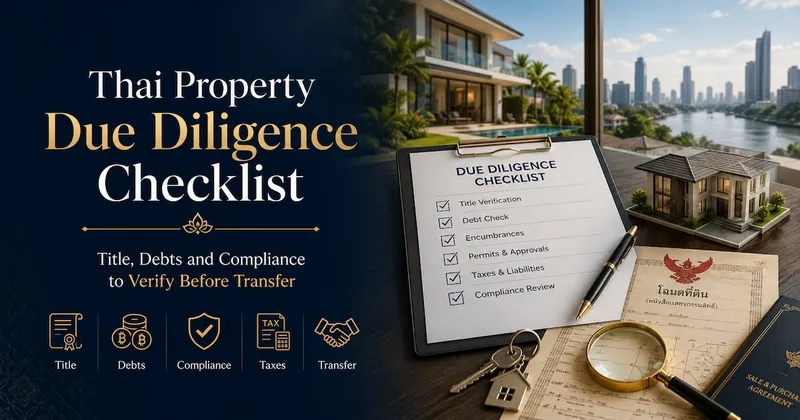
Thai Property Due Diligence Checklist: Title, Debts and Compliance to Verify Before Transfer
In Thailand, due diligence before transfer is the most important, most pitfall-blocking step. Five core areas to check: first, title — verify the deed type (whether Chanote), that the owner is the seller, and that area and boundaries match; second, debts and encumbrances — any mortgage, seizure, or unpaid management fees and utilities; third, the foreign quota (condos) and land limits (villas) — whether a foreigner can lawfully hold it; fourth, the developer and project (off-plan) — delivery record, EIA and construction permits; fifth, the contract and funds — review the sale contract and confirm funds can be remitted compliantly for the FET. Most of this needs a lawyer verifying originals at the Land Office. This guide gives a checklist to work against, subject to the Land Department's current rules and a lawyer.
7/16/2026