 泰互帮
泰互帮Getting a Mortgage as a Foreigner in Thailand: Local Bank Policies, Conditions, LTV, Remittance and Repayment
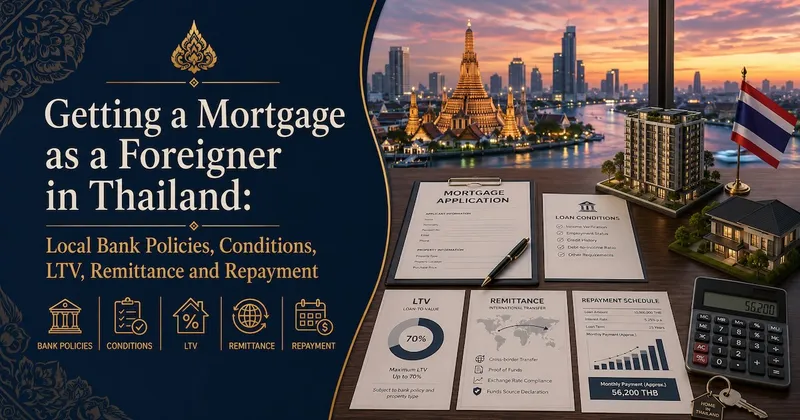
Face Reality: Foreigner Mortgages in Thailand Aren't Easy
- Local banks are cautious: Thai local banks review foreigner home loans strictly, mostly requiring a work visa, stable local income and a credit record; relying on pure overseas income rarely gets approved locally
- More realistic routes: foreigner-focused loan products (some banks via overseas branches, e.g. Singapore branches targeting foreign buyers) or developer installments
- Cash is still the norm: many foreigners end up paying cash or using developer installments, treating a mortgage as a "get it if you can" option
- For property ownership and tax rules see buying property in Thailand as a foreigner
Rough Conditions and LTV
- Status and income: local bank loans typically look at work visa, local income and tax, and employer/employment; special products look at overall assets and repayment ability
- Loan-to-value (LTV): the ratio foreigners can borrow is generally lower than for locals, so the down payment is higher, with the exact ratio depending on bank, product and property type
- Term and rate: loan term and rate vary widely by product, and foreign-currency products carry exchange-rate risk
- Property type: foreigners mostly buy condo freehold units; land and villas are restricted — see the buying guide
How the Money Comes In: Foreign-Currency Remittance Is a Hard Rule
- Purchase funds for a foreigner buying a condo must be remitted into Thailand in foreign currency and converted onshore; the bank issues a foreign-exchange/inward-remittance certificate (e.g. FET), a key document for registering the title transfer
- For remitting and converting large purchase sums see the currency exchange and cross-border transfer guide
- If using a mortgage, confirm early with the bank how disbursement, repayment and the FX certificate line up — don't discover missing proof at transfer
- A local account is the basis for payments — for opening one see the bank account opening guide
Repayment and Holding Costs
- Beyond the monthly payment: condo maintenance fees, sinking fund and property-related taxes — see the condo fees guide
- Exchange-rate risk: if your income is in one currency and the loan in baht or another, rate swings affect the real repayment burden — borrow within your means
- Prepayment terms: check for early-repayment penalties and whether the rate is fixed or floating
- Default is serious: failure to repay can lead to the property being seized — don't overestimate the stability of your cross-border income
Common Traps and Sensible Advice
- Distrust "guaranteed loan" pitches: foreigner home-loan approval is inherently strict — be wary of promises of guaranteed approval
- Read developer installment terms: assess the rate, number of installments, default and project-abandonment risk — don't be drawn only by "zero down / low bar"
- Plan the remittance proof with the transfer together: missing the FX inward-remittance certificate can stall the transfer — sort it early
- Think about inheritance too: for passing the property on later see the wills and inheritance guide
FAQ
Can a foreigner get a mortgage in Thailand?
You can try, but it's harder than for locals. Thai local banks review foreigner home loans strictly, mostly requiring a work visa, stable local income and credit, and pure overseas income rarely gets approved locally. More realistic routes are foreigner-focused products (some banks via overseas branches) or developer installments, and many still pay cash. The borrowable ratio is generally lower than for locals and the down payment higher. Whether and how much you can borrow is case-by-case per bank policy — don't assume a mortgage is guaranteed, subject to each bank's current policy.
How much down payment does a foreigner need for a mortgage in Thailand?
There's no single figure. The ratio foreigners can borrow (LTV) is usually lower than for locals, meaning a higher down payment, with the exact ratio depending on bank, loan product and property type, and foreigner-focused products differing too. Buying also involves the requirement to remit purchase funds in foreign currency and convert them. Before viewing, have a target bank or professional assess your eligibility, borrowable ratio and total down payment, and plan funds and remittance — don't put down a deposit only to find you can't borrow as expected, subject to bank policy.
How do I bring the purchase money into Thailand compliantly?
Purchase funds for a foreigner buying a condo freehold unit usually must be remitted into Thailand in foreign currency and converted onshore, with the bank issuing an inward-remittance/FX certificate (e.g. FET) — a key document for registering the title transfer. Plan the route, conversion and reporting for large sums in advance, and if a mortgage is involved, confirm clearly with the bank how disbursement, repayment and the FX certificate connect. Missing the compliant FX inward-remittance proof can stall the transfer, so sort it early, subject to the bank and relevant authorities' current rules.
Can I get a local Thai bank loan using overseas income?
Usually very hard. Thai local banks lending for homes mainly look at your Thai work visa, local income, tax and credit record, and pure overseas income is often not recognized as a repayment source, so approval is difficult. To borrow against overseas assets/income, the more realistic route is foreigner-focused loan products (some via banks' overseas branches) or developer installments, with conditions and exchange-rate risk to scrutinize. Don't equate "my overseas income is high" with being able to borrow locally, subject to each bank's current policy.
Need Help?
TaiHuBang offers consultation and referrals for buying property and related matters in Thailand: loan feasibility and eligibility assessment, target bank/product referral guidance, purchase-fund foreign-currency remittance and transfer support, and referrals for condo selection and contract review. We do not provide loan guarantees or "guaranteed approval" promises; everything follows each bank's and the relevant authorities' current policies, with legal matters resting on a professional lawyer's advice. See our legal consulting services or submit an enquiry, and an advisor will reply within 24 hours.
Related Articles
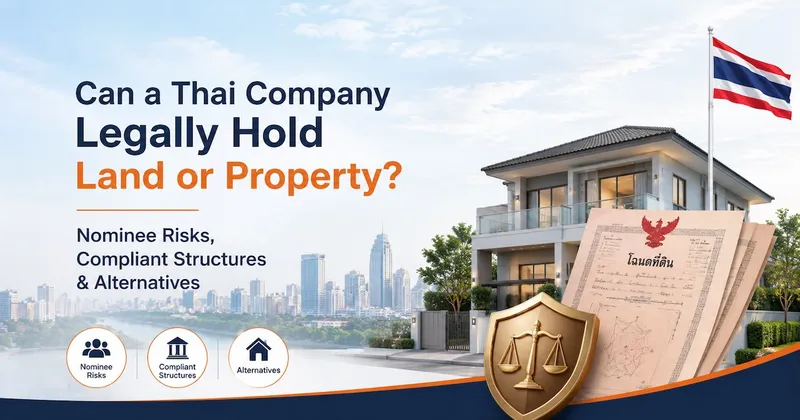
Can a Thai Company Legally Hold Land or Property? Nominee Risks, Compliant Structures & Alternatives
Since foreigners can't directly own Thai land or landed houses, some think of "registering a Thai company to hold the land." That route exists in specific compliant cases, but the most common version on the market — using Thai people as nominee shareholders to make up 51% Thai ownership while a foreigner actually controls the company — is an illegal nominee arrangement: Thai law prohibits using nominees to circumvent the ban on foreign land ownership, and if caught you can face forced disposal of the land, fines and even criminal liability, with the nominee Thais also liable. True compliance depends on whether the company genuinely operates and whether the Thai shareholders genuinely invest and hold rights — not a shell set up purely to hold land. For safer holding, foreigners more commonly buy a freehold condo (which foreigners may own), sign a long-term lease (leasehold, up to about 30 years, renewable), or use BOI/special permits where qualified. This guide covers the red lines of company land-holding, nominee risks and safer alternatives, subject to the Land Code; consult a lawyer for major decisions.
8/4/2026
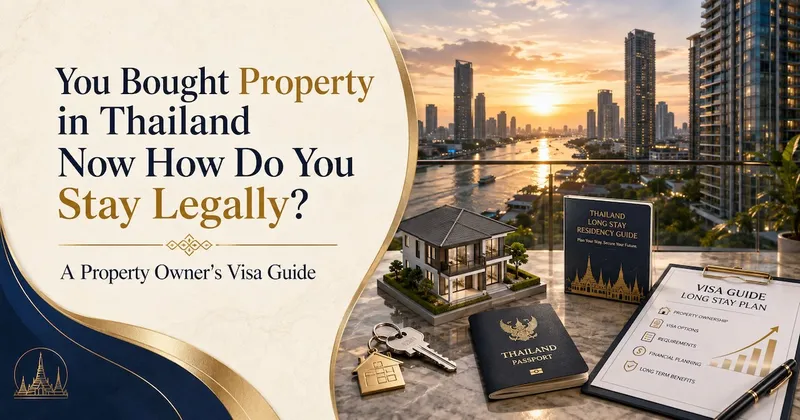
You Bought Property in Thailand — Now How Do You Stay Legally? A Property Owner's Visa Guide
Buying property in Thailand doesn't let you stay legally — a purchase carries no residency, and you still need a valid visa to live there long-term. Common lawful long-stay routes for owners include: a retirement visa for those 50+ retiring, an Elite visa for easy long stays, the LTR 10-year visa for qualifying high-asset/remote/specialist profiles, a work visa for the employed, a dependant visa if your spouse is Thai, and DTV for remote workers. Which to choose depends on your age, whether you work, your income/assets and your long-stay goal — and has little to do with which property you bought. Owners should also mind obligations like 90-day reporting and TM30 address notification. This guide explains a property owner's visa options by profile and how to pair property with a visa, subject to current Immigration and agency rules.
8/1/2026
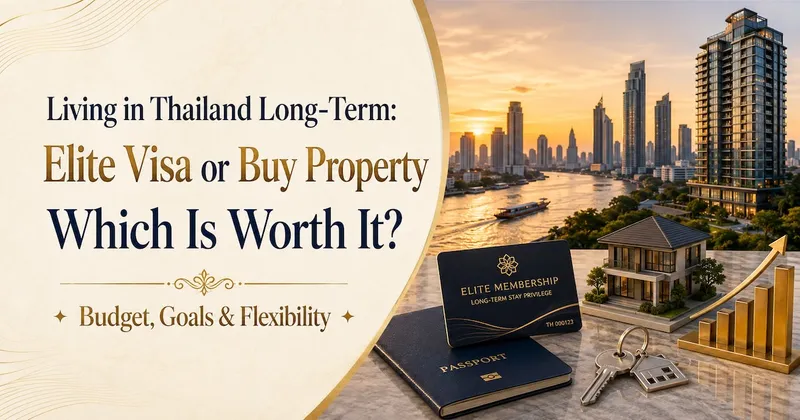
Living in Thailand Long-Term: Elite Visa or Buy Property — Which Is Worth It? Budget, Goals & Flexibility
Planning to live in Thailand long-term, many agonise over spending the budget on an Elite visa membership or on property. In fact the two solve different problems and don't replace each other: the Elite (Thailand Privilege) visa solves "what lawful status lets you stay long-term" (long-stay convenience, but no work rights and it expires or must be renewed/repurchased), while buying property solves "where to live and whether to sink assets into Thailand" (own-use/investment, but buying grants no residency). To truly live long-term you usually need both — a visa for status and housing (rented or bought) for a home — not one or the other. If the budget stretches to only one first, it comes down to your core goal: for lawful long stay first, choose the visa; for asset landing or long-term own-use first, consider buying but still arrange a visa. This guide weighs them across the problem solved, cost nature, flexibility and exit difficulty, subject to current Immigration and agency rules.
8/1/2026