 泰互帮
泰互帮Bangkok International School Districts: Buying Near Schools for Accompanying-Study Families
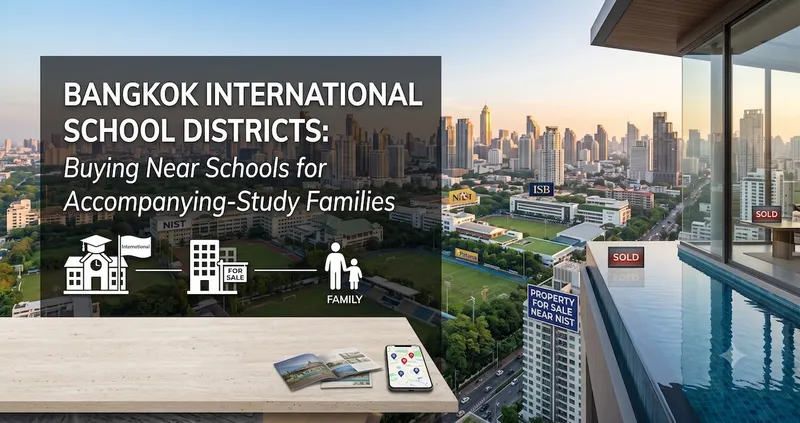
The Core: School First, Home Second
- The school decides the area: Bangkok has no Chinese-style "catchment" — international schools admit independently, but "close to school" directly determines daily drop-off and quality of life
- Look at drive time and buses: Bangkok traffic is heavy, so focus on drive time to school, whether there's a school bus and if its route covers your area
- Pick the school before the home: settle which school the child attends, then choose a home around it, not the other way round
How Bangkok's International Schools Are Spread
- Scattered, many on the outskirts: many international schools sit on the city's edge (large campuses need space), such as eastern Sukhumvit, Bangna and the Ramindra belt
- Some are central: a few schools are in core Sukhumvit, convenient but with higher nearby prices
- Different curricula: British, American, IB and others differ — pick the curriculum and school for your child first, then the home
Popular Accompanying-Study Areas
- Phrom Phong-Thonglor: a Japanese community hub with mature malls, healthcare and dining, several schools reachable, favoured by families with high living quality but higher prices — areas in the Bangkok area guide
- Eastern Sukhumvit (On Nut-Bangna): near several international schools, friendlier prices than the core, covered by metro extensions
- Each school's surroundings: many families pick a condo/townhouse within walking or a short drive of the school for the easiest drop-off
Buy or Rent? It Depends on the Duration
- Short accompaniment (a few years): mostly rent — flexible, saving transaction taxes — see the renting guide
- Long accompaniment / settling: if the child studies through high school and the family stays long term, consider buying — flow in the buying process
- Pair with the visa: accompanying parents need a guardian visa; buying doesn't solve the visa — see buying and residency
What Else to Check in a School-Area Home
- Amenities: supermarkets, hospitals, clinics and dining — daily essentials for accompanying life
- Safety and community: a safe development and whether other Chinese/accompanying families are around, so children and parents have company
- Commute radius: beyond school, whether the parents' own activities, healthcare and shopping are convenient
- Resale/rental: condos near schools usually have steady rental demand (other accompanying families), so exit is relatively easy, but still weigh returns rationally — see the investment breakdown
FAQ
Does Bangkok have school catchment zones?
No. Bangkok has no Chinese-style "catchment-based admission" — international schools admit independently, based on application, interview, places and fees, not where you live. So in Bangkok, "school-area home" really means "a home close to an international school with easy drop-off," not that buying in a certain development guarantees a place. The logic should be: settle which international school the child attends (by curriculum, fees and places), then choose a home around it, focusing on drive time, bus routes and nearby amenities. Don't be misled by "school-area home" into thinking buying locks a place; admission is per each school's rules.
Should accompanying families buy or rent in Bangkok?
It mainly depends on the duration and whether you'll settle. If it's just a few years and you'll return or move afterwards, renting suits better — flexible, saving transaction taxes and hassle, and letting you learn the area first; if the child studies through high school and the family plans to settle long term, consider buying, which is steadier over time and an asset. Note that whether buying or renting, accompanying parents need a suitable guardian visa for lawful long-term residency, and buying itself doesn't solve the visa. Settle the study plan and visa arrangement first, then decide buy or rent. Subject to the school's and Immigration's rules; this article is not investment advice.
Which Bangkok area is convenient for accompanying study?
It depends which school the child attends, but a few popular areas help. Phrom Phong-Thonglor has a concentrated Japanese community, mature malls, healthcare and dining, several schools reachable and high living quality — favoured by families, though prices are higher; eastern Sukhumvit (On Nut-Bangna) is near several international schools with friendlier prices than the core and metro-extension coverage, offering good value; and many families simply pick a condo within walking or a short drive of the target school for the easiest drop-off. The core principle remains "school first, home around the school," focusing on drive time, buses and nearby amenities. Subject to the school's location and live market data.
Need Help?
TaiHuBang offers consulting for accompanying families buying and living in Thailand: school-area suggestions, buy-vs-rent weighing, title and contract checks, living plans aligned with a guardian visa, and lawyer referral. We only provide consulting and process support; admissions are per each school, this article is not investment advice, and prices are subject to live market data. See legal consulting and visa services, or submit an enquiry and an advisor will reply within 24 hours.
Related Articles
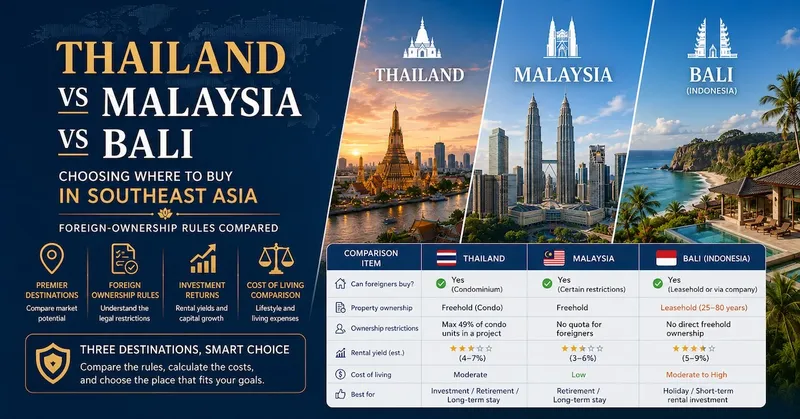
Thailand vs Malaysia vs Bali: Choosing Where to Buy in Southeast Asia and Foreign-Ownership Rules Compared
For buying in Southeast Asia, Thailand, Malaysia and Indonesia's Bali are three popular choices, but foreign-ownership rules, costs and suitability differ greatly. Thailand: foreigners can buy condo freehold (49% foreign quota), can't hold land individually, and villas use leasehold or a company; mature living, strong tourism, good value. Malaysia: foreigners can buy property above a local minimum price threshold (including landed property, rules by state), with the MM2H long-stay programme, widespread English and an English-style legal system. Bali (Indonesia): foreigners can't hold land title directly, commonly using Hak Pakai (right of use) or leasehold, with a strong holiday character and relatively complex rules. This guide compares the three on ownership, residency, cost and who they suit; each country's rules are subject to its official current rules, and this is not investment or legal advice.
7/16/2026

The Baht Exchange Rate and Buying Timing: How It Affects Your Thai Property Cost
Thai property is priced in baht, but your funds are mostly in another currency, so the baht exchange rate directly affects your real purchase cost and your take-home proceeds when you later sell. Put simply: the stronger your currency against the baht (the more baht it buys), the cheaper the purchase; weaker, and it costs more. The rate also affects off-plan instalments (long span, big swings), the amount you repatriate on sale, and your return in your home currency. But be clear-eyed: rates are hard to predict, don't rush to buy chasing a rate, and don't count on the rate to make money — the home's location, title and price are what matter. The rational approach is to treat the rate as a cost variable in the budget, use tools to compute, and convert in tranches to spread risk. This guide explains how the rate affects buying and how to treat timing rationally; rates are live, not investment or financial advice.
7/16/2026
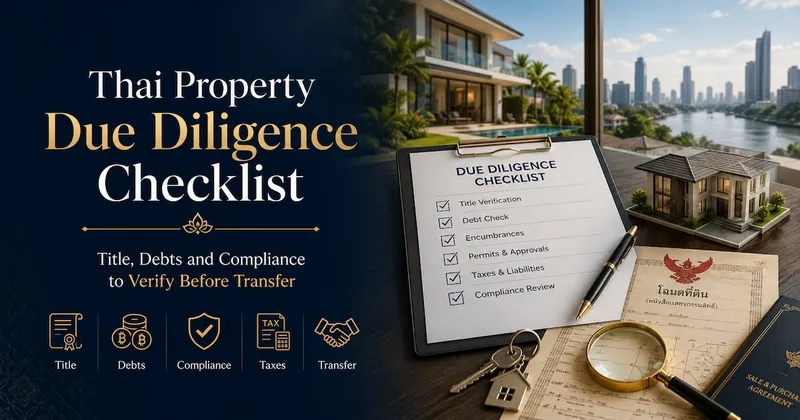
Thai Property Due Diligence Checklist: Title, Debts and Compliance to Verify Before Transfer
In Thailand, due diligence before transfer is the most important, most pitfall-blocking step. Five core areas to check: first, title — verify the deed type (whether Chanote), that the owner is the seller, and that area and boundaries match; second, debts and encumbrances — any mortgage, seizure, or unpaid management fees and utilities; third, the foreign quota (condos) and land limits (villas) — whether a foreigner can lawfully hold it; fourth, the developer and project (off-plan) — delivery record, EIA and construction permits; fifth, the contract and funds — review the sale contract and confirm funds can be remitted compliantly for the FET. Most of this needs a lawyer verifying originals at the Land Office. This guide gives a checklist to work against, subject to the Land Department's current rules and a lawyer.
7/16/2026