 泰互帮
泰互帮Buying Near BTS/MRT Lines in Thailand: The Value Logic and How to Pick
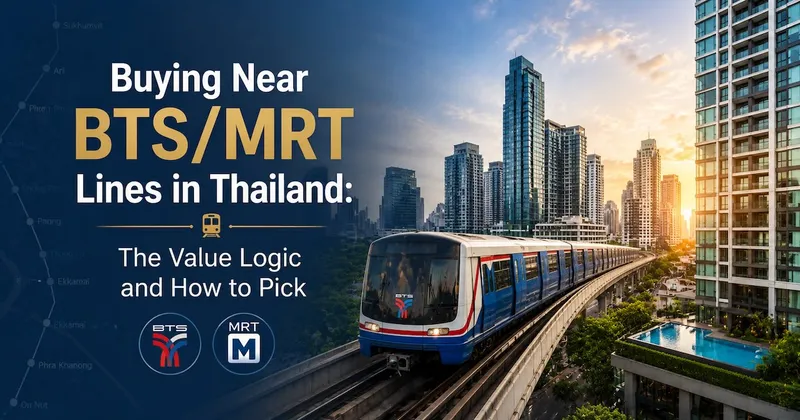
Why Metro Lines Are Bangkok's Iron Rule
- Traffic makes rail essential: Bangkok's congestion makes the BTS/MRT the most reliable commute, so line-side property has the steadiest demand
- Strong rental/resale, resists falls: metro projects rent more easily, have shorter voids and resell faster, holding value better than those away from rail
- Tenants all want the metro: professionals, expats and students all prioritise line-side homes when renting, so rental certainty is high
How to Pick a Metro Project: Key Points
- Walk to the station: projects within a 5-10 minute walk carry a clear premium; those needing a transfer, a long walk or a taxi are discounted
- Established line vs extension: established lines (e.g. the core Sukhumvit line) have high certainty; planned/under-construction extensions carry upside but also uncertainty
- Station-area maturity: check for malls, supermarkets and offices around the station — stations with amenities have truer demand
- Whether the price has priced it in: popular metro projects may already bake in the "metro story," so weigh value and don't buy at a peak
Extensions/New Lines: Opportunity and Trap
- Upside comes from better access: a new metro reaching an area improves commutes, lifting demand and prices — a real logic
- Spot "just a rail line": some extensions have metro but no matching malls, jobs or amenities, so the value story may fall flat
- Planned ≠ delivered: planned lines can be delayed or changed — don't pay on a plan alone, go by actual opening
- Off-plan compounds risk: extensions often come with new off-plan projects, adding stall risk — see the off-plan guide
Combining Metro with Area and Investment
- Combine with area profile: the metro is only the base — also weigh the area's tier and tenant base, see the Bangkok area guide
- Investment weighs rental certainty: metro-adjacent rents more steadily, but compute returns on a net basis — see the investment breakdown
- Own-use weighs the commute radius: for own-use, focus on whether your family's daily commute and life flow well, not chasing appreciation alone
FAQ
Must I buy on a metro line in Bangkok?
Not strictly required, but strongly advisable to prioritise. Because Bangkok's congestion makes BTS/MRT commute certainty essential, metro projects (especially within a 5-10 minute walk) rent more easily, have shorter voids, resell faster and hold value better. Conversely, homes far from the metro that need a transfer or rely on taxis are discounted on both rent and resale, even at a low unit price. If you're own-use with a car and especially value quiet or space, a non-metro home is worth considering; but if you're weighing rental, investment or future resale ease, a metro line is almost the first choice. In short: not mandatory, but line-side is the safest choice. Subject to your use and live market data; this article is not investment advice.
Can buying on a planned new metro line appreciate?
There's upside, but with uncertainty to sift. The real value logic is that a new metro reaching an area sharply improves access and commutes, lifting population, demand and prices. But mind two traps: first, "planned ≠ delivered" — planned lines can be delayed, rerouted or even cancelled, so don't pay on a plan alone; second, "just a rail line" — some extensions have metro but no matching malls, jobs or amenities, so the value story may fall flat. Extensions also often come with off-plan projects that add stall risk. So buying along planned lines calls for more caution: prefer those confirmed under construction or opening soon with amenity support, and don't buy at a peak on concept alone. Subject to actual opening and live market data; this article is not investment advice.
How close to a station counts as a good metro project?
Generally within a 5-10 minute walk — projects in this range carry the clearest rental/resale premium and resist falls best. The closer the walk the better, especially in Bangkok's hot, rainy climate, where "the station is downstairs" versus "a 15-minute walk crossing a road" differ greatly in experience and value. If a project needs a shuttle transfer, a long walk, or a taxi/motorbike to reach the station, then even if marketed as "near the metro," its real convenience and premium are discounted — call these "fake metro projects" and be wary. When viewing, time the walk from the project to the station yourself, rather than trusting the sales office's "a few minutes." Subject to on-the-ground experience and live market data.
Need Help?
TaiHuBang offers area consulting and support for buying near Bangkok metro lines: metro-project selection and station analysis, area-and-tenant matching, title and quota checks, purchase contract and transfer support, and lawyer referral. We only provide consulting and process support; this article is not investment advice, prices are subject to live market data, and professional conclusions are verified against a lawyer and the Land Department's current rules. See legal consulting or submit an enquiry and an advisor will reply within 24 hours.
Related Articles
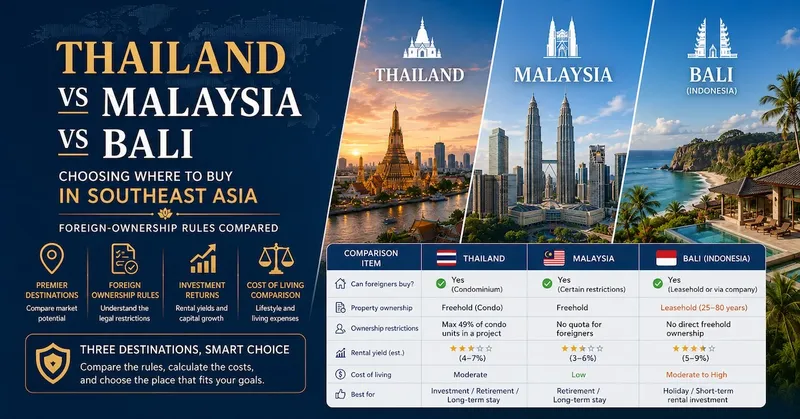
Thailand vs Malaysia vs Bali: Choosing Where to Buy in Southeast Asia and Foreign-Ownership Rules Compared
For buying in Southeast Asia, Thailand, Malaysia and Indonesia's Bali are three popular choices, but foreign-ownership rules, costs and suitability differ greatly. Thailand: foreigners can buy condo freehold (49% foreign quota), can't hold land individually, and villas use leasehold or a company; mature living, strong tourism, good value. Malaysia: foreigners can buy property above a local minimum price threshold (including landed property, rules by state), with the MM2H long-stay programme, widespread English and an English-style legal system. Bali (Indonesia): foreigners can't hold land title directly, commonly using Hak Pakai (right of use) or leasehold, with a strong holiday character and relatively complex rules. This guide compares the three on ownership, residency, cost and who they suit; each country's rules are subject to its official current rules, and this is not investment or legal advice.
7/16/2026
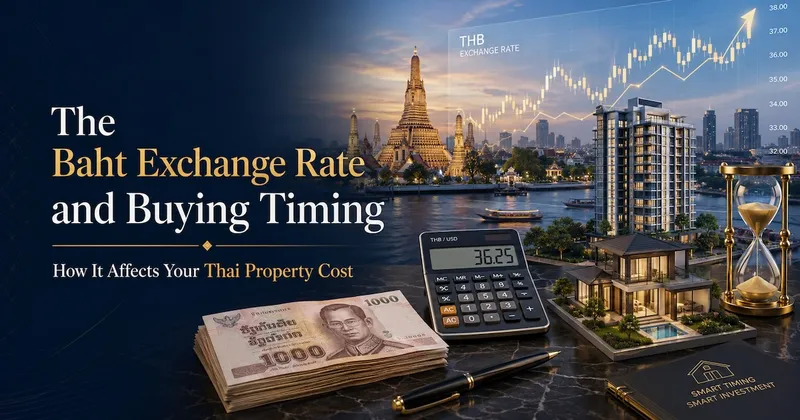
The Baht Exchange Rate and Buying Timing: How It Affects Your Thai Property Cost
Thai property is priced in baht, but your funds are mostly in another currency, so the baht exchange rate directly affects your real purchase cost and your take-home proceeds when you later sell. Put simply: the stronger your currency against the baht (the more baht it buys), the cheaper the purchase; weaker, and it costs more. The rate also affects off-plan instalments (long span, big swings), the amount you repatriate on sale, and your return in your home currency. But be clear-eyed: rates are hard to predict, don't rush to buy chasing a rate, and don't count on the rate to make money — the home's location, title and price are what matter. The rational approach is to treat the rate as a cost variable in the budget, use tools to compute, and convert in tranches to spread risk. This guide explains how the rate affects buying and how to treat timing rationally; rates are live, not investment or financial advice.
7/16/2026
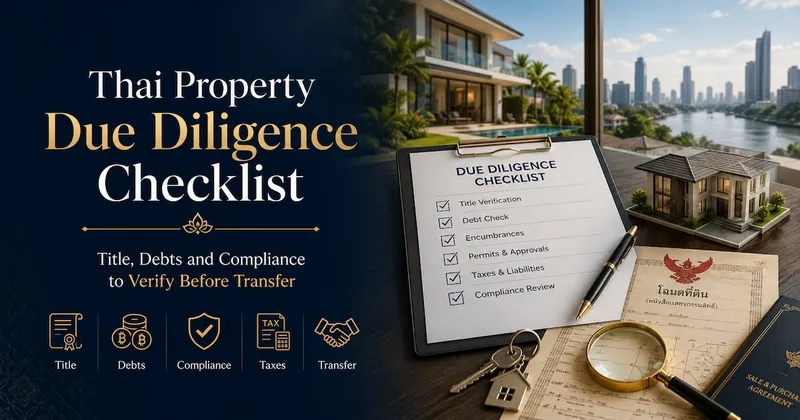
Thai Property Due Diligence Checklist: Title, Debts and Compliance to Verify Before Transfer
In Thailand, due diligence before transfer is the most important, most pitfall-blocking step. Five core areas to check: first, title — verify the deed type (whether Chanote), that the owner is the seller, and that area and boundaries match; second, debts and encumbrances — any mortgage, seizure, or unpaid management fees and utilities; third, the foreign quota (condos) and land limits (villas) — whether a foreigner can lawfully hold it; fourth, the developer and project (off-plan) — delivery record, EIA and construction permits; fifth, the contract and funds — review the sale contract and confirm funds can be remitted compliantly for the FET. Most of this needs a lawyer verifying originals at the Land Office. This guide gives a checklist to work against, subject to the Land Department's current rules and a lawyer.
7/16/2026