 泰互帮
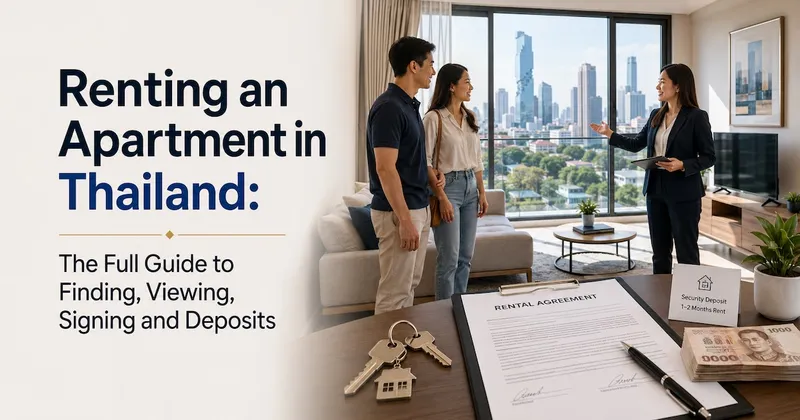
泰互帮Renting an Apartment in Thailand: The Full Guide to Finding, Viewing, Signing and Deposits
First Decide: How Long, Where, What Budget
- Duration drives the format: short stays (days to months) suit serviced apartments or monthly lets; medium-to-long (a year plus) suit a standard condo long let, better value
- Area follows the commute: in Bangkok prioritise BTS/MRT lines, same logic as buying — see the Bangkok area guide
- Budget includes extras: beyond rent there's the deposit, utilities and management — total it up first
Where to Find Places and What to Check on Viewing
- Channels: classifieds, agents and condo leasing offices all list rentals; TaiHuBang's classifieds has a rentals section too
- View in person: light, noise, leaks, whether appliances work, facilities (pool, gym) and nearby amenities
- Confirm long-stay registration: foreigners need TM30 address registration — ask if the landlord/management will handle it
What "Two-Plus-One" Means in Thailand
- Two-plus-one: on signing you usually pay 2 months' deposit + 1 month's advance rent, about 3 months' rent upfront
- The deposit: offsets damage and arrears at move-out; with no damage it should be refunded after you leave
- The term: long leases are usually a year; early exit may forfeit the deposit — read the break clause before signing
Lease Clauses You Must Read
- Term and early exit: how long, whether you can leave early, and how the deposit is handled
- Deposit-refund conditions: what's deducted, how much, and how soon — to avoid move-out disputes
- Who pays utilities and how: some condos bill at government rates, others at a marked-up management rate — a real difference
- Furniture list: attach a list and photos, recording the move-in condition to compare at move-out
- Repair responsibility: who fixes and pays for a broken appliance — agree upfront
Moving In and Moving Out
- Move-in: transfer or register utilities, do the TM30 address registration, and check the furniture and appliance condition
- During the stay: pay rent on time, keep the place well, and notify the landlord of major repairs
- Move-out: give notice per the agreement, do the exit inspection against the move-in list, settle utilities, then get the deposit back
Rent or Buy?
- Renting first is safer: newly arrived and unfamiliar with areas, rent a while to learn the ground before deciding to buy
- Short-to-medium stays favour renting: unsure about staying, or leaving within a few years — renting skips transaction taxes and hassle
- Buy only for long-term own-use/investment: once you're sure of staying and want the asset, enter the buying flow — see how to buy in Thailand
FAQ
How much deposit does renting in Thailand require?
Long lets in major cities are usually "two-plus-one" — on signing you pay 2 months' deposit + 1 month's advance rent, about 3 months' rent upfront. The deposit offsets damage and arrears at move-out and, with no damage and utilities settled, should be refunded per the agreement. Pay close attention to the lease's deposit-refund and early-exit clauses — what triggers a deduction, how much, how soon, and note that early exit often forfeits the deposit. Short-stay serviced apartments have different deposit rules and cost more overall. Clarifying and writing the deposit and break terms into the contract before signing avoids move-out disputes. Subject to the lease and landlord's terms.
Do foreigners need any registration to rent in Thailand?
Note the TM30 address registration. Under Thai rules, after a foreigner moves into an address the landlord or house master should file a TM30 address report to Immigration, which matters for your later visa extensions and residence procedures as proof of address. In practice many long-let condos and landlords handle it, but some are unfamiliar with the process, so ask when viewing whether the landlord/management will do the TM30, to avoid trouble later when a missing address registration blocks visa matters. Long stays also require a valid visa for lawful presence — renting doesn't solve the visa, so plan the two separately. Subject to Thai Immigration's current rules.
Newly arrived — should I rent first or buy straight away?
Strongly consider renting first. Newly arrived and unfamiliar with the city, areas and pace of life, buying straight away risks the wrong location or an unsuitable home, and buying involves taxes and transfer, so the cost of a mistake is high. Rent for a while (say six months to a year), experience the commute, amenities and community first, then decide whether and where to buy — far safer. If you're only staying short to medium term or might leave within a few years, renting is simply better value and skips the hassle. Only when you're sure of long-term own-use or clearly want an asset should you enter the buying flow. Renting is flexible, low-barrier, and the best first step to knowing Thailand. Subject to your situation.
Need Help?
TaiHuBang offers consulting for renting and living in Thailand: area suggestions, lease and deposit-clause explanation, TM30 registration guidance, and rent-to-buy transition planning. To browse listings see the rentals section of the classifieds; if unsure about a lease, get it checked via legal consulting. We only provide consulting and process support, with terms subject to the lease and local rules. Or submit an enquiry and an advisor will reply within 24 hours.
Related Articles
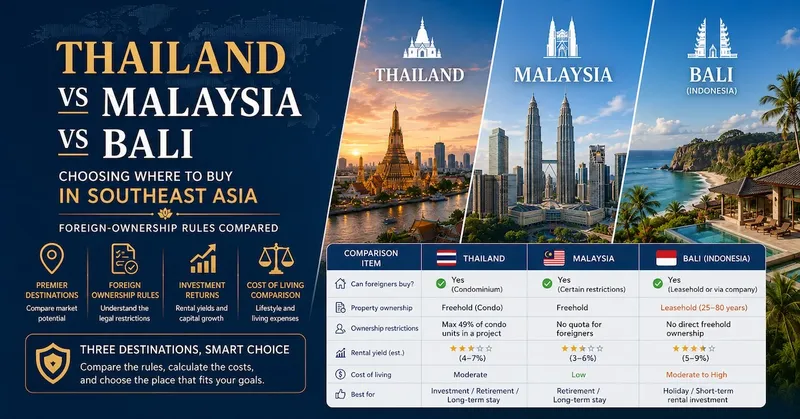
Thailand vs Malaysia vs Bali: Choosing Where to Buy in Southeast Asia and Foreign-Ownership Rules Compared
For buying in Southeast Asia, Thailand, Malaysia and Indonesia's Bali are three popular choices, but foreign-ownership rules, costs and suitability differ greatly. Thailand: foreigners can buy condo freehold (49% foreign quota), can't hold land individually, and villas use leasehold or a company; mature living, strong tourism, good value. Malaysia: foreigners can buy property above a local minimum price threshold (including landed property, rules by state), with the MM2H long-stay programme, widespread English and an English-style legal system. Bali (Indonesia): foreigners can't hold land title directly, commonly using Hak Pakai (right of use) or leasehold, with a strong holiday character and relatively complex rules. This guide compares the three on ownership, residency, cost and who they suit; each country's rules are subject to its official current rules, and this is not investment or legal advice.
7/16/2026
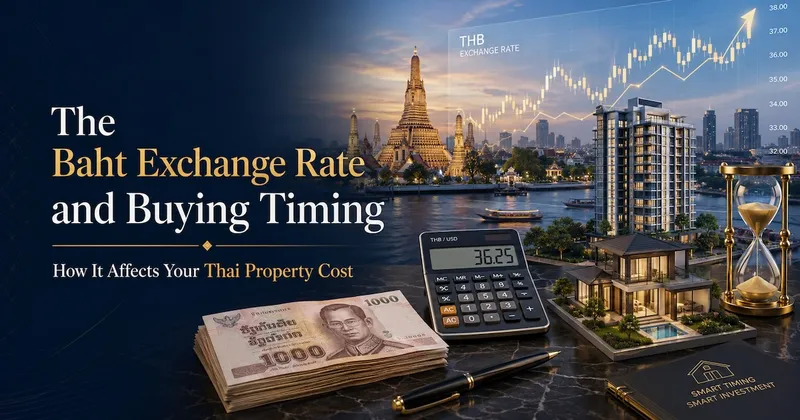
The Baht Exchange Rate and Buying Timing: How It Affects Your Thai Property Cost
Thai property is priced in baht, but your funds are mostly in another currency, so the baht exchange rate directly affects your real purchase cost and your take-home proceeds when you later sell. Put simply: the stronger your currency against the baht (the more baht it buys), the cheaper the purchase; weaker, and it costs more. The rate also affects off-plan instalments (long span, big swings), the amount you repatriate on sale, and your return in your home currency. But be clear-eyed: rates are hard to predict, don't rush to buy chasing a rate, and don't count on the rate to make money — the home's location, title and price are what matter. The rational approach is to treat the rate as a cost variable in the budget, use tools to compute, and convert in tranches to spread risk. This guide explains how the rate affects buying and how to treat timing rationally; rates are live, not investment or financial advice.
7/16/2026
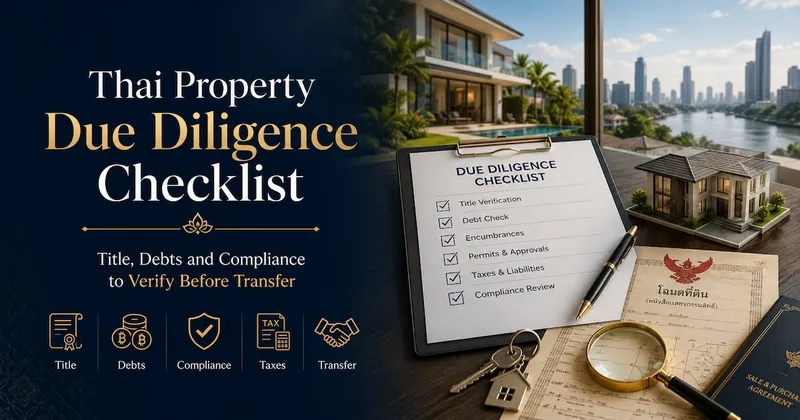
Thai Property Due Diligence Checklist: Title, Debts and Compliance to Verify Before Transfer
In Thailand, due diligence before transfer is the most important, most pitfall-blocking step. Five core areas to check: first, title — verify the deed type (whether Chanote), that the owner is the seller, and that area and boundaries match; second, debts and encumbrances — any mortgage, seizure, or unpaid management fees and utilities; third, the foreign quota (condos) and land limits (villas) — whether a foreigner can lawfully hold it; fourth, the developer and project (off-plan) — delivery record, EIA and construction permits; fifth, the contract and funds — review the sale contract and confirm funds can be remitted compliantly for the FET. Most of this needs a lawyer verifying originals at the Land Office. This guide gives a checklist to work against, subject to the Land Department's current rules and a lawyer.
7/16/2026