 泰互帮
泰互帮Fully Furnished, Fitted or Bare Shell? Thai New-Build Handover Standards and Inspection
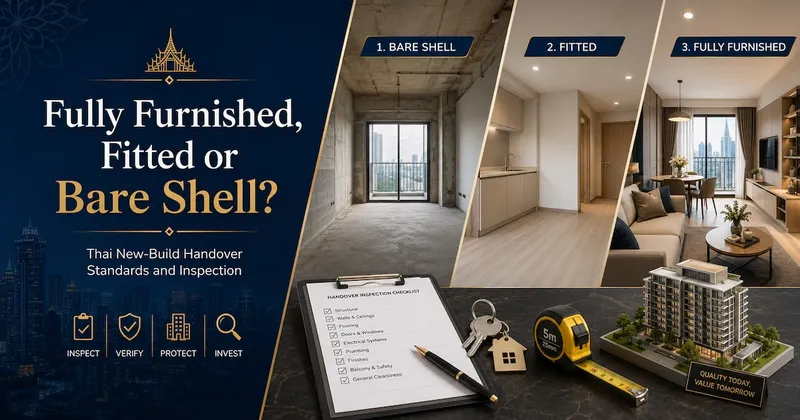
The Three Common Thai Condo Handover Levels
- Bare shell: only basic floors, walls and water/electric points — no cabinets, bathroom fixtures or furniture, so you fit it out yourself, bearing the cost and time
- Fully fitted: includes fixed finishing — flooring, kitchen cabinets and counters, bathroom fixtures, air-con, lighting — but no loose furniture like beds or sofas; basic move-in on receipt
- Fully furnished: on top of fitted, furniture and appliances are included too, so it's move-in or rent-ready at handover — the most hassle-free but usually higher-priced
Don't Be Misled by the Show Unit
- Show unit ≠ handover standard: developers dress show units to the highest spec with soft furnishings for visual effect, but the actual handover may be a lower spec
- The contract governs: what's included and excluded, and which brands/specs, all follow the sale contract and handover-spec list, not your impression of the show unit
- Confirm whether furniture is included: many "fitted" units don't include loose furniture, so renting out means another spend to furnish
What the Contract Should Spell Out
- Handover-spec list: whether flooring, cabinets, bathrooms, air-con, furniture and appliances are each included, and their brands or specs
- Handover date and late liability: especially for off-plan — see the off-plan guide
- Warranty and defect remedy: the scope and response for a period after handover
- Default and refund terms: how a below-spec handover is handled
Handover Inspection Checklist
- Against the handover spec: check item by item that the contracted finishing, equipment and furniture are in place and brands/specs match
- Check build quality: level walls and floors, no leaks, doors and windows open/close, sockets have power
- Test equipment: air-con, water heater, range hood, toilet drainage — test each one
- Record issues: photograph defects, list them, and require the developer to fix them before signing off — don't rush to sign
- For off-plan also check developer reputation and stall risk — see the 10 pitfalls
FAQ
What does a Thai new-build handover usually include?
It depends on the handover standard, commonly three levels: bare shell has only basic floors, walls and utility points, no cabinets, bathroom fixtures or furniture, so you fit it out; fully fitted includes fixed finishing like flooring, kitchen cabinets, bathroom fixtures and air-con, but no loose furniture like beds or sofas; fully furnished adds furniture and appliances so it's move-in or rent-ready. Crucially, don't go by the show unit — show units are dressed to the highest spec and the actual handover may be lower. Before the deposit, spell out in the contract what the handover includes and excludes and which brands/specs, and inspect strictly against it at handover. Subject to the developer's contract and handover-spec list.
The show unit looks great — will the handover match?
Not necessarily — be wary. A developer's show unit is usually dressed to the highest spec with soft furnishings and lighting, looking great, but that doesn't represent the handover standard you'll actually receive — the real handover may be lower (e.g. "fitted" without loose furniture, or different equipment brands/specs). So the show unit only tells you the sense of space and rough look; what actually determines what you get is the handover-spec list in the sale contract. Before the deposit, clarify item by item and write into the contract: whether flooring, cabinets, bathrooms, air-con, furniture and appliances are included, and their brands/specs. Then inspect strictly against it at handover, requiring defects fixed before signing off. Don't pay on the show unit's impression. Subject to the contract.
What should I watch at the handover inspection?
The core is inspecting item by item against the contract's handover spec. First, check the finishing, equipment and furniture are in place per the contract and brands/specs match (especially count each item for "fitted/furnished"); second, check build quality — level walls and floors, no leaks, doors and windows work, sockets have power; third, test equipment — air-con, water heater, range hood, toilet drainage each; fourth, record issues — photograph and list them, requiring the developer to fix them before you sign off; don't rush to sign. For off-plan also mind developer reputation and stall risk. Inspection is the last gate before taking the home, so do it carefully. Subject to the contract and actual handover.
Need Help?
TaiHuBang offers consulting and support on Thai new-build handover and inspection: handover-standard and contract-term explanation, flagging show-unit vs actual-handover gaps, inspection-checklist guidance, defect-remedy and developer coordination, and lawyer referral. We only provide consulting and process support, with professional conclusions verified against the developer's contract and a lawyer; this article is not investment advice. See legal consulting or submit an enquiry and an advisor will reply within 24 hours.
Related Articles
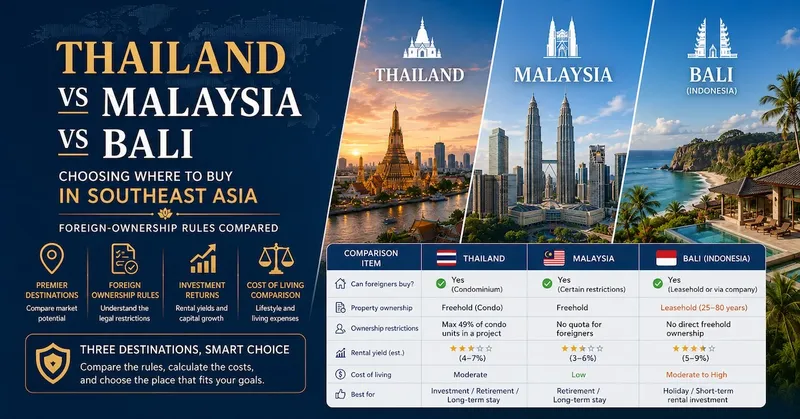
Thailand vs Malaysia vs Bali: Choosing Where to Buy in Southeast Asia and Foreign-Ownership Rules Compared
For buying in Southeast Asia, Thailand, Malaysia and Indonesia's Bali are three popular choices, but foreign-ownership rules, costs and suitability differ greatly. Thailand: foreigners can buy condo freehold (49% foreign quota), can't hold land individually, and villas use leasehold or a company; mature living, strong tourism, good value. Malaysia: foreigners can buy property above a local minimum price threshold (including landed property, rules by state), with the MM2H long-stay programme, widespread English and an English-style legal system. Bali (Indonesia): foreigners can't hold land title directly, commonly using Hak Pakai (right of use) or leasehold, with a strong holiday character and relatively complex rules. This guide compares the three on ownership, residency, cost and who they suit; each country's rules are subject to its official current rules, and this is not investment or legal advice.
7/16/2026

The Baht Exchange Rate and Buying Timing: How It Affects Your Thai Property Cost
Thai property is priced in baht, but your funds are mostly in another currency, so the baht exchange rate directly affects your real purchase cost and your take-home proceeds when you later sell. Put simply: the stronger your currency against the baht (the more baht it buys), the cheaper the purchase; weaker, and it costs more. The rate also affects off-plan instalments (long span, big swings), the amount you repatriate on sale, and your return in your home currency. But be clear-eyed: rates are hard to predict, don't rush to buy chasing a rate, and don't count on the rate to make money — the home's location, title and price are what matter. The rational approach is to treat the rate as a cost variable in the budget, use tools to compute, and convert in tranches to spread risk. This guide explains how the rate affects buying and how to treat timing rationally; rates are live, not investment or financial advice.
7/16/2026
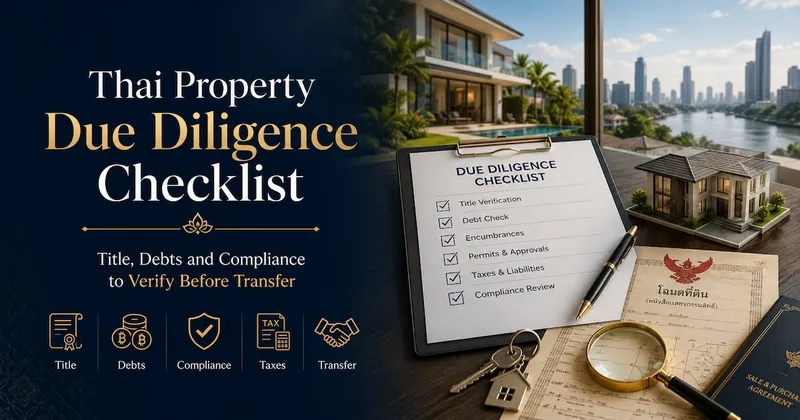
Thai Property Due Diligence Checklist: Title, Debts and Compliance to Verify Before Transfer
In Thailand, due diligence before transfer is the most important, most pitfall-blocking step. Five core areas to check: first, title — verify the deed type (whether Chanote), that the owner is the seller, and that area and boundaries match; second, debts and encumbrances — any mortgage, seizure, or unpaid management fees and utilities; third, the foreign quota (condos) and land limits (villas) — whether a foreigner can lawfully hold it; fourth, the developer and project (off-plan) — delivery record, EIA and construction permits; fifth, the contract and funds — review the sale contract and confirm funds can be remitted compliantly for the FET. Most of this needs a lawyer verifying originals at the Land Office. This guide gives a checklist to work against, subject to the Land Department's current rules and a lawyer.
7/16/2026