 泰互帮
泰互帮Condo vs Apartment vs Villa vs Townhouse in Thailand: What's the Difference and Which to Buy
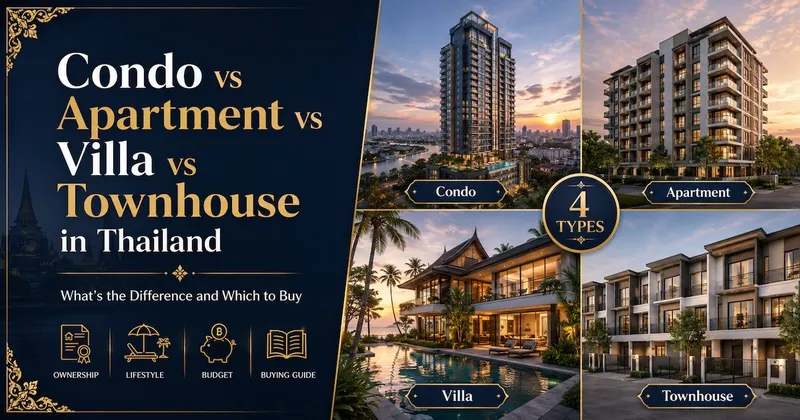
Condominium (Condo / Strata-Titled)
- Core trait: registered under the Condominium Act with title split per unit; foreigners can buy freehold (within the 49% foreign quota), with the title in your name
- Why it's mainstream: the most direct, safest way for foreigners to buy in Thailand, with a clear path
- Quota and title in the foreigner buying guide; deeds in Thai title deeds (Chanote)
Apartment (Rent-Only)
- Core trait: looks like a condo, but usually the whole building is held by a single owner/company, title not split, rent-only
- For foreigners: generally can't buy title, only rent — don't buy an apartment thinking it's a condo
- How to tell: ask whether it's registered under the Condominium Act and whether a unit can be transferred with its own title — if not, it's usually an apartment
Villa / Detached House (Landed)
- Core trait: a detached landed home, spacious and private
- Ownership limit: since foreigners can't own land individually, villas are mostly long-lease (Leasehold) or company-held — beware non-compliant nominees
- Suits: buyers wanting space and a garden who can accept a lease/company structure with a lawyer overseeing it
Townhouse (Landed)
- Core trait: a terraced landed home, cheaper than a detached villa, with land and space unlike a condo
- Ownership limit: also landed, so the same foreign-ownership limit as villas applies
- Suits: budget-conscious buyers wanting landed space who can handle the ownership structure
Serviced Apartment
- Core trait: a home with hotel-style service (cleaning, front desk), mostly leasehold, good for short-to-medium stays
- For buyers: some licensed projects can short-let compliantly, but verify the credentials and revenue share — see short-let legality
How Foreigners Should Choose
- Want hassle-free freehold: buy a condo — the most mainstream, safest choice
- Want landed space: a villa/townhouse, but accept a long lease or company holding and use a lawyer
- Only staying short-to-medium term: renting an apartment or serviced apartment is more flexible — see the renting guide
- The key question: can this property's title be split per unit, can foreigners buy it, and is land involved — ask before negotiating
FAQ
What's the difference between a condo and an apartment, and can foreigners buy both?
The key difference is whether title can be split and whether foreigners can buy. A Condominium (condo) is registered under Thailand's Condominium Act with title split per unit, and foreigners can buy freehold (within the building's 49% foreign quota), with the deed in your name — the mainstream route for foreign buyers. An Apartment looks similar but is usually a whole building held by a single owner, title not split, rent-only, so foreigners generally can't buy title and can only rent. So when viewing, always ask: is the building registered under the Condominium Act, and can a unit be transferred with its own title — only then is it a buyable condo; if not, it's usually an apartment. Don't buy a rent-only apartment thinking it's a buyable condo. Subject to Land Department registration and a lawyer.
Can foreigners buy a Thai villa or townhouse?
Not outright the way you buy a condo. Villas (houses) and townhouses are both landed homes, and foreigners can't hold land in their own name — this applies across Thailand. So to "own" such landed property, foreigners usually can only use a long land lease (Leasehold) or a Thai company, each with compliance risk, and using nominee Thai shareholders to dodge the rule is non-compliant and high-risk. By contrast, a condo can be bought freehold with a clear path. To buy a villa or townhouse, first have a lawyer clarify the ownership structure, renewal terms and risks — don't act on space and a garden alone. Subject to Thai law and the Land Department's current rules, with major decisions verified by a lawyer.
For a short-to-medium stay in Thailand, buy or rent a serviced apartment?
For short-to-medium stays, renting is usually better value, especially when you're newly arrived and still learning the area. A serviced apartment comes with hotel-style service, is move-in ready and flexible, good for short-to-medium term; a regular apartment on a long let also saves the taxes and hassle of buying. Buying (a condo) suits those sure of long-term own-use or wanting an asset, since buying and selling involve transfer taxes and a higher cost of a mistake. In short: rent for short-to-medium or while undecided, buy once sure of a long stay or for investment. Renting logic in the renting guide, buying in the buying process. Subject to your situation; not investment advice.
Need Help?
TaiHuBang offers consulting and support on Thai property types and ownership: identifying the type and title nature, condo foreign-quota checks, villa/townhouse ownership-structure analysis, buy-or-rent advice, and lawyer referral. We only provide consulting and process support, with professional title conclusions verified against a lawyer and the Land Department's current rules; this article is not investment advice. See legal consulting or submit an enquiry and an advisor will reply within 24 hours.
Related Articles
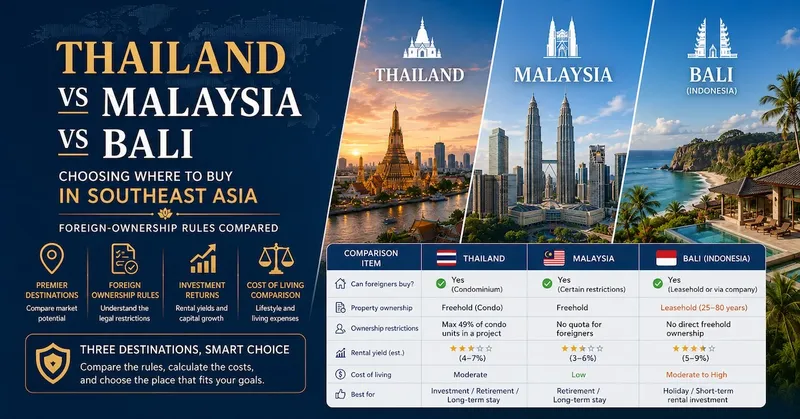
Thailand vs Malaysia vs Bali: Choosing Where to Buy in Southeast Asia and Foreign-Ownership Rules Compared
For buying in Southeast Asia, Thailand, Malaysia and Indonesia's Bali are three popular choices, but foreign-ownership rules, costs and suitability differ greatly. Thailand: foreigners can buy condo freehold (49% foreign quota), can't hold land individually, and villas use leasehold or a company; mature living, strong tourism, good value. Malaysia: foreigners can buy property above a local minimum price threshold (including landed property, rules by state), with the MM2H long-stay programme, widespread English and an English-style legal system. Bali (Indonesia): foreigners can't hold land title directly, commonly using Hak Pakai (right of use) or leasehold, with a strong holiday character and relatively complex rules. This guide compares the three on ownership, residency, cost and who they suit; each country's rules are subject to its official current rules, and this is not investment or legal advice.
7/16/2026

The Baht Exchange Rate and Buying Timing: How It Affects Your Thai Property Cost
Thai property is priced in baht, but your funds are mostly in another currency, so the baht exchange rate directly affects your real purchase cost and your take-home proceeds when you later sell. Put simply: the stronger your currency against the baht (the more baht it buys), the cheaper the purchase; weaker, and it costs more. The rate also affects off-plan instalments (long span, big swings), the amount you repatriate on sale, and your return in your home currency. But be clear-eyed: rates are hard to predict, don't rush to buy chasing a rate, and don't count on the rate to make money — the home's location, title and price are what matter. The rational approach is to treat the rate as a cost variable in the budget, use tools to compute, and convert in tranches to spread risk. This guide explains how the rate affects buying and how to treat timing rationally; rates are live, not investment or financial advice.
7/16/2026
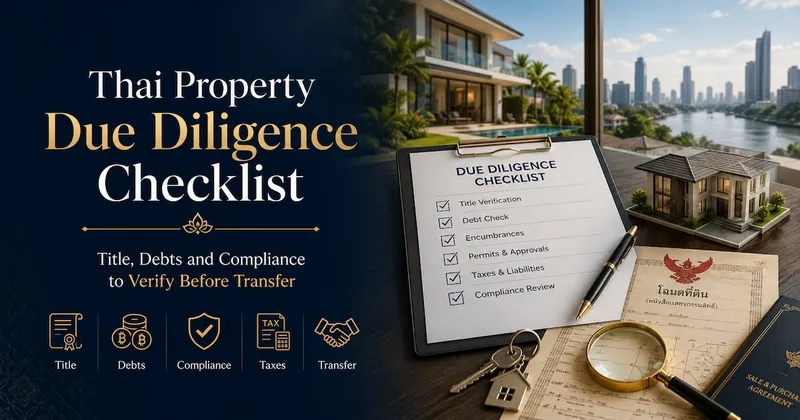
Thai Property Due Diligence Checklist: Title, Debts and Compliance to Verify Before Transfer
In Thailand, due diligence before transfer is the most important, most pitfall-blocking step. Five core areas to check: first, title — verify the deed type (whether Chanote), that the owner is the seller, and that area and boundaries match; second, debts and encumbrances — any mortgage, seizure, or unpaid management fees and utilities; third, the foreign quota (condos) and land limits (villas) — whether a foreigner can lawfully hold it; fourth, the developer and project (off-plan) — delivery record, EIA and construction permits; fifth, the contract and funds — review the sale contract and confirm funds can be remitted compliantly for the FET. Most of this needs a lawyer verifying originals at the Land Office. This guide gives a checklist to work against, subject to the Land Department's current rules and a lawyer.
7/16/2026