 泰互帮
泰互帮A Beginner's Guide to Temple Visits in Thailand: Etiquette, Requesting Amulets and Common Taboos
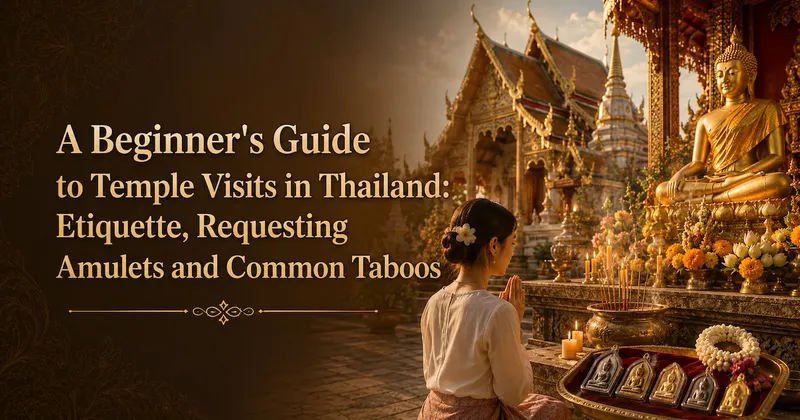
First, Separate Three Things: Worship, Offerings and Requesting Amulets
Many first-time visitors lump "going to pray" into one act, but a Thai temple visit usually has three layers: worship (paying respects to the Buddha image), making offerings (flowers, gold leaf, donations), and requesting an amulet (receiving a sacred object to carry). You can do just one or all three. The distinction matters because worship and offerings can be done freely at any open temple, while requesting an amulet involves communicating with the temple, arranging any blessing ritual, and the rules on carrying a sacred object home — the part worth understanding in advance. If you want the whole trip handled and don't speak Thai, see the on-the-ground amulet service at the end.
Before You Enter: Dress and What to Bring
- Shoulders and knees covered is the baseline: for everyone, tank tops, shorts, mini-skirts and bare shoulders or backs can get you turned away at the door. Major temples like the Emerald Buddha at the Grand Palace are especially strict — sarongs are rented on site but the queue eats time, so dress right before you go
- Shoes off inside the hall, always: the pile of shoes at the door is your cue; once barefoot, keep your soles from pointing at the Buddha image
- Color doesn't matter, but avoid anything too revealing or with inappropriate prints; remove hats and sunglasses inside
- Bring a scarf or sarong and easy on-off shoes — most practical when visiting several temples in a day
The Posture and Order of Worship
Standard worship isn't complicated — a respectful heart matters more than perfect form:
- The wai: palms together at chest or forehead with a slight bow to the Buddha image, the basic greeting on entering and leaving
- Bow three times: kneeling, raise joined palms to the forehead and lower your body to the floor three times, honoring the Buddha, the Dhamma and the Sangha — the Triple Gem
- Feet never toward the Buddha: when sitting on the floor, use the "mermaid" position — legs tucked to one side and back, soles pointing behind you, never toward the Buddha image or a monk. This is one of Thailand's firmest etiquette lines
- With multiple images, generally start from the principal Buddha at the center of the main hall; don't fixate on order — pay respects unhurriedly
Offerings: Incense, Gold Leaf and Donations
- Incense, candle and lotus: a common set is three incense sticks, one candle and a lotus (offered with both hands, bud up); plant the incense in the burner after lighting, and light the candle at the designated stand
- Gold leaf: applying a small square of gold leaf to a Buddha image or designated object is a distinctly Thai way of making merit — apply it where your wish suggests (customs on which spot vary by temple, so simply follow your heart)
- Donations: dropping a sum in the merit box, buying the temple's blessing items, or making an offering to monks all count as giving; there's no minimum — intention comes first
- Keep respect throughout: no loud talking, no stepping on offerings, no photos with your back to the Buddha
Requesting an Amulet: Process, Cost and the Value of a Guide
Requesting an amulet (receiving a Buddha amulet, image or other sacred object to carry) is the core purpose for many visitors — and the easiest place to go wrong:
- Find the right window: well-known temples usually have a dedicated amulet or distribution counter, charging a set fee or by donation; don't let a tout who approaches you outside lead you away, where neither price nor authenticity is assured
- Blessing rituals: some amulets can be chanted over and blessed by senior monks — whether this can be arranged depends on the temple's current schedule and needs to be discussed ahead
- Language is the biggest barrier: requesting an amulet involves confirming your intention, the object's provenance, the price and any ritual — easy to get wrong or overcharged without the language, which is exactly where a Chinese-speaking guide adds value
- Keep perspective: an amulet is a vessel for faith and intention; approach it with personal belief and respect. Never trust any "guaranteed to work" or "guaranteed wealth" pitch — a genuine temple never promises that
To be clear, TaiHuBang only provides on-the-ground temple-run accompaniment and process support in Thailand. We do not sell amulets and do not ship them — you request an amulet in person at the temple. To request authentic amulets directly from home with individually numbered authentication certificates, visit our sister sites: TaiZhenFang (taizhenfang.com) in China, or Merit Messenger (meritmessenger.com) for overseas buyers.
The Taboo List You Must Remember
- Feet are the least clean part: don't point at things with your feet, don't aim your soles at Buddha images or monks, don't step on thresholds
- The head is the most sacred part: don't touch anyone's head, children included
- Women must not touch monks: to hand something to a monk, pass it via a man or place it on the cloth in front of him, avoiding direct contact
- No selfies with your back to the Buddha, no climbing on images for photos: Thailand penalizes disrespect toward Buddha images heavily, tourists included
- Silence your phone, keep your voice down, and stay quiet when others are praying
Caring for Your Amulet and Bringing It Home
- Wearing customs: amulets are usually worn against the body and, by tradition, not below the waist (take them off and store them respectfully for showering or the toilet); keep them in a clean place when not worn
- Export rules: small amulets for personal wear are generally unrestricted; commercial quantities or antique Buddha images require an export permit from Thailand's Fine Arts Department, or they may be stopped at customs
- Entering China: handled under reasonable personal-use quantities and limits; carrying a batch may be deemed commercial and require trade declaration — always per both countries' current customs rules. Sort out checked vs carry-on and whether to declare before you fly
- To ship larger images or several sacred objects home, use proper logistics and keep the receipts — see our China–Thailand shipping and consolidation guide
Frequently Asked Questions
I don't speak Thai — can I worship and request an amulet on my own for a first visit?
Worship and offerings you can absolutely do alone: follow the local worshippers around you and hold to two lines — feet never toward the Buddha, shoes off inside — and you won't cause offense. Requesting an amulet calls for more caution: it involves dealing with the temple, arranging any ritual and confirming price, and without the language you can be intercepted by a tout outside or overcharged. For sightseeing and worship, going solo is fine; if requesting an amulet is your main goal and you'd rather not fumble, a Chinese-speaking guide keeps your time at the right counter.
Do I have to request an amulet when I visit? How much does it cost?
Not at all. Worship, offerings and requesting an amulet are independent — if you only want to pay respects, flowers, incense and a donation are plenty, with nothing spent and no offense given. Amulet costs vary hugely: an ordinary amulet from the temple counter might be a few hundred baht, while a famous temple or master, a limited edition or an antique can run into the thousands, tens of thousands or far more, depending on temple, material, age and blessing lineage. Budget sensibly, within your means, and be wary of any "the pricier the more effective" pitch.
Can women enter temples during their period?
Yes, you can worship as normal — no need to worry about this. It's simply that by Thai tradition women shouldn't directly touch monks or certain sacred areas anyway, so keep to the same sense of distance during your period; there's nothing to be anxious about. The usual rules — shoulders and knees covered, shoes off inside — still apply.
Will my amulet be stopped by Chinese customs?
Small amulets for personal wear are generally unrestricted; what really warrants care is commercial quantities or antique Buddha images — Thailand may require a Fine Arts Department export permit, and China handles entry under personal-use limits, where an excess is easily deemed commercial. A few amulets for yourself or family are usually fine; carrying a batch means declaring per both countries' current customs rules. If unsure, check before you fly, or have your guide flag the compliance limits during the temple run.
Need a Hand?
TaiHuBang provides on-the-ground amulet-trip support in Thailand: temple-run route planning with Chinese-speaking accompaniment, guidance and appointment coordination for requesting amulets, airport transfers and private charters, and interpretation with an etiquette briefing. We don't sell or ship amulets — we just make the trip run smoothly and the etiquette clear. See our amulet trip service and airport transfer and charter service, or submit an inquiry and a consultant will reply within 24 hours.
Related Articles
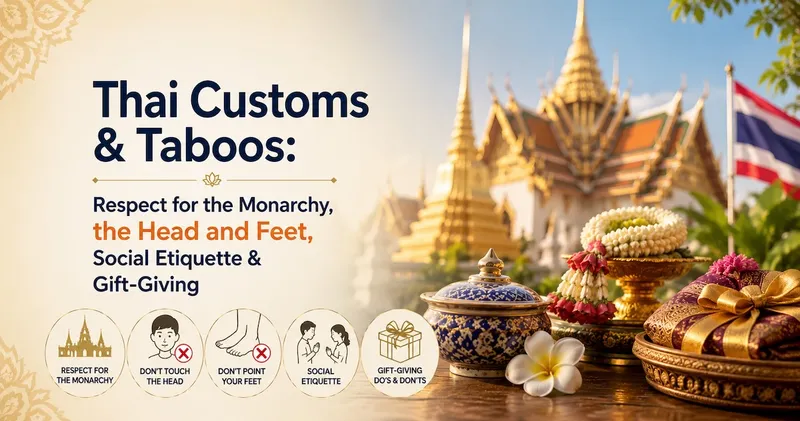
Thai Customs & Taboos: Respect for the Monarchy, the Head and Feet, Social Etiquette & Gift-Giving
Living in or visiting Thailand goes much more smoothly if you understand local customs and taboos. The key ones: first, respect the monarchy — disrespect toward the King and royal family is a serious matter in Thailand, involving the law, so never publicly comment or act irreverently; second, the head and feet — the head is regarded as the most sacred and shouldn't be touched (including children's), while feet are the lowest, so don't point with your feet, put your feet toward people or Buddha images; third, religious respect — monks, Buddha images and temples deserve reverence, and women must not touch monks; fourth, social etiquette — greet with a wai, communicate with a smile and gentleness, and avoid public anger or loud arguments (which cause loss of face). There are also smaller points like removing shoes indoors, giving with the right hand, and gift and colour customs. This guide covers the everyday customs and taboos worth knowing so you fit in and conduct yourself well, subject to local culture and law.
8/14/2026
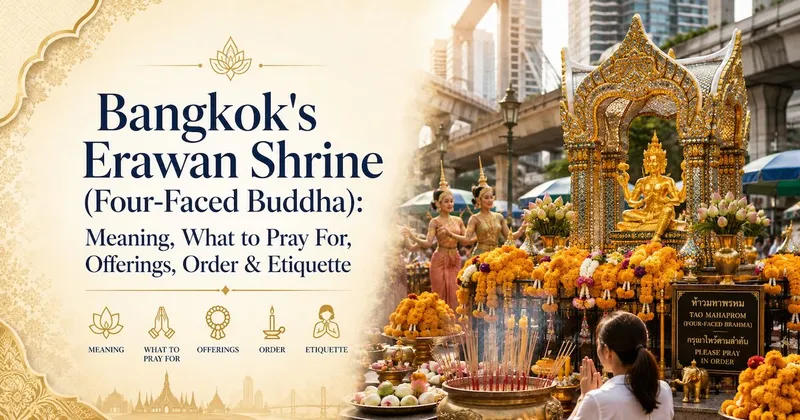
Bangkok's Erawan Shrine (Four-Faced Buddha): Meaning, What to Pray For, Offerings, Order & Etiquette
Bangkok's Erawan Shrine (San Phra Phrom, the "Four-Faced Buddha") sits in the Ratchaprasong district in the city centre and is one of Thailand's busiest and best-known places of worship. It enshrines the four faces of the Hindu god Brahma, symbolising loving-kindness, compassion, sympathetic joy and equanimity, which popular belief links to different wishes — career, love, health and safety, wealth and connections. Worship follows a clockwise order starting from the front, with common offerings of flower garlands, candles and incense, and dancers performing as a form of thanksgiving. Many return to give thanks once a wish is granted. Dress modestly, be respectful, and follow on-site etiquette. The shrine is right by BTS Chit Lom and surrounded by malls, so it's easy to reach. This guide covers its origins, what each face is for, offerings and worship order, thanksgiving and etiquette so you can pay a respectful, orderly visit.
8/14/2026
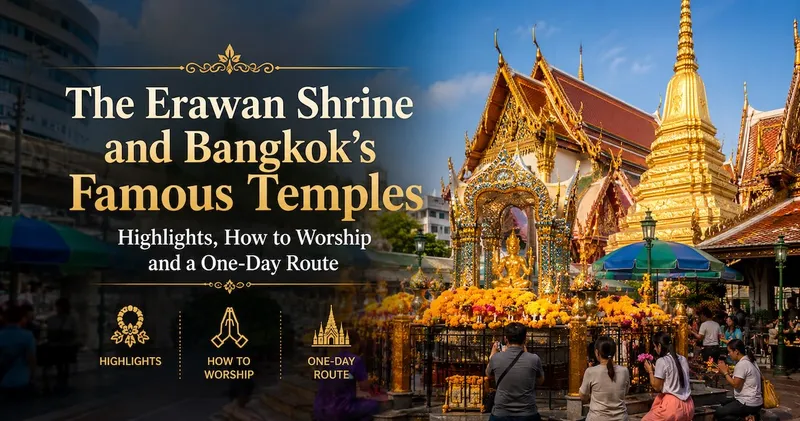
The Erawan Shrine and Bangkok's Famous Temples: Highlights, How to Worship and a One-Day Route
To pay respects in Bangkok, a few landmarks are unmissable: the Erawan Shrine (in the downtown shopping district, a popular site for love and career), Wat Pho (the 46-meter Reclining Buddha and the birthplace of Thai massage), Wat Arun (the Temple of Dawn, a Chao Phraya riverside landmark), Wat Traimit (a 5.5-tonne solid-gold Buddha), and the most solemn Grand Palace and Wat Phra Kaew. This guide strings together the must-visit temples' highlights, how to worship and etiquette, with a route to make a day flow — opening and rules per each temple's current practice.
7/9/2026