 泰互帮
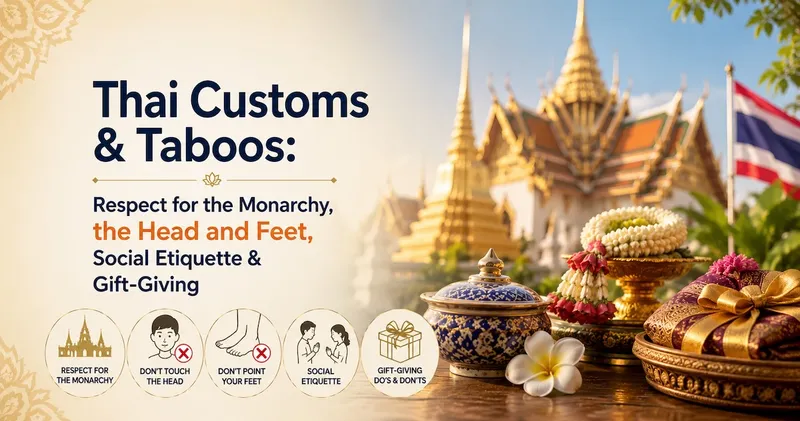
泰互帮Thai Customs & Taboos: Respect for the Monarchy, the Head and Feet, Social Etiquette & Gift-Giving
The most important: respect the monarchy
- Extremely sensitive: Thais deeply revere the King and royal family, and disrespectful words or acts are a serious matter, involving the law
- Never comment publicly or act irreverently: don't publicly criticise or mock the royal family, and don't treat royal images or banknotes (which bear royal portraits) disrespectfully
- Public etiquette: when the royal anthem plays in cinemas or the national anthem in public, stand respectfully per local custom
- Adapt: this isn't a topic for "personal free expression" — respect is the baseline
Head and feet: the body taboos Thais care about most
- The head is sacred: seen as the most sacred part of the body, so don't casually touch anyone's head, including children's
- Feet are lowest: don't point with your feet, put your soles toward people or a Buddha/deity image, or push doors/move things with your feet
- Mind how you sit: in a temple or seated on the floor, avoid stretching your feet toward a Buddha image — sit side-on with feet tucked
- Stepping over people: don't step over a seated/lying person, especially toward their head
Religious and social etiquette
- Respect monks and Buddha: monks, Buddha images and temples deserve reverence, and women must not touch monks or hand things directly to them (pass via a man or place it down) — temple etiquette in the temple etiquette guide
- The wai greeting: greet and thank with the palms-together wai; a wai to elders and monks is more reverent
- Smile and gentleness: as the "Land of Smiles," communication values calm restraint — public anger and loud arguments cause loss of face and backfire
- Dress modestly: for temples and palaces, dress modestly (cover shoulders and knees), avoiding revealing clothing
Everyday points: shoes, giving, gifts
- Remove shoes indoors: take off shoes before entering homes, some shops and temples — mind the shoes at the door
- Use the right hand: give things and money with the right hand (or both), as the left is considered unclean
- Gifts: present gifts with both hands, avoid inauspicious colour associations; Thailand has "birthday colour" customs, so pleasing wrapping helps
- Fitting in: observe and ask — community and living info in the community resource map, festivals in the festivals guide
Frequently asked questions
What are the absolute taboos in Thailand?
The most important is respect for the monarchy: disrespectful words or acts toward the King and royal family are a serious matter involving the law — never publicly criticise or mock, and don't treat banknotes or images bearing royal portraits disrespectfully. Next is the head and feet: don't casually touch anyone's head (including children's), and don't point with your feet or put them toward people or Buddha images. Then religious respect: monks, Buddha images and temples deserve reverence, and women must not touch monks. These are "baseline" taboos — breaking them ranges from rude to unlawful. Others like removing shoes and giving with the right hand are etiquette. Adapt and be respectful and you'll avoid most pitfalls, subject to local culture and law.
Why can't I touch people's heads or point with my feet in Thailand?
It stems from Thai views of the body: the head is seen as the most sacred, most exalted part, so casually touching someone's head — even affectionately patting a child's — is considered very rude; while feet are seen as the lowest, least clean part, so pointing with your feet, putting your soles toward people or a Buddha image, or pushing doors and moving things with your feet is disrespectful. Grasp the core "head high, feet low" and many related manners follow: tuck your feet away from Buddha images when seated, give with hands not feet, and don't step over people. Respecting these body taboos is a basic first step to fitting into daily Thai life.
What should I mind socially when dealing with Thai people?
The core is gentleness, respect and saving face. Greet and thank with the palms-together wai; communicate with a smile and restraint, and don't display public anger, argue loudly or embarrass others — causing "loss of face" in Thailand makes things worse, while a calm approach is more effective. Give things and money with the right hand or both, remove shoes indoors, and dress modestly in temples and palaces. Be especially reverent to monks — women must not touch them. Observe how locals do things and communicate amicably to build good relationships. Put "respect and gentleness" first and you'll rarely go wrong socially, subject to local culture.
Need help?
Taihubang offers settling-in and cultural-adaptation support for living in Thailand: transfers and guided company, temple-worship guidance, daily connections and local-custom tips to help you and your family fit into Thai life and conduct yourselves well. We respect local culture and law and encourage adapting to local ways. See our transfer/escort service or submit an enquiry.
Related Articles
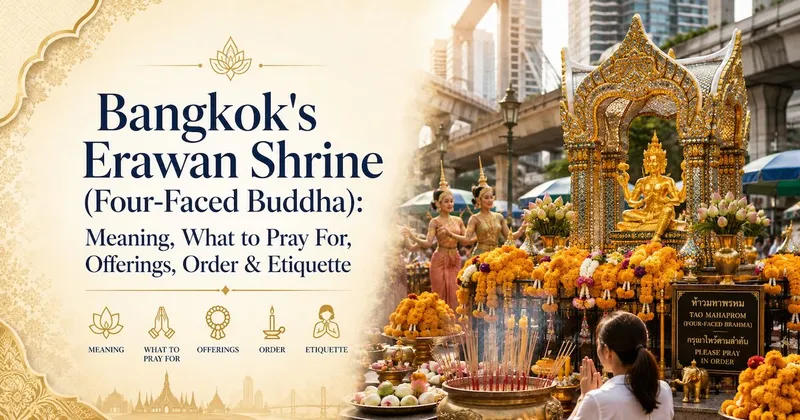
Bangkok's Erawan Shrine (Four-Faced Buddha): Meaning, What to Pray For, Offerings, Order & Etiquette
Bangkok's Erawan Shrine (San Phra Phrom, the "Four-Faced Buddha") sits in the Ratchaprasong district in the city centre and is one of Thailand's busiest and best-known places of worship. It enshrines the four faces of the Hindu god Brahma, symbolising loving-kindness, compassion, sympathetic joy and equanimity, which popular belief links to different wishes — career, love, health and safety, wealth and connections. Worship follows a clockwise order starting from the front, with common offerings of flower garlands, candles and incense, and dancers performing as a form of thanksgiving. Many return to give thanks once a wish is granted. Dress modestly, be respectful, and follow on-site etiquette. The shrine is right by BTS Chit Lom and surrounded by malls, so it's easy to reach. This guide covers its origins, what each face is for, offerings and worship order, thanksgiving and etiquette so you can pay a respectful, orderly visit.
8/14/2026
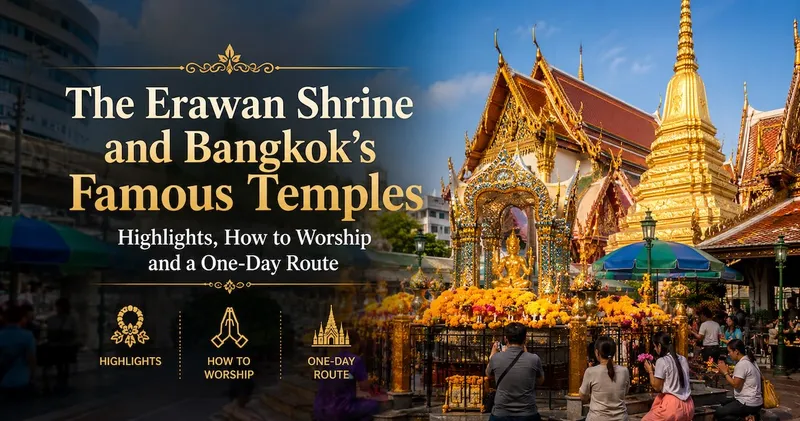
The Erawan Shrine and Bangkok's Famous Temples: Highlights, How to Worship and a One-Day Route
To pay respects in Bangkok, a few landmarks are unmissable: the Erawan Shrine (in the downtown shopping district, a popular site for love and career), Wat Pho (the 46-meter Reclining Buddha and the birthplace of Thai massage), Wat Arun (the Temple of Dawn, a Chao Phraya riverside landmark), Wat Traimit (a 5.5-tonne solid-gold Buddha), and the most solemn Grand Palace and Wat Phra Kaew. This guide strings together the must-visit temples' highlights, how to worship and etiquette, with a route to make a day flow — opening and rules per each temple's current practice.
7/9/2026
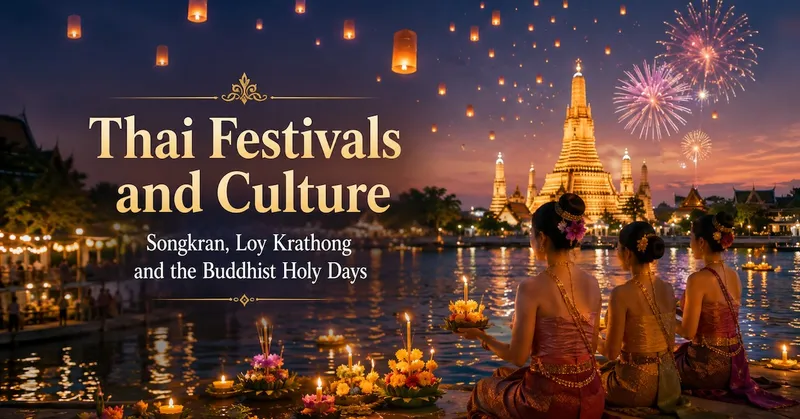
Thai Festivals and Culture: Songkran, Loy Krathong and the Buddhist Holy Days
Thailand's two most famous festivals are opposites — one loud, one quiet: Songkran (the water festival, April) is the nationwide Thai New Year revelry, and Loy Krathong (November) is the romantic night of floating wish-lanterns, with Chiang Mai's mass sky-lantern Yi Peng at the same time. Across the year, the major Buddhist holy days (Makha Bucha, Visakha Bucha, Khao Phansa and more) bring a nationwide alcohol ban and crowded temples. This guide covers the main festivals' origins, timing, regional styles and etiquette, to help you time your trip.
7/9/2026