 泰互帮
泰互帮Thai Festivals and Culture: Songkran, Loy Krathong and the Buddhist Holy Days
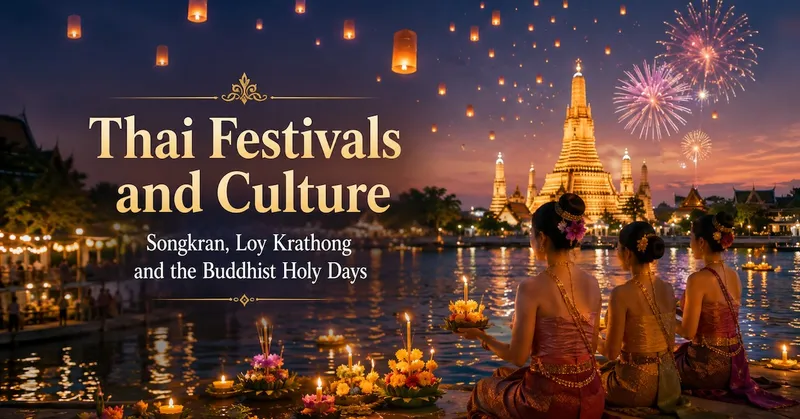
Songkran (Water Festival): The Nationwide Thai New Year Revelry
- Timing and origin: April 13–15, the traditional Thai lunar New Year, originally about washing away the past year's misfortune with water and pouring water over elders' hands as a blessing, later evolving into nationwide water-fighting revelry
- Regional styles: Bangkok's Khao San and Silom roads are the main water-fight battlegrounds, Chiang Mai's old-city moat is the liveliest, and Pattaya's Songkran runs to mid-month
- Participation tips: waterproof your phone and wallet, respect monks and elders (the hand-pouring is a blessing, not a splash-fight), and don't splash the elderly, children or vehicles; government offices chain-close and transport and logistics halt these days, so avoid errands — see our Thai holidays and errand calendar
Loy Krathong: The Night of Floating Wishes
- Timing and meaning: the full-moon night of the twelfth Thai lunar month (usually November) — floating a krathong of banana leaf and flowers on the water to thank the water spirit, release bad luck and make a wish
- Chiang Mai's sky lanterns: at the same time, Chiang Mai holds the famous Yi Peng sky-lantern release, thousands of lanterns rising into the sky — a bucket-list scene (official release events usually require tickets and follow safety and environmental rules)
- Environmental note: favor krathong of biodegradable materials and follow local environmental rules
Buddhist Holy Days: The Quiet, Alcohol-Free Days
- Main holy days: Makha Bucha (Feb–Mar), Visakha Bucha (May), Asanha Bucha and Khao Phansa (July) and others — set by the lunar calendar and moving on the Gregorian each year
- Characteristics: on these days alcohol sales stop nationwide, and the faithful make merit, listen to sermons and circle the temple at temples (from Khao Phansa, monks enter the three-month rains retreat)
- Etiquette: to take part at a temple, see the dress and worship rules in our guide to temple visits — shoulders and knees covered, shoes off inside, feet never toward the Buddha
Other Festivals Worth Seeing
- Royal and memorial days: King Rama IX Memorial Day, the King's Birthday and others carry a solemn mood, with subdued dress fitting for some occasions
- Local festivals: historical and cultural events in places like Kanchanaburi and Ayutthaya, and seasonal markets and music festivals around Hua Hin and Khao Yai — best paired with a weekend trip, see our Bangkok weekend trips guide
- Chinese festivals: Chinatown's Lunar New Year and the Nine Emperor Gods (Vegetarian) Festival (biggest in Phuket) — familiar flavors for Chinese in Thailand
How to Time Your Trip
- Want the revelry: hit Songkran in April or Loy Krathong/Yi Peng in November, but these two windows have the priciest, tightest flights and hotels — book one to two months ahead
- Want quiet errands: avoid the Songkran long break (government and logistics halt) and the holy days when buying alcohol is inconvenient
- With elders and children: Songkran crowds are intense — pick milder areas with the elderly and kids; choose officially managed, safe sessions for sky lanterns
Frequently Asked Questions
Is Songkran worth visiting, and what should I watch for?
Very worth it for the Thai New Year revelry — Bangkok, Chiang Mai and Pattaya are all main venues. Note a few things: waterproof your phone and wallet, respect monks and elders (the hand-pouring is a blessing), and don't splash the elderly, children or vehicles; government offices chain-close and transport and logistics largely halt, so avoid errands. Flights and hotels are peak-priced and tight — book ahead. Enjoy it, but mind safety and belongings, and watch for pickpockets in the water-fight chaos.
Are Loy Krathong and the sky-lantern festival the same thing? Where's best?
Related but not identical. Loy Krathong is the nationwide floating of wish-lanterns on the full-moon night of the twelfth Thai lunar month (usually November); Yi Peng is Chiang Mai's simultaneous release of sky lanterns, famous for thousands rising at once. For krathong, riverside events are everywhere; for sky lanterns, Chiang Mai is best — official sessions usually need tickets and follow safety and environmental rules, so don't join unlicensed ones. The timing overlaps, so Chiang Mai lets you experience both at once.
How do Buddhist holy days affect a trip to Thailand?
The most direct effect is a nationwide alcohol-sales ban: convenience stores, supermarkets and restaurants stop selling that day and most bars close, so stock up ahead or switch drinks. Temples are crowded and solemn on these days, good for experiencing merit-making and sermons, but observe worship etiquette. Holy days are set by the lunar calendar and move on the Gregorian each year, so check the year's dates before travel. Overall it doesn't hinder sightseeing — indeed it's a fine time to feel Thai Buddhist culture.
What about dress and etiquette at these festivals?
It depends on the occasion: for Songkran, quick-dry water-friendly clothes are fine, but some temples still require covered shoulders and knees; Loy Krathong and Yi Peng are casual but respect the on-site order; on Buddhist holy days, strictly follow covered shoulders and knees, shoes off inside and feet never toward the Buddha at temples, and dress plainly and solemnly for royal memorials. The core is respect for religion and the monarchy, avoiding any disrespectful acts. For detailed temple etiquette, see the temple visits guide.
Need a Hand?
TaiHuBang provides itinerary and transport support during festivals: transfers and charters for peak seasons like Songkran and Loy Krathong/Yi Peng, accompanied temple-run routes, and custom nearby trips. Vehicles are tight in peak season, so book ahead. See our airport transfer and charter service and amulet trip service, or submit an inquiry and a consultant will reply within 24 hours.
Related Articles
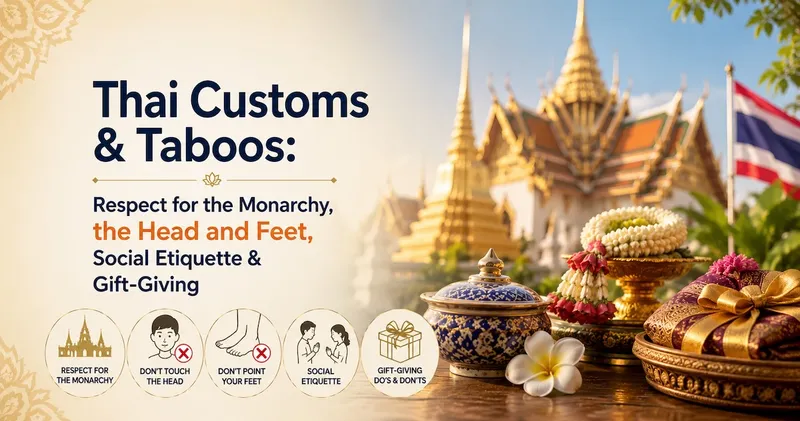
Thai Customs & Taboos: Respect for the Monarchy, the Head and Feet, Social Etiquette & Gift-Giving
Living in or visiting Thailand goes much more smoothly if you understand local customs and taboos. The key ones: first, respect the monarchy — disrespect toward the King and royal family is a serious matter in Thailand, involving the law, so never publicly comment or act irreverently; second, the head and feet — the head is regarded as the most sacred and shouldn't be touched (including children's), while feet are the lowest, so don't point with your feet, put your feet toward people or Buddha images; third, religious respect — monks, Buddha images and temples deserve reverence, and women must not touch monks; fourth, social etiquette — greet with a wai, communicate with a smile and gentleness, and avoid public anger or loud arguments (which cause loss of face). There are also smaller points like removing shoes indoors, giving with the right hand, and gift and colour customs. This guide covers the everyday customs and taboos worth knowing so you fit in and conduct yourself well, subject to local culture and law.
8/14/2026
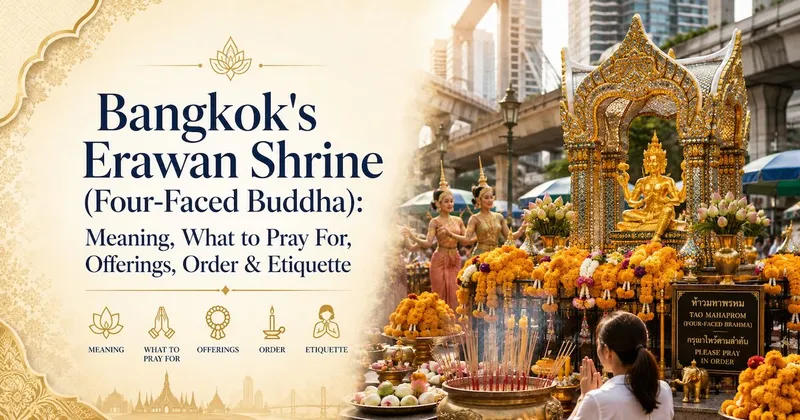
Bangkok's Erawan Shrine (Four-Faced Buddha): Meaning, What to Pray For, Offerings, Order & Etiquette
Bangkok's Erawan Shrine (San Phra Phrom, the "Four-Faced Buddha") sits in the Ratchaprasong district in the city centre and is one of Thailand's busiest and best-known places of worship. It enshrines the four faces of the Hindu god Brahma, symbolising loving-kindness, compassion, sympathetic joy and equanimity, which popular belief links to different wishes — career, love, health and safety, wealth and connections. Worship follows a clockwise order starting from the front, with common offerings of flower garlands, candles and incense, and dancers performing as a form of thanksgiving. Many return to give thanks once a wish is granted. Dress modestly, be respectful, and follow on-site etiquette. The shrine is right by BTS Chit Lom and surrounded by malls, so it's easy to reach. This guide covers its origins, what each face is for, offerings and worship order, thanksgiving and etiquette so you can pay a respectful, orderly visit.
8/14/2026
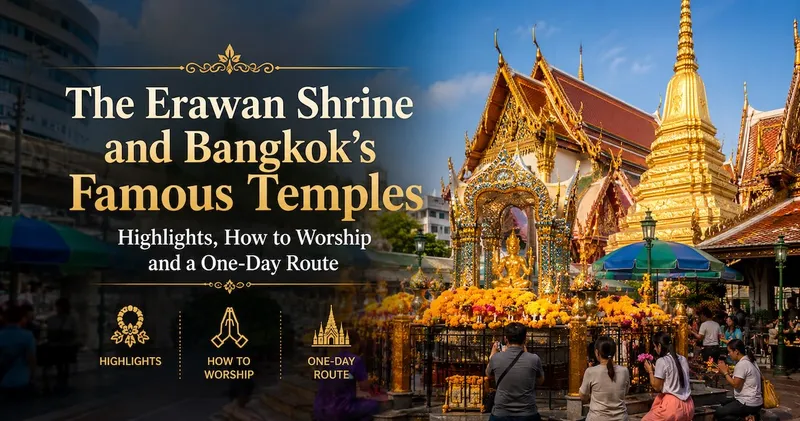
The Erawan Shrine and Bangkok's Famous Temples: Highlights, How to Worship and a One-Day Route
To pay respects in Bangkok, a few landmarks are unmissable: the Erawan Shrine (in the downtown shopping district, a popular site for love and career), Wat Pho (the 46-meter Reclining Buddha and the birthplace of Thai massage), Wat Arun (the Temple of Dawn, a Chao Phraya riverside landmark), Wat Traimit (a 5.5-tonne solid-gold Buddha), and the most solemn Grand Palace and Wat Phra Kaew. This guide strings together the must-visit temples' highlights, how to worship and etiquette, with a route to make a day flow — opening and rules per each temple's current practice.
7/9/2026