 泰互帮
泰互帮Tenant Rights and Getting Your Deposit Back in Thailand: Deposit Rules, Fair Deductions, and What to Do When It's Withheld
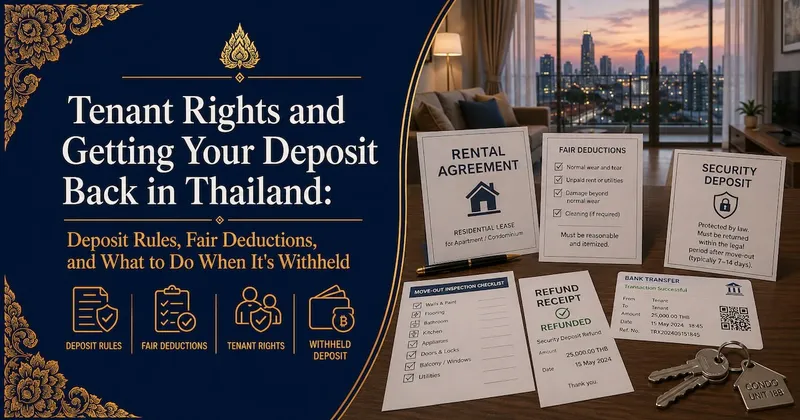
Understand Deposit Rules: It Isn't the Landlord's Money
- Common structure: Thai rentals are often two months' deposit plus one month advance; the deposit is performance security and should normally be returned at move-out
- 2018 residential lease rule: for commercial landlords renting out a certain number of units, it caps the deposit at about one month, requires a controlled contract, and bars unreasonable withholding and requires prompt return, giving tenants more protection
- Even outside the rule there's law: small/single-unit landlords may fall outside it, but the contract and the Civil and Commercial Code still bind both sides — unreasonable withholding is still contestable
- For finding and signing, see the Bangkok rental guide; the landlord's side is in the landlord guide
What Can and Can't Be Deducted from the Deposit
- Can be deducted: actual damage you caused (breakage, burns, obvious damage), unpaid rent and utilities, and cleaning or repairs the contract puts on you
- Shouldn't be deducted: normal wear and tear (walls aging naturally, furniture wearing normally, paint fading) isn't damage and shouldn't be charged to you
- Early termination: leaving before the term may forfeit the deposit per the contract — read the breach and termination clauses before signing
- Final utilities: move-out often means settling the last utility bill, which the landlord may reasonably offset — see the utilities and living-cost guide; for condo fees see the condo common-fee guide
Move-In and Move-Out: Keep Enough Evidence
- Read the contract before signing: deposit amount and return conditions, breach and termination clauses, repair responsibility — if the terms are unclear, ask before signing
- Photograph/video at move-in: capture existing scratches, stains and appliance condition with timestamps, ideally confirming a checklist with the landlord in writing
- Keep every record: contract, deposit receipt, transfer records, chat logs
- Photograph again at move-out: compare with move-in records to prove the unit's condition and avoid being blamed for damage
- Request the deposit in writing: ask for the return by text/email and keep a trail — not just verbally
Solid evidence is your leverage — many deposit disputes are lost because there were no move-in photos and no move-out records.
Deposit Unfairly Withheld — How to Assert Your Rights
- Negotiate first: show move-in/out comparison photos and contract terms, and ask in writing for the basis of deductions and a refund — much can be recovered this way
- Complain to consumer protection: for commercial landlords under the controlled contract, you can complain to the Office of the Consumer Protection Board (OCPB) and similar channels
- Litigation/small claims: for smaller sums, court action is an option — Thai law supports reasonable deposit return
- Get professional help: when language and procedure are unfamiliar, a lawyer or adviser versed in Thai tenancy law saves effort
- If it's outright fraud (fake landlord, fake listing, absconding with money), see the fraud, police report and remedy guide
Common Traps and Sensible Advice
- Don't skip a contract or receipt: without it in writing, asserting rights is hardest
- Don't skip move-in inspection photos: this is the key evidence in deposit disputes
- Don't impulsively break the lease and vanish: leaving early without process may genuinely forfeit the deposit — follow the contract
- Don't give up assuming "you never get deposits back": normal wear shouldn't be deducted, and you're entitled to a basis and a refund
FAQ
Can a Thai landlord deduct my deposit at move-out however they like?
No. A deposit is performance security, not the landlord's money, and should normally be returned at move-out; the landlord may only deduct reasonably and with a basis — for actual damage you caused, unpaid rent and utilities, or costs the contract puts on you. Normal wear and tear (walls aging, furniture wearing) shouldn't be deducted. The 2018 controlled-lease rule for commercial landlords also bars unreasonable withholding and requires prompt return. If withheld unfairly, you're entitled to ask for the basis and a refund, and if talks fail, use a complaint or the courts, subject to current law.
Do I have to pay for normal wear and tear out of my deposit?
You shouldn't. Both law and common sense distinguish normal wear and tear from damage: walls aging over time, paint fading and furniture wearing normally are ordinary wear — the cost of renting out — and shouldn't be charged to the tenant; only actual damage you caused by breaking, burning or obviously damaging things can be reasonably deducted. Treating normal wear as damage to withhold the deposit is unreasonable. To avoid disputes, photograph existing marks at move-in and compare at move-out to prove what was pre-existing or normal aging, with the final call per the contract and current law.
The landlord withheld my deposit — where can I complain?
First show move-in/out comparison photos and contract terms and ask in writing for the basis of the deductions and a refund — negotiation often resolves it. If it fails and the other side is a commercial landlord under the controlled-contract rule, you can complain to the Office of the Consumer Protection Board (OCPB) and similar channels; for smaller sums, court action to claim the return is an option, as Thai law supports reasonable deposit return. When language or procedure is unfamiliar, a lawyer/adviser versed in Thai tenancy law is safer. If it's a fake-landlord fraud, report it to the police, subject to the relevant authorities' current rules.
If I leave early, will I definitely lose my deposit?
Not necessarily — it depends on the contract. Leaving before the term is a breach, and the breach and termination clauses in your contract decide whether the deposit is forfeited — some forfeit it, some allow termination on notice with only partial loss. So read the termination, breach and early-exit clauses before signing. If you must leave early, give written notice and negotiate per the contract first — that usually reduces loss more than simply moving out and vanishing, which may lawfully forfeit the deposit. It all follows the contract you signed and current law.
Need Help?
TaiHuBang offers consultation and support on Thai rentals: reviewing lease terms (deposit and termination, breach, repair responsibility), guidance on negotiating and asserting rights when a deposit is unfairly withheld, and referral for consumer-protection complaints and litigation. We provide information and partner matching; legal conclusions rest on a qualified lawyer and current law, and we make no promises on outcomes. See our legal services or submit an enquiry, and an advisor will reply within 24 hours.